TOOLING UP: How 3M EARfit™ Improves Hearing Protection
In this episode of Tooling Up, host Toni Neary is joined by Dr. Laurie Wells, Global Application Engineer and Regulatory Specialist with 3M Personal Safety Division, to discuss why occupational hearing loss remains one of manufacturing's most overlooked workplace safety risks.
Watch time: 9:07 minutes
Watch time: 9:07 minutes
Supplier:
3M
Posted date:
Aug 13, 2026
Posted date:
Aug 13, 2026
Video series:
Tooling Up
, Season 6
Looking for full transcript of video? Read now
In this episode of Tooling Up, host Toni Neary is joined by Dr. Laurie Wells, Global Application Engineer and Regulatory Specialist with 3M Personal Safety Division, to discuss why occupational hearing loss remains one of manufacturing's most overlooked workplace safety risks. Together, they explore why simply providing hearing protection does not always guarantee workers are receiving the protection they need.
Dr. Wells explains the difference between laboratory Noise Reduction Ratings (NRR) and real-world performance, introducing the 3M EARfit™ Dual-Ear Validation System and how fit testing helps employers verify individual protection levels, improve training, and strengthen hearing conservation programs. The conversation also explores why hearing protection should be considered alongside other PPE to help keep workers both protected and aware of their surroundings.
To learn more about the 3M Safety EARfit™ Dual-Ear Validation System and other hearing protection solutions, visit mscdirect.com.
For even more safety insights and expertise, check out MSC's Knowledge Center.
For more Tooling Up videos, check out the MSC Tooling Up playlist and subscribe to our channel.
Video Transcript
Narrator: This video is brought to you by 3M. Hearing solutions made innovatively easy. If you're looking for real-world insights, tips from leading industry experts, the latest trends in products and technology, you've come to the right place. From MSC Industrial Supply, this is Tooling Up.
TONI NEARY: Hi everyone and welcome to Tooling Up. I'm your host, Toni Neary, and I'm so glad that you've joined us today. Before we get started, go ahead and click those Like and Subscribe buttons so you never miss an episode from MSC and our industry partners. Today we're discussing a workplace safety risk that doesn't get the same attention as slips, trips, falls, eye protection, or even machine guarding that can have a lasting impact on workers throughout their careers.
And it's occupational hearing loss. Millions of workers are exposed to hazardous noises every day, and simply wearing earplugs or earmuffs doesn't always mean they're getting the protection they need. To help us understand why that happens and what employers can do about it, I'm joined by Dr. Laurie Wells, a Global Application Engineer and Regulatory Specialist with 3M Personal Safety division.
Laurie, welcome to Tooling Up and thanks for joining us.
LAURIE WELLS: Thank you so much, Toni. It's really great to be here today.
TONI NEARY: So Laurie, let's start with the problem itself. Hearing protection has been around for decades, and most manufacturers already have hearing conservation programs in place. So why is occupational hearing loss still such a concern?
LAURIE WELLS: Well, one of the biggest challenges is that hearing loss, unlike other kinds of workplace injuries, is permanent and it's gradual. So as it happens, people may not even be aware because it's so slowly progressing. And as you know, Toni, millions of workers are exposed to hazardous noise levels in all kinds of industries like manufacturing, mining and construction, and they may not even be aware that the noise is affecting their hearing over the years.
TONI NEARY: So simply providing hearing protection really isn't enough. It sounds like making sure that workers are wearing it properly is just as important.
LAURIE WELLS: Yeah, that's right, Toni. And just providing the hearing protectors is the first step. We have to make sure that every worker is actually wearing it correctly and consistently in order to achieve the right amount of attenuation that they need for the work exposures that they are experiencing every day.
TONI NEARY: That's interesting, because most people probably assume the protection level is already listed right on the package. Why isn't that enough?
LAURIE WELLS: Well, you're right, the hearing protectors are required by US law to include what's called a noise reduction rating or an NRR, and that NRR is dictated by the EPA. Manufacturers have to make sure that their hearing protectors are tested according to a standardized procedure in a laboratory. Very special process that has to be done. But in reality, the NRR isn't always what each worker gets every time they put it in their ear.
So it's easy to look at the NRR and make a decision that it is a hearing protector. But that doesn't always translate well to how much attenuation or noise reduction that a person actually gets when they're using a hearing protector.
TONI NEARY: So if the rating on the package doesn't tell the whole story. How can employers determine whether workers are actually getting the protection that they need?
LAURIE WELLS: Yeah. Great question. And that's exactly where fit testing of hearing protectors comes into play. So fit testing, you may be familiar with respiratory respirators, but for hearing protectors, fit testing allows the employer to identify actual attenuation. Some objective data that tells how much the hearing protector is reducing the noise, just as the person is wearing it with that particular device. So it helps to quickly identify the workers that need additional training.
Maybe they need a different hearing protector altogether to fit the geometry of their ear canal better. Or maybe it's just a technique that they need to achieve a better fit.
TONI NEARY: And Laurie, I think that's really important because it's more about objective data than assumptions. And that's really where 3M's EarFit system comes into the conversation, right?
LAURIE WELLS: Yeah, exactly. EarFit is designed to measure the worker's personal attenuation rating, or PAR, personal attenuation rating, and the PAR reflects the amount of attenuation that the individual is actually getting, the way that they fit it with exactly that hearing protector. So the system provides immediate feedback, which is really great in order to see the measurable results that we that we're getting. That allows the employers to verify the protection level and to make informed decisions about whether their hearing protectors are appropriate for the noise environment of the worker.
TONI NEARY: And once employers have that information, what does it allow them to do that they couldn't do before?
LAURIE WELLS: Well, one of the biggest benefits is that visibility in that window of opportunity to intervene if they need to. So first of all, they can determine if the worker is adequately protected. And if they are, that's great. And they can verify that. But if they're not, then they can intervene and do the training that they need. Maybe they need to choose a different hearing protector, like we said.
Or maybe it's just a technique, a little bit of an adjustment in order to make the difference in the attenuation.
TONI NEARY: And Laurie, one thing that really stood out to me in our earlier conversations where the goal isn't really to achieve that highest possible level of attenuation. Why is finding the right level of protection so important?
LAURIE WELLS: That’s a really good point, Toni, because the assumption is always that the more the better. And actually sometimes more protection can be a deterrent, and it can obscure the sounds that you really want to hear. And we need to be able to choose the amount of attenuation that is appropriate so that people aren't missing the communication that they need, or the warning signals that they need, or the equipment sounds that they need.
So I think an important lesson here is that there are different types of hearing protectors with different amounts of attenuation. Some of them actually have electronic features in them that can help maintain their sense of audibility or situational awareness. So they can hear those alarms and warning signs and still be able to communicate with their coworkers, all the while being adequately protected.
TONI NEARY: So hearing protection really needs to be considered as part of the overall PPE system, not just as a standalone product.
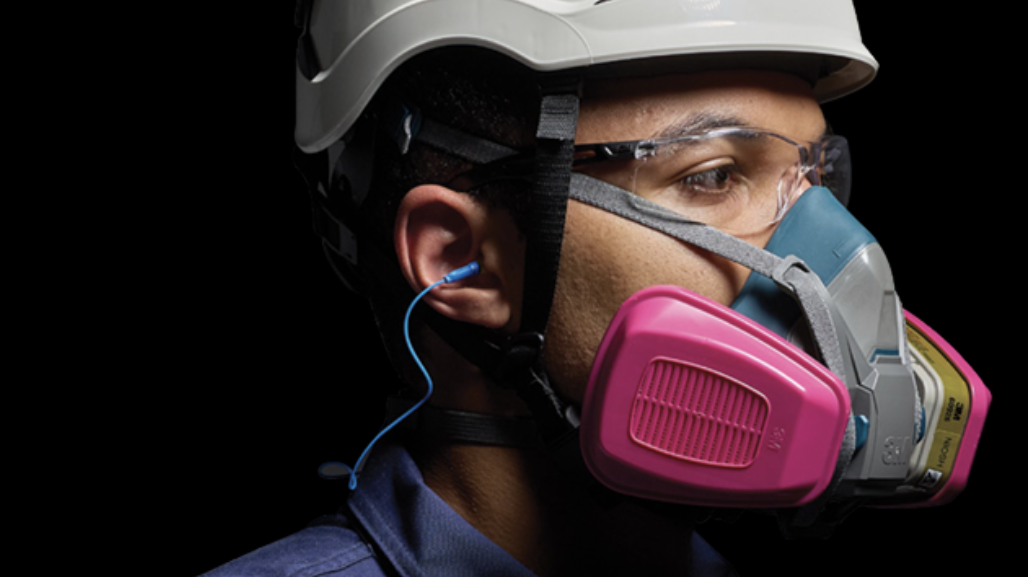
LAURIE WELLS: Yeah, absolutely. People are very good at measuring noise, and they need to think about the fact that noise changes. So they may need different hearing protectors for different noise environments, but also those environments may require wearing different types of PPE or personal protective equipment together. So the hearing protector needs to work together with their safety glasses, with their hard hats, their respirators, etc. and that's where fit testing can really be helpful.
With Earfit, you can do a fit test while they're wearing all their gear to ensure that the compatibility of those products is all working together.
TONI NEARY: Laurie, before we wrap up, who stands to benefit most from incorporating fit testing into their hearing conservation program?
LAURIE WELLS: Well, first and foremost, I would say that any organization that has noise-exposed workers is apt to benefit. After all, the safety managers and the H&S professionals who are responsible for hearing conservation programs, this gives them a tool so that they can actually verify that the hearing protectors that they're choosing are working for their employees. So any organization that's committed to protecting hearing health over time has a reason to benefit from taking that extra step to fit test their hearing protectors.
So key takeaway, fit matters. Verification matters. And remember that the goal is to make sure that workers are achieving the amount of attenuation that they need for their specific work environment.
TONI NEARY: Great insights, Laurie. Thanks so much for joining us today and sharing your expertise with us.
LAURIE WELLS: Well, thanks so much for having me, Toni. It's been a real pleasure.
TONI NEARY: It was so great having Laurie with us today. To learn more about 3M's EarFit Dual Ear Validation System and other hearing protection solutions, visit: www.mscdirect.com/knowledge-center/3m.
Or contact your MSC Safety Consultant or sales representative, and don't forget to subscribe to our channel so you never miss an episode. Thanks for watching, and see you next time on Tooling Up.
Narrator: Want more insights and ideas to improve the efficiency and productivity of your operations? Check out the Tooling Up video playlist to hear tips that can take your company to the next level, and subscribe to our channel so you won't miss out.