



Gage block grades determine the accuracy and tolerance levels required for different inspection and calibration environments. They are available in five standard tolerance grades: K, 00, 0, AS-1, and AS-2.
Precision Starts with the Right Gage Block Grade
Compare gage block grades and tolerances to find the right level of accuracy for your measurement and calibration environment.
What Is a Gage Block?
A gage block, also called a gauge block, is a precision ground reference block manufactured to an exact, certified length and used to calibrate measuring instruments and verify dimensional accuracy. Gage blocks are also known as Jo blocks or slip gauges, terms that trace back to Carl Edvard Johansson, the Swedish engineer who developed the modern gage block system in the early 1900s.
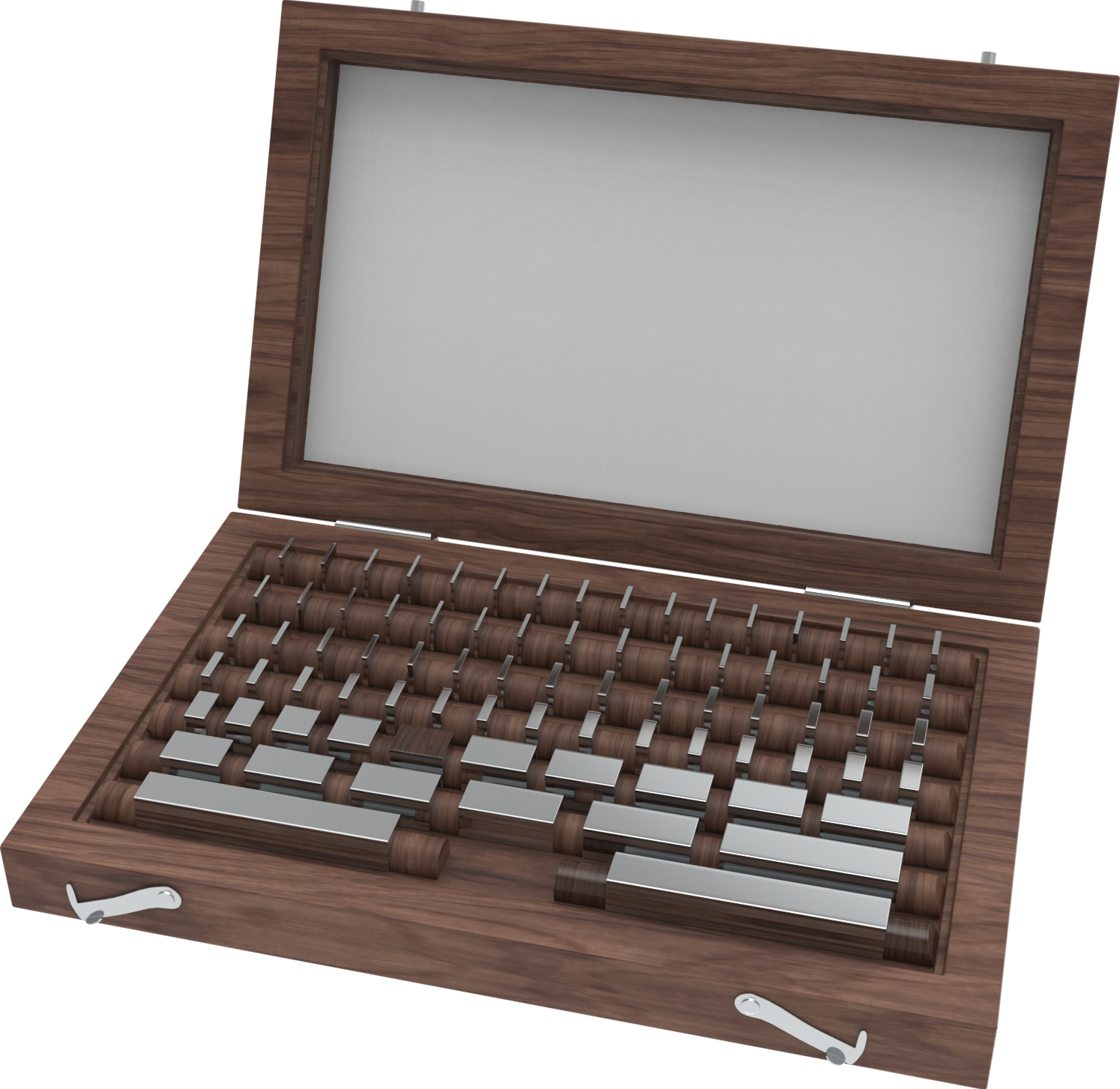
What Are Gage Block Grades?
These grades define the allowable variation in flatness, parallelism, and overall length of the block. Each block's nominal length falls within specific limits set by the ASME Gage Block Standard, which outlines maximum deviations allowed from the nominal size and the allowable variation within a single block. These tolerances apply regardless of the block’s material or shape.
For example, multiple Grade 0 gage blocks with the same nominal length must each fall within ±6 millionths of an inch to meet spec, meaning they could range from 0.999994" to 1.000006".
Understanding gage block grades helps ensure you select the right level of precision for your inspection setup.
This standard is officially known as ASME B89.1.9, Gage Blocks, and it is the reference most calibration labs cite when specifying gage block tolerances.
Certificate and Serial Number
Each gage block must carry a unique serial number to support calibration and verify the block’s actual size down to the nearest millionth of an inch. For accuracy and traceability, a Certificate of Accuracy is typically included with every gage block or gage block set, unless otherwise specified. These certificates are traceable to NIST (National Institute of Standards and Technology), ensuring compliance with industry calibration standards.
Gage Block Grade Comparison Chart
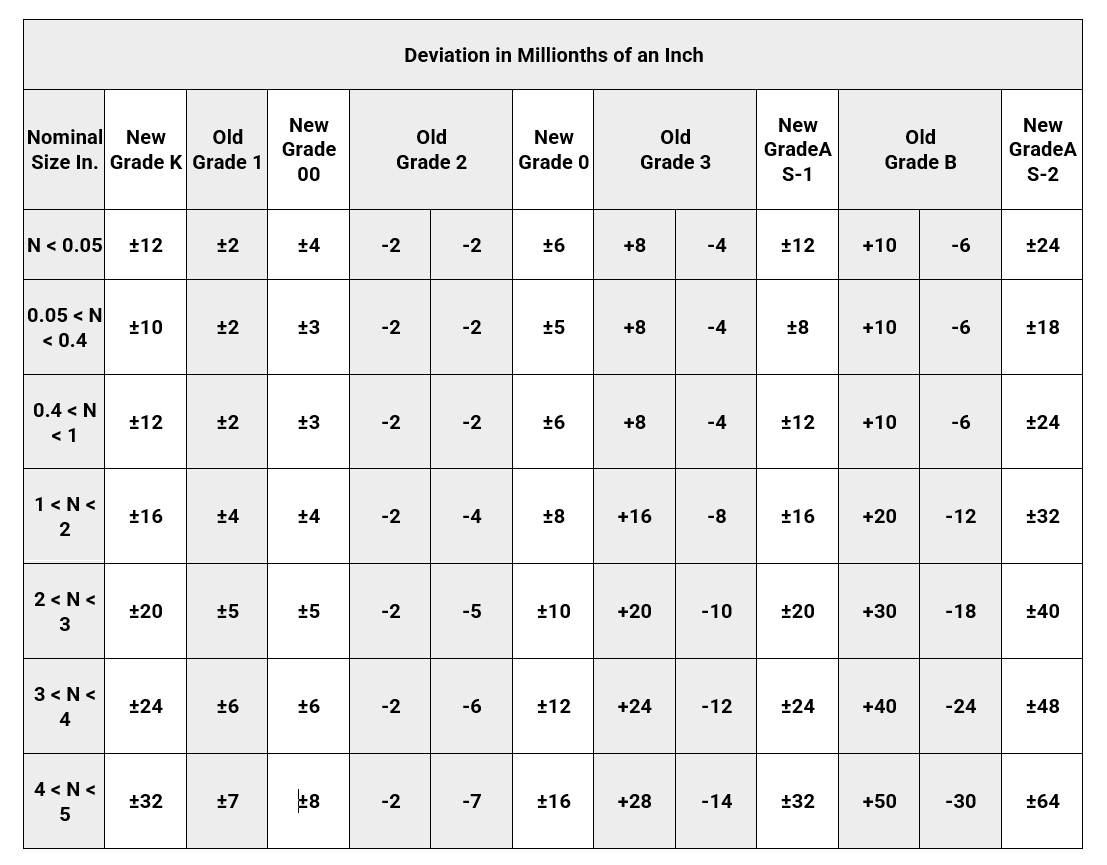
Use the chart below to compare gage block grade tolerances based on nominal size ranges.
Gage block grading was updated from an older naming system, Grade 1, Grade 2, Grade 3, and Grade B, to the current system, Grade K, Grade 00, Grade 0, Grade AS-1, and Grade AS-2. The chart below maps each old grade name to its modern equivalent by nominal size.
Shop Gage Blocks
Frequently Asked Questions
The right gage block set depends on the dimensional ranges you check most often. A smaller set with fewer blocks in common increments works for routine shop floor checks, while a full set with finer increments down to 0.0001 inch or smaller supports precision calibration lab work. Match the set's grade to your required accuracy and to how well your environment controls temperature and cleanliness.
Gage blocks come in rectangular and square cross-sections, and in materials such as steel, chrome, ceramic, and tungsten carbide. Material and shape affect wear resistance, thermal stability, and cost, so the right choice depends on how often the blocks are handled and the precision required for your calibration environment.
Reference labs and NIST-traceable calibration programs typically rely on the highest precision grade, Grade K, since it carries the tightest tolerance of the standard grades and is built to serve as a master reference for certifying other gage blocks.
Gage block tolerances in the United States are set by ASME B89.1.9, Gage Blocks, which defines the allowable deviation from nominal length as well as the allowable variation in flatness and parallelism within a single block, regardless of material or shape.
Gage blocks are also called gauge blocks, Jo blocks, or slip gauges, all referring to the same type of precision length standard used to calibrate measuring instruments and verify dimensional accuracy.
To request a quote, please login to your existing account or register a new one. This helps us provide you with a personalized experience and keep track of your requests.