



For light grinding applications. Made with friable white aluminum oxide, ideal for grinding heat-sensitive steels and light to medium grinding of high-speed steels.
Grinding and Cutoff Wheels Technical Information: Types and Selection
Grinding and cutoff wheels are used in industrial applications to remove, shape, and finish materials. Available in various sizes, larger wheels can remove more material quickly. They help smooth rough surfaces, enhancing safety for both users and equipment.
In short, a grinding wheel (also called an abrasive wheel) is a rotating disc made of abrasive grains bonded together, used to remove material from a workpiece or sharpen a cutting edge, while a cutoff wheel is a thinner, similarly bonded disc built specifically to slice through material rather than shape or finish a surface.
Toolroom Grinding Wheel Types (Used for Surface, Cylindrical, and Tool & Cutter Grinders)
These are the main types of grinding wheels used on surface grinders, cylindrical grinders, and tool and cutter grinders, organized by abrasive color and material.
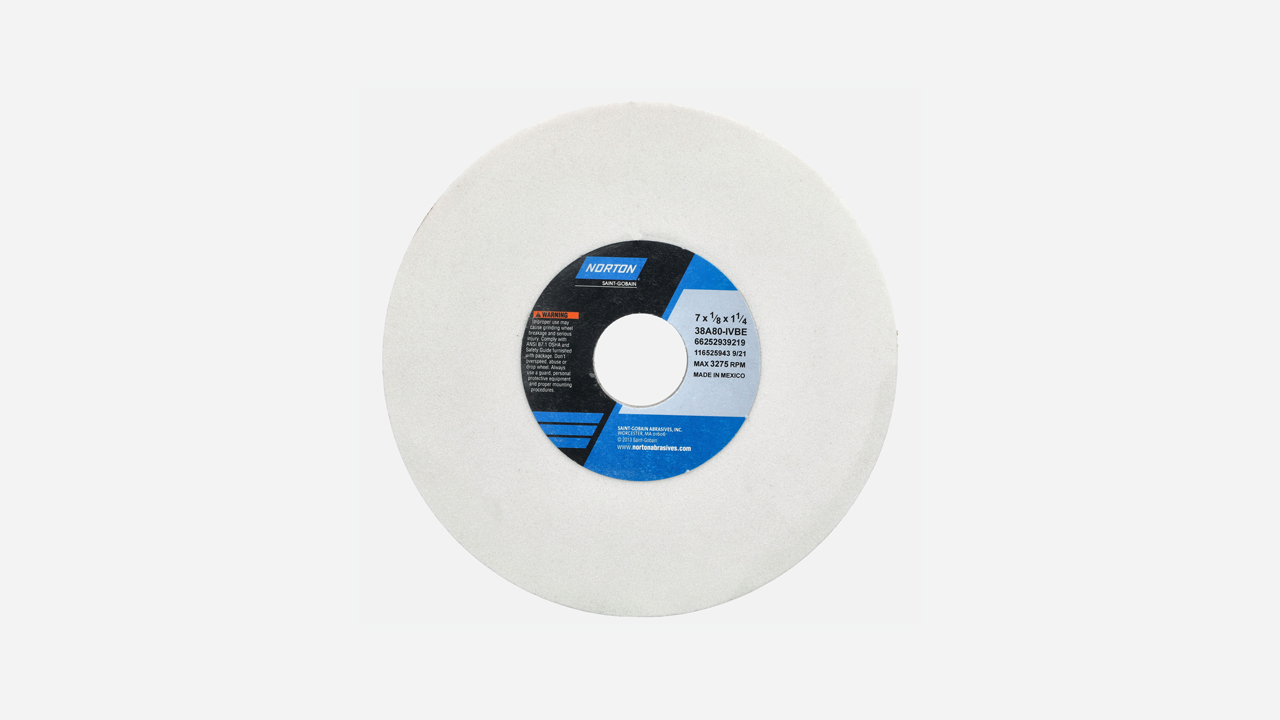
White
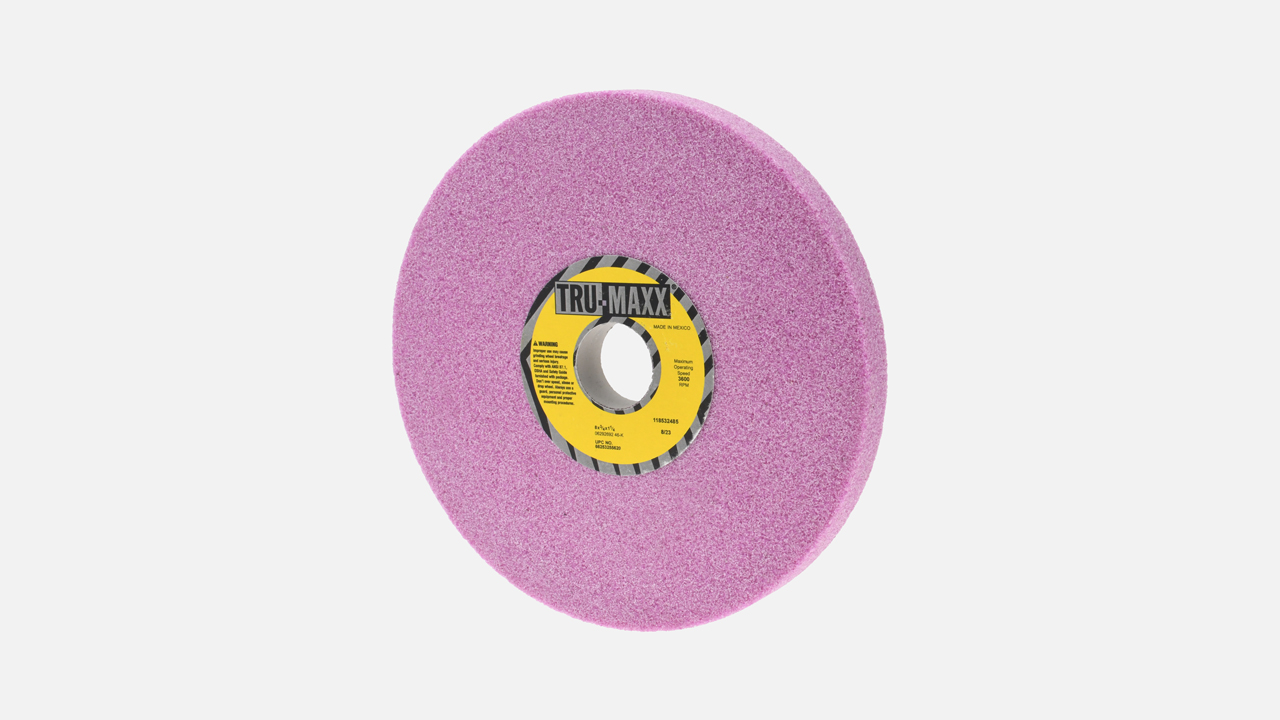
Pink
For light to medium grinding. Made from fused aluminum oxide with chromium and titanium oxide for excellent shape retention. Ideal for alloyed and heat-sensitive steels.
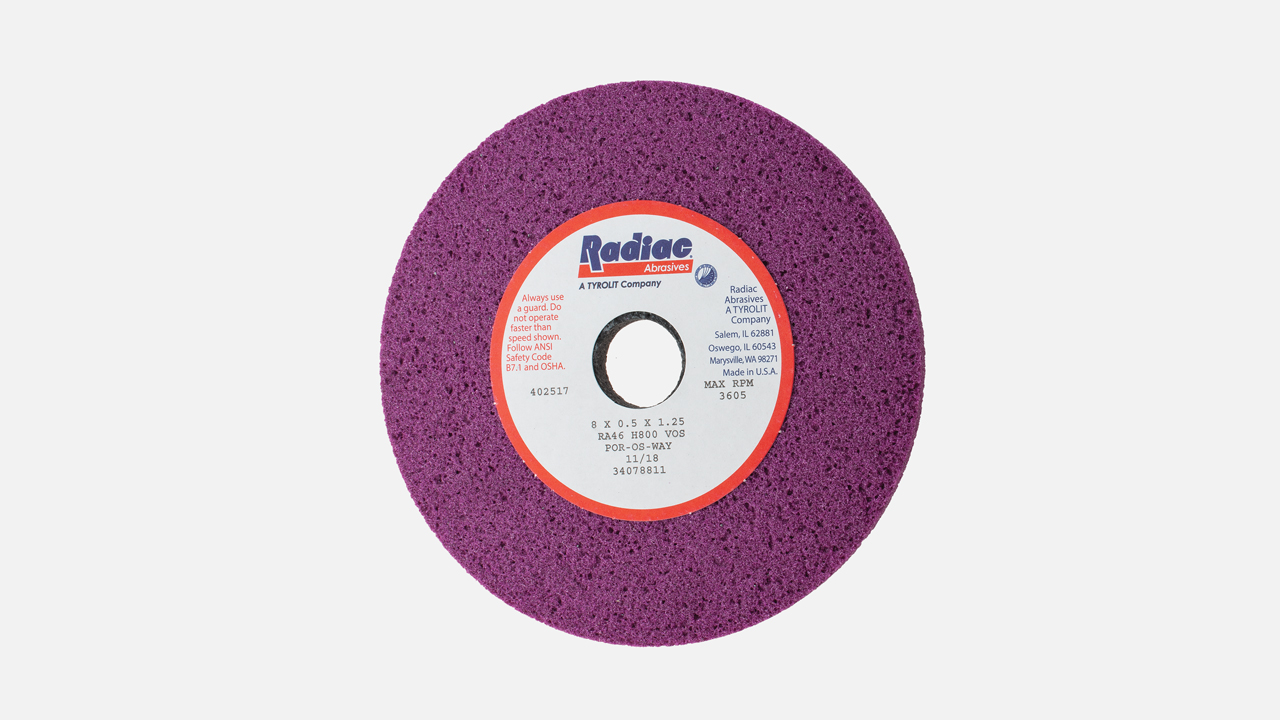
Ruby
For medium to heavy grinding. Made from high-purity calcined alumina fused with chromium oxide, offering excellent form retention and versatility for a wide range of tool steels.
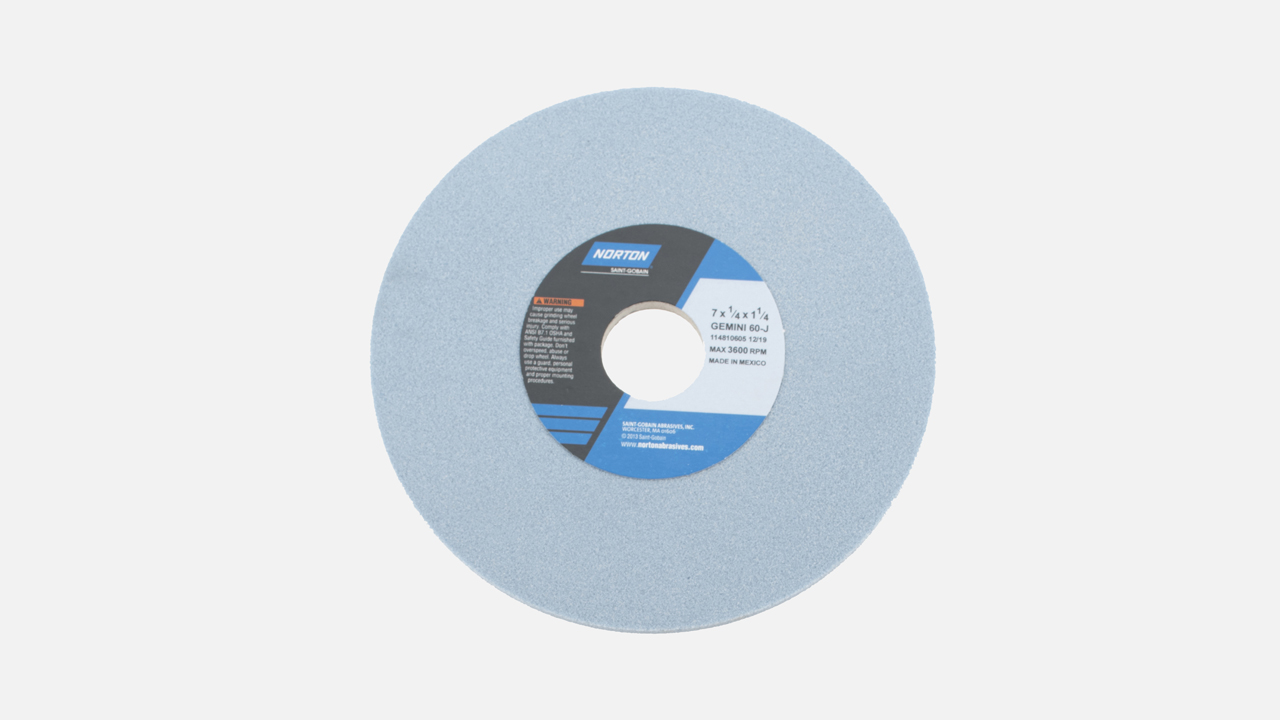
Blue/Gray
For medium to heavy grinding. Made with sharp, monocrystalline, friable aluminum oxide for aggressive cutting, excellent edge retention, and consistent shape. Typically off-white to blue/gray in color.
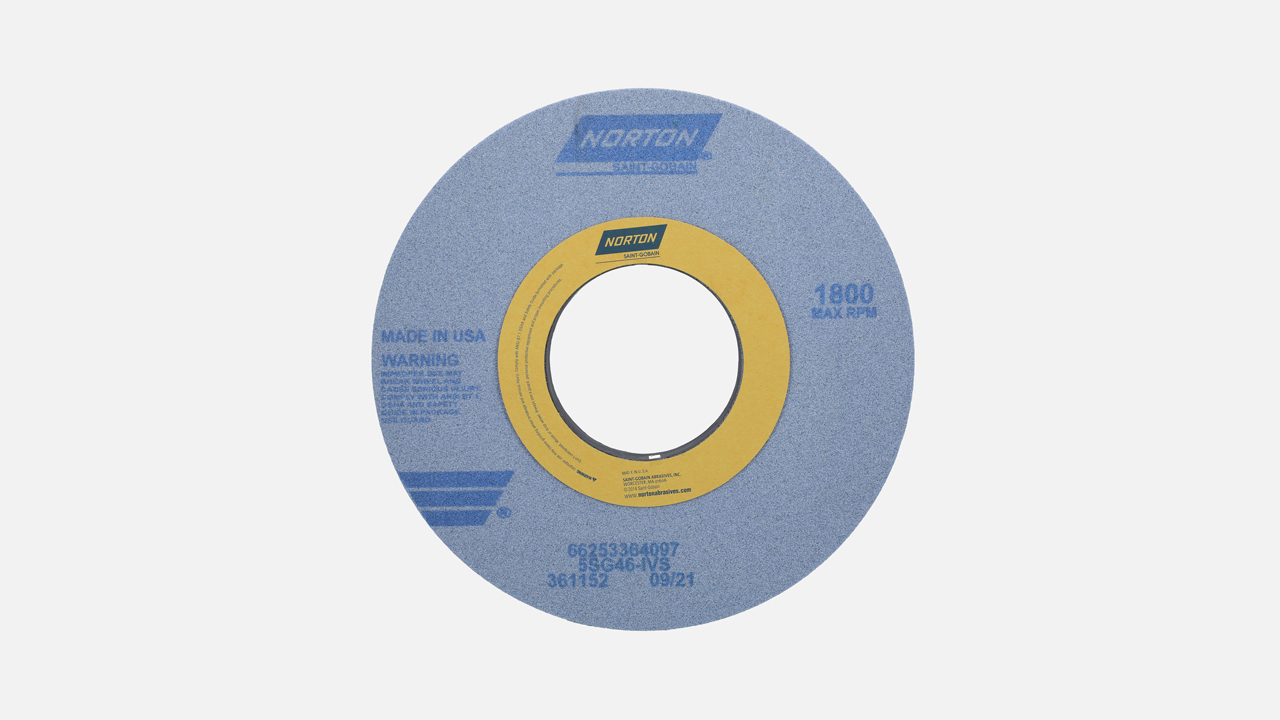
Ceramic
For light to heavy grinding. Made from a ceramic alumina blend, this wheel offers top-tier performance with the highest productivity, fastest stock removal, and longest lifespan—ideal for grinding a wide range of tool steels.
Grade Selection Assistance
Use coarser grits when:
Finish quality is not critical
Rapid stock removal is required
Grinding involves a large contact area
Use finer grits when:
A smooth surface finish is important
Form accuracy must be maintained
Grinding involves a small contact area
Use the grit size chart below to match a grit number to the surface finish and particle size it produces.
Grit Size | Particle Size | Finish RMS | Finish |
|---|---|---|---|
46 | .020 | Over 32 | Industrial |
60 | .016 | 15-20 | Smooth |
80 | .0105 | 12-18 | Fine |
100 | .0085 | 10-15 | Finer |
120 | .0056 | 8-12 | Very Fine |
150 | .0048 | 6-10 | Mirror Finish |
220 | .0026 | 5-6 | Mirror Finish |
Choosing the Hardness of a Wheel
Hardness:
A wheel's hardness is primarily determined by the bond's holding power—the material that secures the abrasive grains. The bond's quantity is the key factor influencing wheel hardness.
Grinding wheel hardness is graded on a letter scale from D through Z, with each letter grouped into a broader hardness category as shown below.
Very Soft | Soft | Medium | Hard | Very Hard |
|---|---|---|---|---|
D, E, F, G | H, I, J, K | L, M, N, O | P, Q, R, S | T, U, V, W, X, Y, Z |
Note: The information in this chart follows industry standards.
The following guide helps determine the appropriate hardness grade, though factors such as stock type, RPM, and desired finish also influence the selection.
Softer Grades | Medium Grades | Harder Grades |
|---|---|---|
Hard metals, such as hard tool steels, carbide | Hard and soft metals | Soft metals |
Rapid stock removal is most important | Balance between rapid stock removal and longer life | Longer wheel life is most important |
Large surface contact | Medium surface contact | Small, narrow surface contact |
Tips For Using Grinding and Cutoff Wheels
1
If the wheel wears too quickly:
Use a harder grade
2
If cutting action is too heavy or slow:
Switch to a softer grade for freer cutting
3
If overheating during cutting
Use a harder or more porous grade for cooler cutting
4
In wet grinding conditions:
Allow for the use of harder grades without burning the workpiece
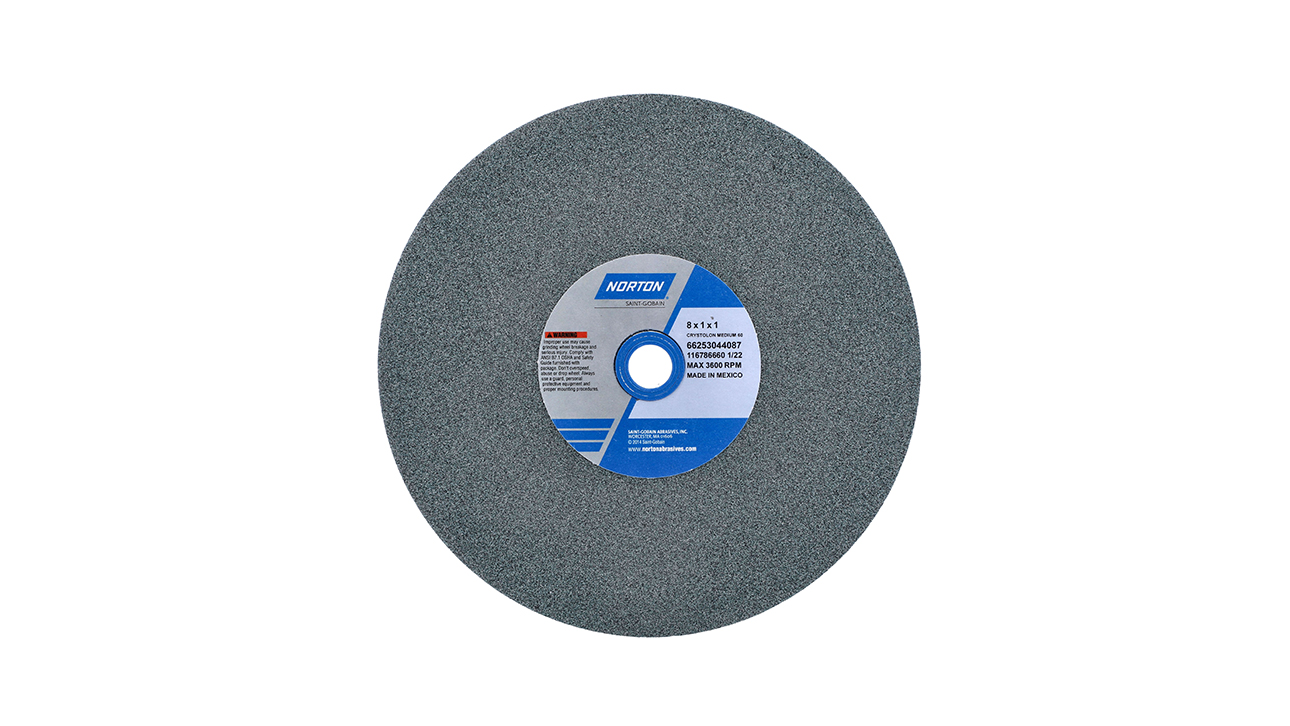
Bench & Pedestal Grinding Wheel Types (Wheels Used for Off-hand Grinding)
- Gray: Made with semi-friable aluminum oxide; ideal for steel applications.
- Green: Made with friable silicon carbide; used for non-ferrous materials and carbide sharpening.
Safety Tip: Always use grinding wheels in accordance with the manufacturer’s safety guidelines.
Grade Selection Assistance
Grit Selection for Aluminum Oxide
36 Grit | Coarse grinding |
46 Grit | Coarse to Medium grinding |
60 Grit | Medium grinding |
80 Grit | Medium grinding |
120 Grit | Fine grinding |
Grit Selection for Silicon Carbide
60 Grit | General Purpose/Rough grinding |
80 Grit | General-purpose grinding |
120 Grit | Fine Finish grinding |
Shop Grinding & Cut-Off Wheels
Frequently Asked Questions
A grinding wheel is generally thicker and designed to remove, shape, or finish material along a surface, while a cutting (or cutoff) wheel is thinner and built to slice all the way through a workpiece in a single pass. Both are made from bonded abrasive grains, but their thickness and edge geometry are optimized for different jobs, grinding wheels for surface work and cutoff wheels for cutting stock to length.
Grinding wheels are made of abrasive grains, most commonly aluminum oxide, silicon carbide, or ceramic alumina, held together by a bonding material. The abrasive type and color (white, pink, ruby, blue/gray, or ceramic) determine how aggressively the wheel cuts and which materials it handles best.
Toolroom grinding wheels, used on surface, cylindrical, and tool and cutter grinders, are typically classified by abrasive color: white, pink, ruby, blue/gray, and ceramic. Bench and pedestal grinding wheels, used for off-hand grinding, are typically gray (aluminum oxide, for steel) or green (silicon carbide, for non-ferrous metals and carbide sharpening).
Based on the grit size chart above, 150 and 220 grit wheels both produce a mirror finish, with 220 grit yielding the finest particle size and smoothest result. Coarser grits like 46 or 60 are better suited to fast stock removal than to finish quality.
The letter grade indicates how tightly the bond holds the abrasive grains in place, from D (very soft) through Z (very hard). Softer grades release worn grains faster, which helps on hard materials and large contact areas, while harder grades hold grains longer for extended wheel life on soft materials and smaller contact areas.
To request a quote, please login to your existing account or register a new one. This helps us provide you with a personalized experience and keep track of your requests.