



Hard hats are used to reduce the force of impact from dangerous materials while on the job. You can find hard hats in full-brim, short-brim, and standard styles.
Hard Hats & Bump Caps: Essential Personal Protective Equipment
Explore the essentials of industrial head protection, such as bump caps and hard hats. Learn about the types, standards, and care tips to ensure safety.
Head protection, such as hard hats and bump caps, is a critical component of personal protective equipment (PPE) in environments with risks of falling or flying objects and impacts. Employees should wear hard hats or bump caps to protect against head and neck injuries. As a core category of head protection PPE, hard hats and bump caps are essential wherever OSHA head protection requirements apply.
OSHA (Occupational Safety and Health Administration) standards require the use of industrial head protection in workplaces where head and neck injuries are possible. To ensure effective impact reduction, all industrial headgear must comply with the latest ANSI Z89.1 requirements for industrial head protection.
Types of Head Protection
Understanding the different types of head protection PPE, from full brim and standard hard hats to lightweight bump caps, helps you match the right headgear to each job site risk.
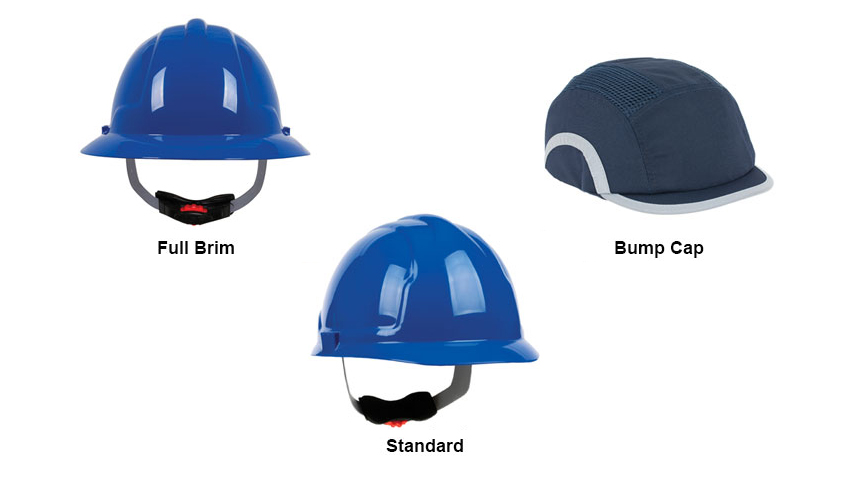
Hard Hats & Bump Caps
Bump caps protect the head from minor bumps, lacerations, and other light injuries. Use them in areas where ANSI-compliant head protection is not required. Bump caps do not protect against falling objects. Some are available with inserts and LED lights on the brim of the cap.
Bump Cap vs. Hard Hat: The key difference is impact protection. Hard hats are ANSI Z89.1 rated to protect against falling or flying objects and, depending on class, electrical hazards, while bump caps are designed only for minor bumps and lacerations in low-clearance areas with no risk of falling objects. Choosing a bump cap in an environment that requires ANSI-compliant head protection can leave workers underprotected.
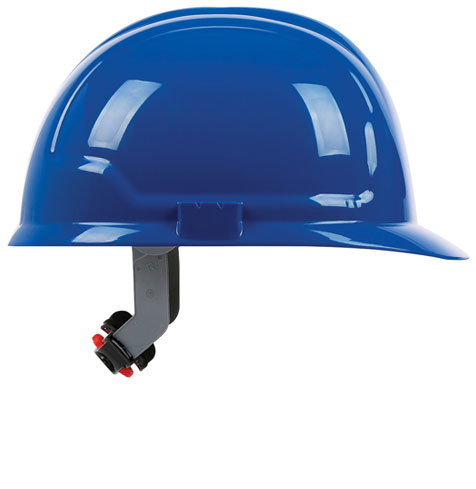
ANSI Type Impact and Protection:
In the latest revision of the standard 289.1-2003, ANSI specifies requirements for two Types and three Classes of head protection. The Type categories define the area of impact and penetration protection.
Type I caps and hard hats provide protection from objects falling overhead, directly onto the top of the helmet. They do not protect from objects that may strike from the side, front, or rear. These are the familiar hard hats of conventional design and constitute the majority of industrial safety helmets. Type I helmets feature impact and penetration resistance, and dielectric performance.
Type II caps and hard hats provide the same degree of protection to the top of the head as Type I. In addition, Type II helmets have an extra layer of shock-absorbing material, which provides a degree of protection against blows to the side, front, and rear of the head. These caps and hats may be useful for workers who are not always working in an upright position.
Classes of Head Protection:
Classes define levels of protection from electrical hazards.
Class C caps and hard hats are conductive and don’t offer electrical protection. They are used where there is no possibility of exposure to electric shock or burn.
Class E caps and hard hats are used for electrical applications and protect against contact with high-voltage conductors. They have the highest rating and are tested at 20,000 volts AC for three minutes. Class E, formerly designated Class B, also meets Class G and Class C regulations.
Class G caps and hard hats are used for general applications and protect against limited electrical shock and burns. They are tested at 2,000 volts AC for one minute. Class G, formerly designated Class A, meets Class C regulations.
*Note: The voltages listed above are not intended to be an indication of the voltage at which headgear protects the wearer. It indicates only the level at which they are tested.
Because bump caps are not ANSI-classified for impact or electrical protection, a Class C, Class E, or Class G hard hat is only necessary when there is a real risk of falling objects or electrical shock. For environments with only minor bump exposure and no electrical or falling object hazards, a bump cap is generally the appropriate choice instead of a classed hard hat.
Hard Hat Accessories Tip
Manufacturers design some models of bump caps and hard hats that can support accessories, such as face shields and hearing protectors. Ensure that these additions do not adversely affect the product's original degree of head protection, particularly the use of accessories with metal parts, which may affect the voltage protection capabilities of Class G and Class E head protectors.

Suspension Types:
• Suspension: Suspension indicates the number of clips used to attach to the shell of the hard hat. Manufacturers offer suspensions in 4, 6, and 8-point systems. Replacement suspensions with more points can increase the comfort of the hard hat by displacing the shell’s weight across the wearer’s head. Most protectors have crown straps that form the cradle suspension. In addition, adjustable headbands and brow pads help cradle the forehead and absorb perspiration.
• Pinlock Suspensions: Work by inserting a strip with pre-distanced pins into a holder with pre-distanced holes.
• Ratchet Style Suspensions: Designed with a knob on the back end for turning and locking into place. Replacement suspensions should only be from the original manufacturer of the hard hat or bump cap.

Shell Materials:
Shells are water-resistant, slow-burning, and non-irritating to the wearer's skin. They are molded from tough materials, including:
• Acrylonitrile Butadiene Styrene (ABS): High-quality plastic that is hard, tough, and chemical-resistant. It is commonly used in welding environments.
• High-density Polyethylene (HDPE): Durable and lightweight material made from petroleum and commonly used in electrical environments.
• Polyethylene: Made from a derivative of petroleum and natural gas. It is lightweight, tough, and used in electrical and construction environments.
• Fiberglass: Made of lightweight material that is resistant to cracks, warps, and scratches. It is commonly used in high-temperature environments.
• Para-aramid Composites: Extremely lightweight, endure high temperatures, and are resistant to cracks and chips. It is commonly used in construction, drilling, and refinery environments.
• Plastic: Lightweight, tough, and used in general-purpose environments.
The Use, Care, and Replacement of Bump Caps & Hard Hats
Replace bump caps and hard hats periodically to ensure they continue providing protection. Proper use and care ensure a longer lifespan. Some suppliers recommend replacing suspensions every 12 months and the complete unit every five years.
Important precautions when caring for safety caps and hats:
• Increase your feed.
• Avoid the use of adhesives, paints, or cleaning solvents. These may attack and damage the shell, reducing its level of protection. Clean the shell with mild detergent and warm water.
• Avoid exposure to extreme heat or cold and excessive sunlight, such as in the rear window of a car.
• Visually inspect the bump cap or hard hat daily for signs of wear, dents, cracks, or other damage.
• Replace the shell when signs of damage or wear occur or if it has been subjected to impact.
• Replace suspensions and brow pads when damage or excessive wear is detected.
Shop Hard Hats
To request a quote, please login to your existing account or register a new one. This helps us provide you with a personalized experience and keep track of your requests.