



A vise is a device that secures objects during work processes. It features one stationary and one movable jaw, which may be brought together or separated via screws, levers, or other mechanisms to hold workpieces firmly in place.
Vise Guide: Types, Uses and Safety Tips
Explore the different types of vises, their uses and essential safety tips in this detailed guide. Learn how to choose and use a vise for your projects.
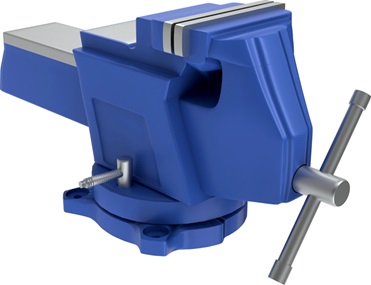
Vises
A vise, sometimes spelled vice outside the United States, works by tightening a screw, lever, or other mechanism to bring the movable jaw toward the stationary jaw, clamping the workpiece securely in place so it can be cut, drilled, filed, or otherwise worked on with both hands free.
Pictured: Bench Vise
Types of Vises
There are several types of vises available, each designed for a specific holding task, material, or level of precision.
Types of Vise Jaws
Safety Tips for Using a Vise
DO’S
Always wear safety glasses or a face shield when using striking or power tools on a workpiece held by a vise.
Mount the vise securely, with bolts in all base holes and lock washers under the nuts.
Position the stationary jaw slightly beyond the edge of the workbench to avoid interference with clamped work.
Ensure the workbench is firmly secured to its base.
Inspect vises for cracks or other damage before use.
Place the workpiece in the vise so the full clamping surface of the jaws supports it.
Use a vise large enough to hold the workpiece without strain.
Keep the workpiece as close as possible to the vise jaws to minimize vibration during operation.
Support the end of long workpieces with an adjustable stand, sawhorse, or box to reduce strain on the vise.
Keep all moving parts clean, oiled, and free of debris.
Use vise jaw liners to prevent marking delicate or finished surfaces.
Replace bent handles and worn jaw inserts immediately.
Refer to the manufacturer's instructions for specific guidelines.
DON’TS
Never weld or repair a vise by brazing.
Do not try to bend a heavy rod in a light vise.
Do not cut into the jaws.
Do not apply heavy pressure at the vise jaw corners.
Avoid using handle extensions to increase clamping pressure.
Do not hammer the handle to tighten beyond normal hand pressure.
Never use vise jaws as an anvil or exceed their designed opening capacity.
Do not operate the vise with even the slightest crack.
Frequently Asked Questions
A vise, also spelled vice, is a device that secures objects during work processes. It has one stationary jaw and one movable jaw that are brought together by a screw, lever, or similar mechanism to hold a workpiece firmly in place.
A vise is used to hold a workpiece steady so it can be cut, drilled, filed, welded, or otherwise worked on without slipping, freeing up both of the user’s hands for the task.
Turning the vise’s handle drives a screw or lever mechanism that moves the movable jaw toward the stationary jaw, clamping the workpiece between them with enough pressure to hold it steady during work.
A bench vise is a general-purpose vise mounted on a table or workbench for everyday clamping tasks, while a machine vise is mounted directly to a machine table, such as on a mill or drill press, to hold workpieces at precise, repeatable positions during machining.
Vise caps, or jaw covers, should be used when clamping delicate, finished, or precision parts, since they add a protective layer between the jaws and the workpiece to prevent marring or damage.
A bench vise is used for general-purpose clamping tasks like sawing, filing, drilling, and assembly work, making it one of the most common vises found in home and professional workshops.
Vise is the standard spelling in the United States, while vice is common in British English for the same tool. Both terms refer to the same clamping device.
To request a quote, please login to your existing account or register a new one. This helps us provide you with a personalized experience and keep track of your requests.