



Shop all our special offers today -
Shop Now
Service & Floor Jacks
2 items returned
Loading

Applied Filters
Category:
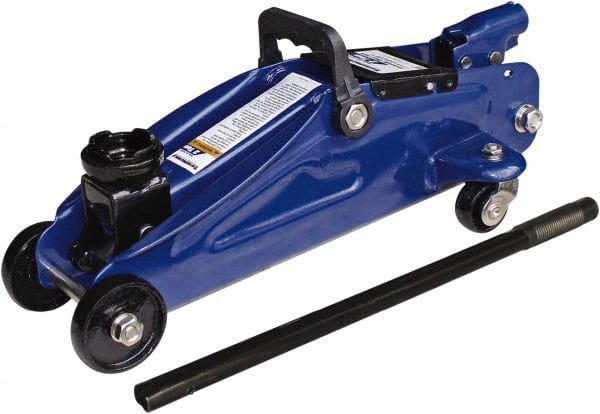
In Stock
Web Price
$65.61 / ea.
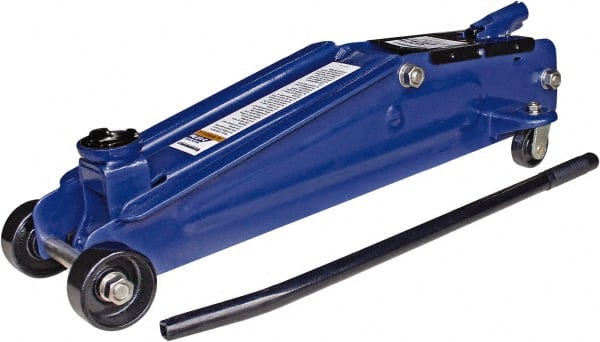
MSC#
35732122
Mfr#
TH22504
Ships from Supplier.
Expected to ship within 4 Business days
Web Price
$192.53 / ea.
Have a question?
We're here to help
Top Sellers
Lift with Confidence: Floor Jacks Tips and Tricks
Floor jacks enable the lifting of heavy loads that would be unmanageable manually. They significantly reduce the risk of accidents associated with lifting heavy objects. However, they come in a wide variety of types, and selecting the right one for your specific use case is crucial for ensuring safety and efficiency. This article explains how different types of floor jacks are best suited for specific applications and offers best practices and safety tips.
Use Cases and Recommendations
Different applications present unique lifting challenges, and having the correct floor jack ensures safety, efficiency, and reliability. Below are some typical applications and the recommended types of floor jacks.
Vehicle Maintenance
Use a hydraulic jack to safely lift vehicles for tire changes, brake work, undercarriage inspections, and other maintenance tasks. Hydraulic jacks use a hydraulic cylinder to lift and lower heavy loads smoothly and efficiently. A load capacity of 3 tons is suitable for most vehicle maintenance tasks, ensuring it can handle a variety of vehicle weights safely.
Industrial Equipment Repair
Use a high-tonnage jack to lift and stabilize heavy industrial machinery for repair and maintenance. While hydraulic and high-tonnage jacks use hydraulic systems to lift loads, high-tonnage jacks are built with more robust materials and larger hydraulic systems to handle loads exceeding several tons. They are generally more substantial and less portable than standard hydraulic jacks. Choose a high-tonnage jack with a capacity that meets or exceeds the weight of the machinery to ensure it can handle the load without risk.
Forklift Maintenance
Forklift jacks are designed specifically for lifting forklifts and can handle these vehicles' unique shape and weight distribution. They are typically low-profile jacks with a broad base to accommodate the forklift's frame, ensuring stability and safety during maintenance. A forklift jack with a load capacity of at least 3 tons is ideal, providing sufficient lifting power for most forklifts.
Transmission Work
The challenge for removing or installing a transmission is to lift and position it accurately. A transmission jack features adjustable saddles and tilt mechanisms for precise alignment and positioning. Choose one with an adequate load capacity, typically around 1 ton, to ensure it can handle the weight of the transmission while providing the necessary maneuverability.
Low-Clearance Vehicles
Lifting low-clearance vehicles, such as sports cars, presents a unique challenge. A low-profile jack slides under vehicles with minimal ground clearance, allowing for safe and effective lifting without damaging the car's undercarriage. These jacks are typically compact and feature a high lifting range to accommodate low-clearance vehicles. Ensure the jack has a load capacity of at least 2 tons to handle most low-clearance vehicles, providing sufficient lifting power while fitting under the car.
Best Practices and Safety Tips
Incorporating the following technical guidelines into your practices ensures that your floor jacks remain reliable, efficient, and safe for all lifting operations. Here are some essential tips:
Never rely solely on the floor jack for support, as it can lead to dangerous situations if the jack fails. Always use jack stands to support the vehicle or equipment after lifting with a floor jack.
Inspect the jack before each use to ensure it is in good working condition and free from defects. Check for wear, leaks, and proper function of all moving parts.
Ensure the jack is placed on a stable, level surface to prevent it from tipping. A broader base provides better stability, reducing the risk of the jack tipping during use.
Position the jack correctly under the manufacturer's recommended lifting points to avoid damage and ensure stability. The saddle should be large and well-cushioned to distribute the load evenly and prevent damage to the lifting point.
Always wear safety gear, including gloves and safety glasses, to protect yourself from hazards while operating the floor jack.
Familiarize yourself with the jack's operating manual and follow the manufacturer's guidelines for safe use. Understanding the hydraulic system's pressure ratings and operational range can prevent misuse and potential failures. Use pressure gauges to monitor hydraulic pressure and ensure it stays within safe operating limits.
Never exceed the jack's rated load capacity. Overloading can cause the jack to fail and lead to accidents. Apply a safety factor when selecting a jack, using one rated higher than the actual load for added safety.
Lift and lower loads slowly and steadily to maintain control and prevent sudden movements that could destabilize the load or cause the jack to slip.
Know the emergency procedures for your jack. Learn how to release the loads safely during an emergency.
Be aware of the temperature tolerance so the jack can operate effectively. Extreme temperatures can affect the viscosity of hydraulic fluid and the performance of seals and gaskets, impacting the jack's efficiency and safety.
Adhere to a regular maintenance schedule. Ensure your floor jack remains in optimal working condition by routinely inspecting it for leaks, wear, and proper lubrication. Periodically check the hydraulic fluid level and quality, as contaminated or low hydraulic fluid can hinder performance and lead to potential failures. Follow the manufacturer’s recommendations for replacing seals and gaskets to maintain peak performance.
