The human body is remarkable. It converts food to energy to fuel everything we do; it heals after a paper cut or broken bone and regulates temperature in different weather conditions. The typical body temperature is just about 98.6°F. However, extreme environmental temperatures can put the body at risk. In situations where cold temperatures are present, significant health risks are possible if your body temperature starts to dip below the norm. A substantial drop in body temperature, known as hypothermia, can happen due to prolonged exposure to cold. And if you find yourself in that condition, you'll need to start taking measures to lift your body's temperature quickly.
This article will review what hypothermia is and what usually causes it. You also will learn the symptoms of each stage of hypothermia and how to prevent the unsafe cooling of the body's core temperature. Finally, we'll discuss the PPE types you should consider wearing during winter weather to keep yourself protected.
Definition
What Is Hypothermia? For starters, it is a real risk for anyone exposed to cold weather for extended periods. Hikers, skiers, and other outdoor enthusiasts can experience hypothermia. It is also a common risk for the homeless, the very young and very old, or anyone working on a job site when the temperatures start to fall. But what is it exactly? Hypothermia results from a significant drop in your body's core temperature. It can quickly become a severe medical emergency if the body begins to lose heat faster than it can recoup it, resulting in a core temperature below 95°F. Hypothermia occurs most commonly in cold weather or when someone is immersed in chilly water for a prolonged period.
Causes and Symptoms
Extended exposure to cold water or air temperatures causes hypothermia. When the thermometer falls, your body starts to lose heat in the cold conditions faster than it can produce it—and you can no longer recover your core temperature using your energy. This deficit can become dangerous after an extended period; your overall body temperature drops as you begin to lose your stored energy. Without adequate heat, the body begins to shut down. Hypothermia can begin to set in even if temperatures don't seem severe. A combination of cool temperatures and an individual who is chilled from rain or sweat can lead to hypothermia.
It's important to remember that it doesn't take biting cold weather to cause hypothermia; just cool weather is enough to lower the body's temperature if you're not prepared with the proper protection. It can even happen on a cool night while standing or sitting outside—hypothermia creeps up on you.
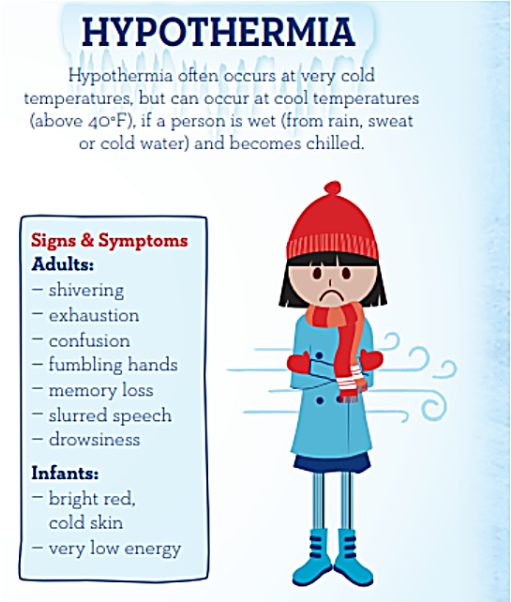
Symptoms of hypothermia include shivering, shallow or slow breathing, slurred speech and loss of coordination, exhaustion; a slowed or weak pulse, confusion, loss of consciousness, and even memory loss.
The symptoms of hypothermia depend on how severe it is—which means that each case of hypothermia might look a little different. Mild hypothermia may result in loss of motor skills, uncontrolled shivering, slowed circulation, difficulty concentrating, a sense of pain, or a noticeable decrease in the skin's temperature. More severe hypothermia can be identified by amplified symptoms, including the sudden absence of shivering, dilated pupils, confusion, fatigue, and loss of consciousness.
It's crucial you know the symptoms of hypothermia, so let's look at what is likely to happen in each of the stages. It is important to note that symptoms may differ from individual to individual, but any of these symptoms should prompt immediate action to increase warmth and raise the body's temperature.
The Stages of Hypothermia: Mild Versus Severe
The colder a person's core body temperature is, the more severe their hypothermia. Experts generally identify three levels of hypothermia: mild, moderate, and severe. As hypothermia becomes more severe, so too do the side effects—and the danger increases as well.
Typical Winter Cold
If you're outside in the winter elements, you may feel some sense of cold. However, hypothermia is a lot riskier than just cold fingers and toes.
Mild Hypothermia Signs
At this first stage of hypothermia, the body's core temperature is somewhere between 95°F and 96.8° F. The person may be shivering involuntarily and may lose the ability to perform complex motor skills, even if they can still walk and talk. Victims may not realize right away that hypothermia is setting in because the cold weather is affecting their ability to think clearly.
Many people report feeling confused and foggy when experiencing mild hypothermia. As hypothermia progresses, it becomes harder and harder to move well.
Moderate Hypothermia Signs
At this stage, the victim's body temperature drops to somewhere between 91.4°F and 95°F, and they may experience a lowered level of consciousness, loss of fine motor skills (especially in the hands and feet), slurred speech, violent shivering, and behavior that does not make sense.
Severe Hypothermia Signs
When severe hypothermia risk temperature sets in, the body drops below 91.4°F. The skin becomes pale; shivering happens in waves, then finally stops because the energy stored in cells in the muscles cannot keep up with the body's plummeting temperature. People with severe hypothermia experience muscle rigidity, dilated pupils, and a slowed pulse before the body slips into hibernation. This means the blood flow, breathing rate, and heart rate all slow, and the victim will lose consciousness and likely suffer from cardiac arrhythmia. This increases the chances that their heart could stop completely.
How to Treat Hypothermia?
At every stage, the goal of treating hypothermia is to increase the body's core temperature to a safe level. This may mean changing from wet into dry clothing, finding shelter, and preventing heat loss through radiation, convection, and conduction heat. Victims of moderate and severe hypothermia will require external heat sources, but these must be introduced carefully to avoid shocking the body.
Mild
Mild hypothermia may be treated with basic measures before seeking additional medical treatment from trained professionals. This can include sharing body heat with another person or donning a foil blanket or a space blanket to retain body heat. Other preliminary treatment measures may be using warm compresses on the neck, chest, and groin to help raise the body's temperature. Be careful when doing this, however, as the victim may not be able to accurately gauge how hot the compress is and could burn themselves. Drinking warm and sweet liquids can also assist in raising the body temperature of those dealing with mild hypothermia. The warm liquid can help increase the core temperature, and the added sugar can restore some of the depleted cellular energy lost in trying to stay warm. Again, be careful that the liquids are warm and not too hot.
Severe
In its most severe instances, hypothermia calls for life support measures to revive the patient, involving resuscitation and monitoring their overall cardiac performance. These are best administered and monitored by health professionals. If the patient still has a very low core temperature, they may need to be warmed before these lifesaving measures can be effective. Patients with severe hypothermia will likely be unconscious and unresponsive to external stimuli, with small but detectable signs of life like a faint pulse or slow breathing. They may need further treatment to bring their body temperature back to a safe, healthy level, including warm intravenous fluid, warm and humid oxygen treatments, warming blankets, and other warming measures.
Continue reading this blog in its entirety to learn about PPE solutions from MCR Safety to help you prevent hypothermia and combat the cold winter months.
This article was previously featured on MCR Safety's blog.