Looking for full transcript of video? Read now
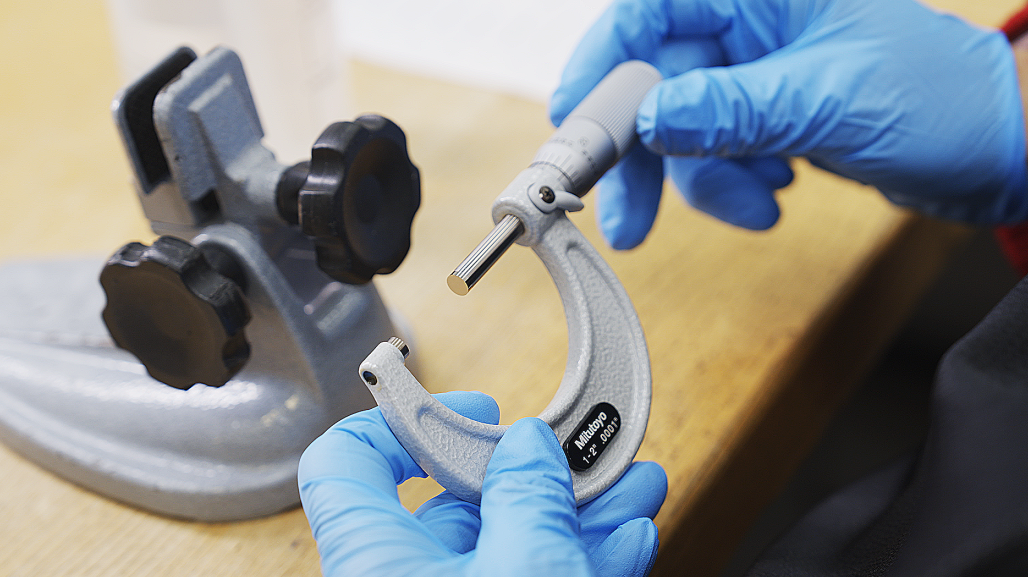
Calibration is more than a sticker or a compliance requirement. In this episode of MSC Industrial Supply’s How To, Jacob Sanchez visits the Mitutoyo calibration lab to explore what calibration truly means and why it matters for every machinist, inspector, and quality team.
Many manufacturers think of calibration as paperwork or simple tool adjustment. In reality, calibration is about understanding measurement error, evaluating equipment performance over time, and maintaining traceability to national standards such as NIST. When done correctly, calibration builds a documented history of your measuring instruments and provides insight into how they are performing in real-world shop conditions.
Joined by Dr. Jim Salsbury and Pat Sullivan from Mitutoyo, Jacob breaks down key concepts, including as-found and as-left data, calibration intervals, and the importance of traceability. As-found data captures the condition of the instrument when it arrives for calibration. As-left data documents its condition after any necessary adjustments. Together, this information creates a performance record that allows manufacturers to monitor trends, identify risk, and make informed decisions before small issues become costly problems.
Inside the calibration lab, viewers see how Mitutoyo supports three primary customer groups, including field service teams, end users with their own gauge blocks, and customers purchasing new small tools that require accredited calibration certificates. The episode also explains how traceability flows from NIST to calibration labs and ultimately into manufacturing facilities across the country. This traceability chain is essential for proving process accuracy and maintaining confidence in measurement data.
Lastly, the team addresses a common misconception. Simply replacing an out-of-calibration tool with a new one does not preserve measurement history. Without documented calibration data, manufacturers lose valuable insight into process stability and long-term performance.
Ultimately, calibration is about reducing risk, improving consistency, and ensuring that the data driving your business decisions can be trusted. Accurate measurement supports quality, strengthens process control, and builds confidence across the shop floor. Whether you are managing quality systems or running machines every day, this episode demonstrates how proper calibration practices protect your process from day one through the full lifespan of your tools.
For even more insights and expertise, check out MSC's Knowledge Center.
“How To” is a video content series from MSC Industrial Supply developed to serve as a resource for all those who work in, support, and have a passion for the metalworking sector of the manufacturing industry. Through How To, you’ll gain hands-on, practical advice from industry experts currently working in the field. At MSC, we are dedicated to providing real-world, practical advice to improve your day-to-day operations.
For more How To videos, check out our MSC How To playlist and subscribe to our YouTube channel.
And check out our other show, Tooling Up, on the MSC Tooling Up playlist.
And subscribe to our channel.
Video Transcript
JACOB SANCHEZ: If you work in manufacturing, you know calibration just needs to get done. But, that can lead to a lot of the misconceptions we have around calibration. To some people, it's all about that paperwork. To others, you're just adjusting tools. But we need to understand that calibration is more than just compliance. It's about ensuring accurate measurements for every single job.
So I'm here, back with the Mitutoyo team, and we're going to be uncovering a few things—misconceptions around calibration, what calibration really means, and how it leads to consistent, accurate measurements for the lifespan of your tools. So if you're ready, I'm ready. Let's start learning about how to understand calibration and why it matters.
As a machinist, we rarely get to step into the metrology world at this level. We're heading into the Mitutoyo Calibration Lab, where we're going to get to check out how measurements are actually established. Let's go check it out.
Hi, are you Doctor Jim?
DR. JIM SALSBURY: Hey Jacob! How's it going? Yeah, welcome to the Mitutoyo metrology lab.
JACOB SANCHEZ: Beautiful facility. I'm very excited to be here. So this is THE Dr. Jim Salsbury from the Mitutoyo team. He is the Senior VP of Services here at Mitutoyo. And we have a question for you. I want you to kind of unravel the calibration world a little bit for me and help me understand why machinists should care.
DR. JIM SALSBURY: Yeah. So there's a lot of confusion about what calibration is out there. A lot of people think of calibration as just the sticker or the label that's on measuring equipment. Or sometimes they think calibration is really only about adjustment of measuring equipment, but calibration is really about understanding and measuring the errors of the measuring equipment over time.
JACOB SANCHEZ: So it sounds like it's really about the performance of that equipment out in the shop.
DR. JIM SALSBURY: Yes, the performance and the performance over time as well. The stability of equipment. So when we receive something to be calibrated, the first thing you do is you evaluate its current status. That's called the as-found or as-received condition. And you want to do that before you make any adjustments so you understand some of the history of the measuring equipment.
Then you do the as-left measurements. And that together combined is all about the calibration of the measuring instruments. And you use that to get some history of the equipment.
JACOB SANCHEZ: Hey, Patrick.
PAT SULLIVAN: Hey, Jacob.
JACOB SANCHEZ: Good to see you again! This is our friend Patrick Sullivan, the National Account Manager here at Mitutoyo. He's representing all of you amazing customers out there. And, Patrick, we have a question for you. What is up with all of the confusion out on the shop floor when it comes to calibration?
PAT SULLIVAN: Yeah. You know, here at Mitutoyo, we love telling the story about quality. But not only quality, but traceability right? That's a big part of what we do. You know, it's much more than just paperwork. There's a reason behind all this. We're not just trying to be a pain or your quality guy. You know, my dad was a quality guy back in the 80s, right?
And. And he was. They just thought, you know, he was the guy that brought the bad news. They called him a rain cloud. You know, in heavy regulated industries like gas and oil and aerospace right, you want to make sure the parts you're making, you’re making them as best you can, right. With calibration, that helps you understand your process better and also proves your process.
That's a big part of it. That's why you're following accreditation because you're proving your process, proving your accuracy right. A lot of our customers, there's some misconception like, if your tools are out of calibration, you can just buy a new tool that's calibrated. MSC, we sell a ton of tools, calibrated tools through MSC. And yes, you're getting a tool, and you're verifying the accuracy, but you're losing that traceability link, right?
Now, you have no idea where you were. We just have a new tool, and you're basically just starting over. So a big part of calibration and quality is proving your process and understanding where you're at.
JACOB SANCHEZ: Yeah. And I want to say, for all the shop owners out there, I don't know about you, but I cannot afford to just replace equipment because we think it's outdated and we need to buy the latest and greatest widget. I don't know, that won't work for me. But I like what you said about learning more from Dr. Jim.
I think that understanding calibration starts at the very beginning, and keeping it in your shop as a foundation throughout the lifetime. So, I'm going to go start my foundational learning on calibration out in the lab with Dr. Jim.
PAT SULLIVAN: Yeah.
JACOB SANCHEZ: Thanks for having me.
PAT SULLIVAN: Yeah. Good seeing you again, Jacob.
JACOB SANCHEZ: Talk to you later.
So, Dr. Jim, this is it. This is the calibration lab. I want you to dive into a little bit for me. What actually goes down in the calibration lab?
DR. JIM SALSBURY: Well, welcome to the calibration lab. The ‘big lab’, as we call it. In this facility, we have three primary groups of customers. Our biggest customer is our own field service departments. All of the gauges that our field service team uses all across the country to calibrate Mitutoyo equipment all come back here to be calibrated. So examples like this step gauge or check master on this Legex Takumi CMM....
That is field service owned gauge that will go from here to a customer site to be used for the calibration of customers' own equipment. Then we have a lot of the end users that own their own gauges like this, where they have lots of gauge blocks. We calibrate tens of thousands of gauge blocks in this lab every single year.
And those are mostly other calibration labs or large organizations that are looking to bring traceability into their facility through those gauges. Then the third big customer we have is for new small tools. So those aren't done here. That was another room that we are in, and those small tools, people are looking for this accredited calibration certificate, even on a new tool.
So when they receive that tool from us through partners like MSC, they open up that box and inside is the tool and this accredited calibration sticker and certificate, and that instrument is ready for day one use. At this laboratory, we get all of our masters calibrated at a place called NIST. And so NIST is, traceability to NIST, is sort of a term a lot of people use.
And so NIST creates the meter, they realize it for us. They transfer it to gauge blocks, they calibrate our gauge blocks, and then lots of other regional laboratories calibrate, we calibrate their gauge blocks, and then they use those to calibrate other IMs across manufacturing. And so those from NIST to us, to lots of regional labs to, to all U.S. manufacturing.
JACOB SANCHEZ: Nice. And within that, there has to be at least some type of search for these errors, whether it's an error in the equipment, whether it's an error in the process on the shop floor. Does that help with that?
DR. JIM SALSBURY: Yeah, that's the other side of calibration. So calibration really is known for it has to be traceable. That's really critical. Then we have to look for the errors. We have to be strategic and look for the errors in measuring equipment all the time. And that's where we get back to that as-found, as-left data that we talked about earlier.
So when something comes in here, the first thing you want to do is record the as-found data. And that gives us an idea of the performance prior to coming here. And then after that, we will do any adjustments that need to be done or maintenance. And then we do the as-left calibrations. And that sort of kicks off the next calibration interval.
Creating that history over time where customers can look for trends in their calibration data and that enables them to reduce risk and hopefully identify problems before it becomes a big problem for them in manufacturing.
JACOB SANCHEZ: Dr. Jim, let's talk about those machinists, the inspectors, quality teams in general. How do some of the things we've talked about today affect their day to day at the shop?
DR. JIM SALSBURY: Yeah, that's a really good question, Jacob. So it's really about getting confidence in your data. It's about reducing risk. Everyone wants data that they can trust to make decisions, whether they're cutting material or evaluating a process capability. You need data that you can trust and calibration helps bring that to you. It helps give you that reliability and your measuring equipment to trust the data so you can make good business decisions.
JACOB SANCHEZ: I hope you caught on to that. Calibration, for what I'm hearing, leads to trust in your processes. It can also build confidence in your team and your department all throughout your shop to help you get the job done.
Today's been all about the foundations around calibration. We dove into misconceptions around calibration. We got to learn more about how calibration is really used out in the field, and more importantly, how calibration leads to consistent and accurate measurements for the lifespan of your tools. And lucky for you, the learning doesn't stop here. We're going to be taking everything we practiced today and putting them into live demonstrations here in this lab, in a different episode at a later date.
So you're going to have to stay tuned. But as for today, thanks for joining me and learning how to understand calibration and why it matters.
Narrator: For more metalworking tips and industry best practices, stay tuned for the next How To episode and subscribe to the MSC Industrial Supply YouTube channel, a source of original manufacturing content Built To Make You Better.