Milling Tips: Insert Geometry
In milling, selecting the proper insert geometry is an important decision because it affects many parameters from stability to surface finish and power consumption.
Watch time: 1:42 minutes
Watch time: 1:42 minutes
Supplier:
Sandvik Coromant
Posted date:
Mar 10, 2026
Posted date:
Mar 10, 2026
Looking for full transcript of video? Read now
In milling, selecting the proper insert geometry is an important decision because it affects many parameters from stability to surface finish and power consumption. Learn more in this short video.
This video was previously featured on Sandvik Coromant's YouTube channel.
Browse Milling Inserts From Sandvik Coromant
Video Transcript
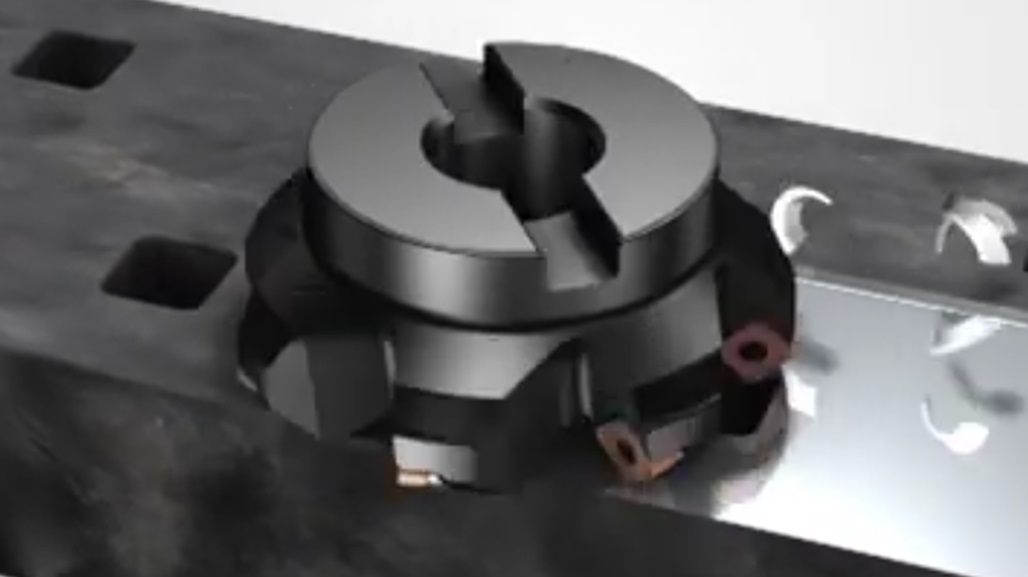
In milling, selecting the proper insert chip breaker is an important decision because it affects many parameters from stability to surface finish. In this episode, we’ll discuss the importance of selecting the correct insert geometry and its effect on the machining process.
Milling inserts are generally designed with three different chip breakers or geometries. In this animation we have the three geometries, L or Light, M or Medium, and H or Heavy.
Some materials are very sticky so you need a light geometry with a sharp edge, while other materials are very abrasive, requiring a stronger edge. This is one of many reasons why choosing the correct geometry is very important.
M, or medium geometry, should always be your first choice for general-purpose machining and mixed production.
L, or light geometry, is best suited for light cutting operations and generating surface finish. It has a sharp positive edge and generates low cutting forces.
H, or heavy geometry, due to its strong edge is ideal for unstable conditions such as interrupted cuts.
In summary, based on material type, cutting conditions and component features, it's always important to pick the right insert geometry for your application. For more smart tips, contact one of our specialists or visit us at the Sandvik Coromant web site.