Osborn’s Weatherstripping Brushes Limit Debris and Limit Energy Loss
Learn how the SEALEZE line of weatherstripping brushes helps manufacturers reduce air infiltration, improve energy efficiency and tackle everyday facility challenges.
In a manufacturing or distribution facility, doors are a critical part of the building envelope.
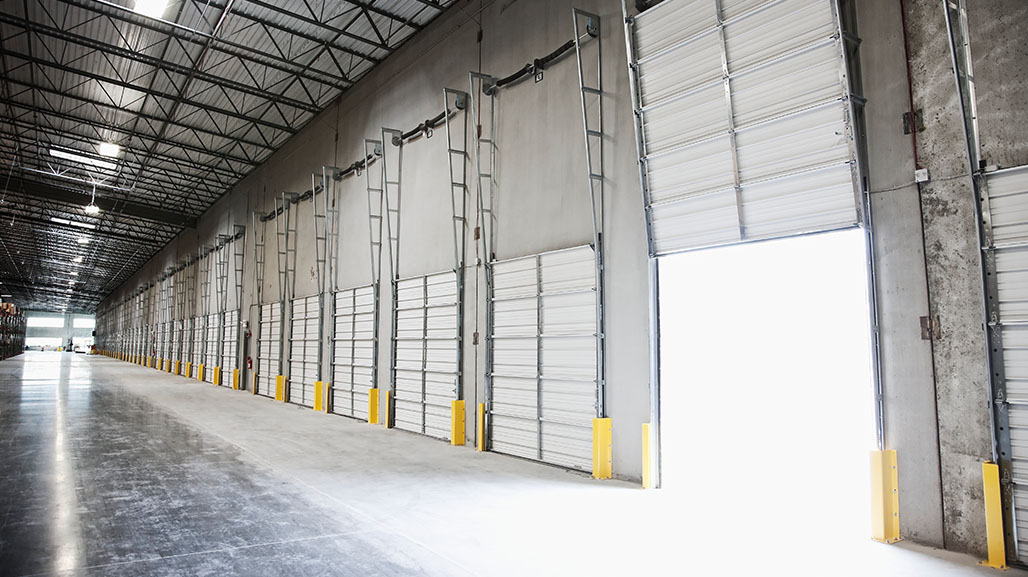
Overhead doors, dock doors and large entryways may open and close hundreds of times a day, and even small gaps around those openings can allow dust, pests and weather into the facility.
Osborn’s SEALEZE® line of weatherstripping brushes are designed to seal those gaps while providing durability that can outlast conventional vinyl strip seals, says Adam Erbse, product manager for SEALEZE.
“We take a lot of pride in being a U.S.-made product line.”
Adam Erbse,Product Manager, SEALEZE,Osborn
“We’ve tested the durability of our product, and we’ve seen up to 2 million operations or revolutions of a door with very limited wear,” he says.
Properly Sealed Overhead Doors Pay Off in Energy Savings
According to Erbse, customers are paying closer attention to weatherstripping these days because of energy efficiency concerns.
“In the last five years, we’ve seen facilities place a bigger emphasis on energy savings,” he says. “They’re realizing the amount of money that they’re losing by not having properly sealed doors.”
Erbse says testing by third-party companies has shown that “the energy savings with SEALEZE brushes is three times what vinyl energy savings would be.”
In addition, Osborn has developed an energy savings calculator that considers the number and type of doors in a facility and compares unsealed or partially sealed openings with openings equipped with brush seals.
“This way, we’re able to give our customers a return on investment based on if they were to seal their facility with our product,” he says.
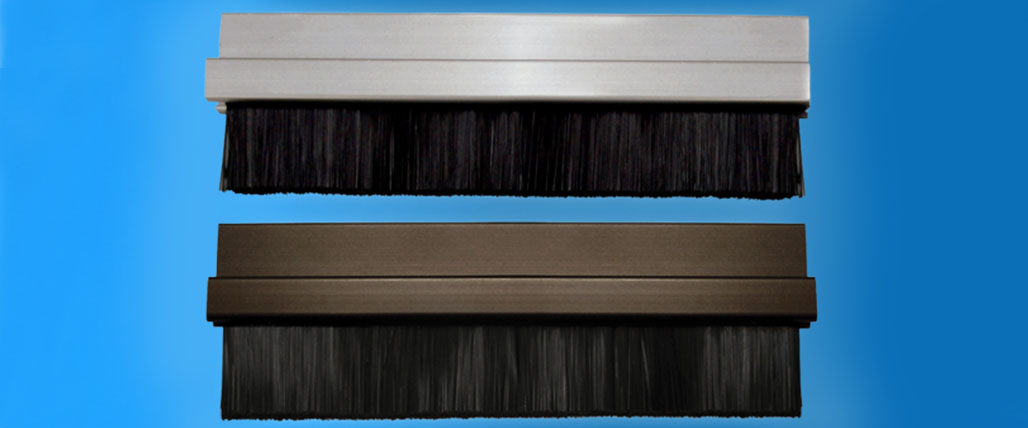
SEALEZE® brush weatherseal is ideal for sealing the irregular surfaces of thresholds at door bottoms—conforming to the surface without impairing door movement.
Why Brush Door Seals Last Longer
The vinyl strip seals that are a familiar solution for overhead doors can have limitations in demanding industrial environments, Erbse says.
“The bad thing about vinyl is it doesn’t last—it’s irregular, and it warps with weather,” he says. That’s why facilities often end up having to replace vinyl seals twice a year.
Brush seals are designed to withstand repeated door operation. The flexibility of brush filaments can also help maintain the seal as concrete shifts, cracks or otherwise creates an irregular surface. Rather than requiring a perfectly flat contact surface, the filaments can flex into gaps and around contours.
That can help facilities reduce air infiltration and address problems ranging from pest intrusion to snow and ice entering through door openings, Erbse says.
“We’ve had customers that have had door brushes on their openings for 10 to 15 years without needing replacement,” he says.
Stopping Weather, Pests and Safety Hazards at the Door
As the name suggests, proper weatherstripping is needed to keep snow, ice and rain from entering through gaps and creating slippery conditions, particularly at loading docks and other frequently used openings.
“Companies have sent us pictures of a dock door where there are gaps all around the door and in the winter there’s snow and ice coming in,” Erbse says. After the doors were properly sealed, he says, “no more weather is getting in and causing a slippery surface on the inside.”
Gaps around doors can also provide entry points for insects and rodents. The brush seal adds another barrier between the outside environment and areas where products, materials or equipment are stored or manufactured.
In the strip brush world, nylon is typically considered the higher-quality filament, and it’s the standard material Osborn uses for the majority of its SEALEZE building-envelope products.
For certain applications, however—particularly where doors are exposed to moisture—polypropylene can offer an advantage because it doesn’t soak up water the way nylon brushes do. That’s why SEALEZE offers a ProSeal line using polypropylene filament that performs better in wet conditions.
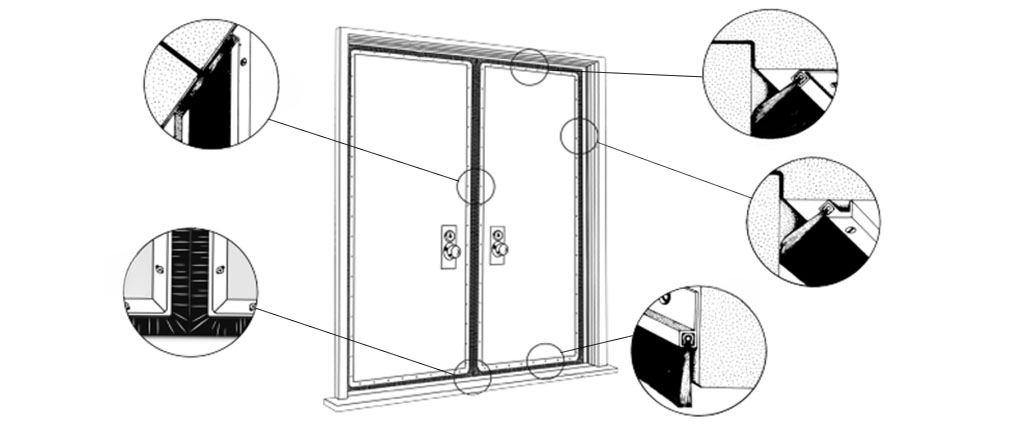
The double door brush weatherstripping kit provides seamless perimeter protection across the center astragal, top header, side jambs and bottom threshold.
U.S.-Made Product Reduces Tariff and Supply Chain Risks
The SEALEZE product line is manufactured in the U.S., which has become increasingly relevant as manufacturers deal with shifting tariffs and supply-chain considerations. Several customers who previously purchased weatherstripping brushes from Asia have switched to SEALEZE, Erbse says.
“While Osborn is a global company, our main headquarters is in Richmond, Indiana. For our SEALEZE line, we source all of our material domestically, and we manufacture everything right here in Richmond seven days of the week,” he says. “We take a lot of pride in being a U.S.-made product line.”
Custom Brush Seals for Industrial Applications
Since not every door or opening has the same requirements, Osborn also offers a variety of custom-engineered solutions alongside their standard SEALEZE building-envelope product line.
Custom applications can involve nonstandard brush lengths, different channel sizes, stainless or specialty filaments, or formed configurations such as spirals and coils.
“We’re working on custom solutions every day,” Erbse says. “If a customer isn’t sure of what they need, we have field application engineers who can visit the facility and design a custom solution for that particular application.”
For applications that use materials within the company’s standard range, engineering designs can often be completed in about 48 hours, with production and delivery following in as little as one to two weeks after approval.
Donna Behen is a writer and editor with experience in healthcare, finance, and business.
Osborn delivers the best off-the-shelf and custom engineered wire brushes for your toughest finishing challenges. Our innovative solutions will save you time and money.
To request a quote, please login to your existing account or register a new one. This helps us provide you with a personalized experience and keep track of your requests.