Heat stress is a serious concern. Exposure to environmental heat caused an average of 40 worker deaths per year from 2011 to 2022, and 3,389 workplace injuries per year from 2011 to 2020, according to the Occupational Safety and Health Administration.
Yet, without a federal regulation, employers are left with little guidance or accountability for protecting workers from heat stress. Currently, employers are held to OSHA’s general duty clause, a broad requirement that tells them to protect employees from hazards that cause injury or death.
To protect workers, OSHA began paving the way for a national heat standard in 2021, and a year later the agency launched a three-year national emphasis program on workplace heat hazards, which was renewed in 2025.
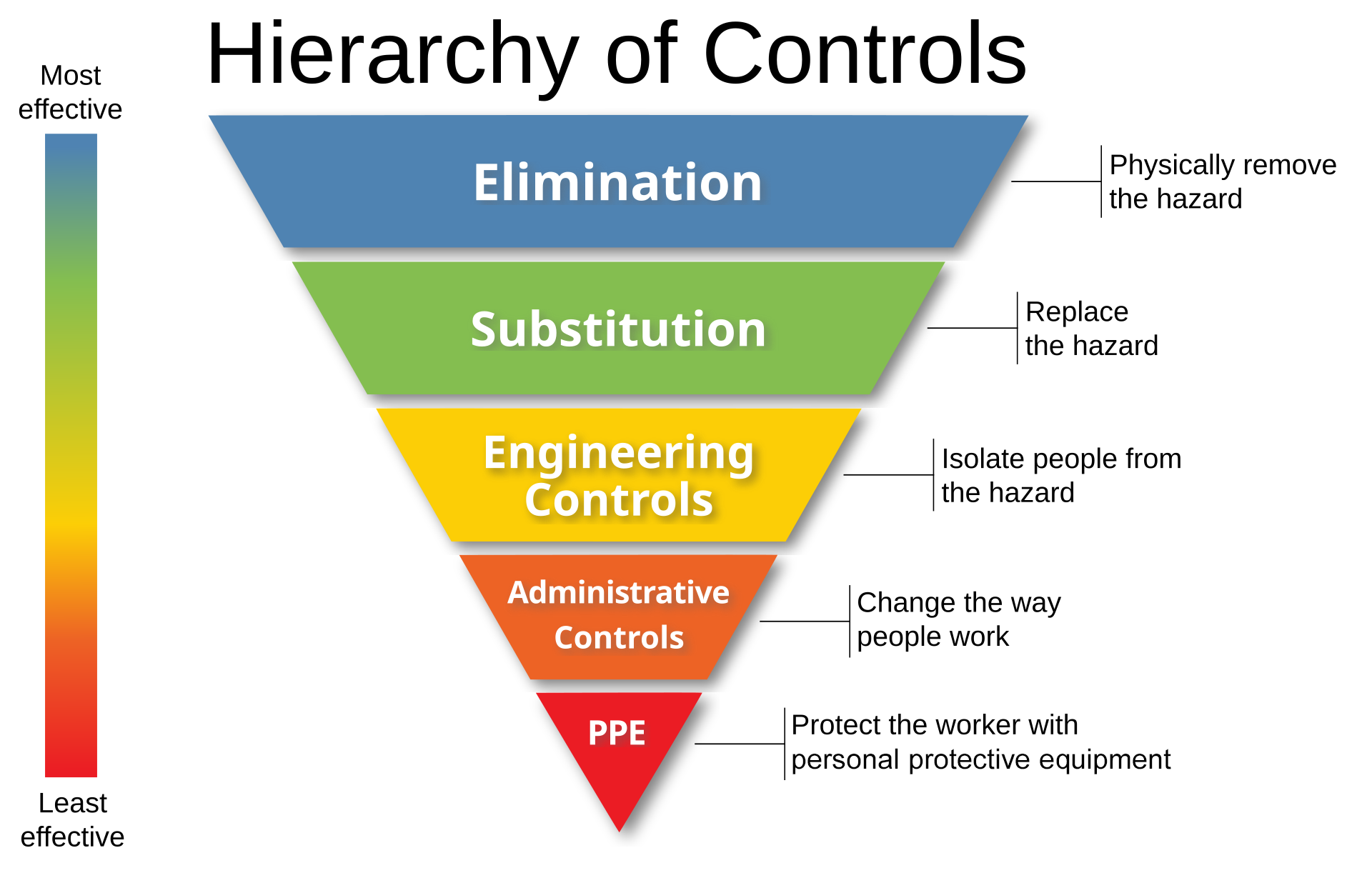
“In the pyramid of safety, engineering is closer to the top. Do all you can to engineer everything out. And when you cannot engineer everything out, the bottom of the pyramid is PPE.”
Gil Truesdale,
Leader of Safety Services,
MSC
Although experts say that a final federal heat stress regulation could be 12 to 18 months away, they also urge employers to start preparing for it now.
State-Level Heat Regulations
Several states have specific regulations that govern an employer’s responsibility to protect workers from heat illness and injury. Many of the requirements are similar, and they point to where a federal standard is headed:
California requires employers to provide training, water, cool-down areas, planning and emergency response when the ambient temperature hits 82 degrees Fahrenheit.
Washington requires training, water, cool-down areas, rest breaks, acclimatization periods and emergency response.
Oregon requires water, emergency communication and training when the heat index hits 80 F, and adds rest breaks, monitoring and emergency response at 90 F.
Minnesota requires training, ventilation and time limits in heat conditions for specific types of work.
Read more: 5 OSHA Enforcement Updates: What Employers Need to Know
The Proposed Federal OSHA Heat Standard: What to Expect
A key part of the proposed federal regulation is a written plan for heat stress, which may already be familiar to employers in states with stricter current regulations.
“You either have a need for heat stress situational solutions, or you don’t,” says Gil Truesdale, leader of safety services at MSC. “If it’s over 80 degrees of heat index, you’ve got to have them. And if you need them, what does your policy say? Because that’s what an OSHA inspector will hold you accountable to.”
You can tell whether your workplace requires heat stress solutions by gathering data, Truesdale says. After tracking ambient temperatures in different areas of the facility every day over several months, you’ll have the information you need to decide how to control heat exposure.
Developing Heat Controls: Engineering First, Then PPE
Facilities without a plan to address any hazard can fall into a reactive position that leads to overreliance on hydration or personal protective equipment.
“When there is no policy in place, people tend to throw product as a solution,” Truesdale says. “In the pyramid of safety, engineering is closer to the top. Do all you can to engineer everything out. And when you cannot engineer everything out, the bottom of the pyramid is PPE.”
Source: National Institute for Occupational Safety and Health
Truesdale notes four engineering controls that are effective for avoiding heat stress:
Increase ventilation from exhaust systems and fans.
Install heat shields to contain radiant heat from hot work areas.
Add spot cooling from misting fans.
Provide cool break areas to recover from heat.
Read more: Cooling Technology in PPE: Keeping Workers Safe and Comfortable
The Human Factor: Acclimatization, Breaks and Training
Most heat-related deaths occur during a worker’s first week on the job, according to a 2018 study, which is why acclimation to hot environments is a special focus of the proposed heat safety standard.
New hires are restricted to heat exposure for 20 percent of their first shift, gradually increasing through the first week; alternatively, they can be subject to an acclimation plan that includes frequent breaks and close monitoring for signs of heat stress. Workers returning after 14 days away have similar protocols.
All workers, even experienced ones who are acclimated to heat, need to be monitored in warm environments.
“After someone has gone to a cool-off period and then they’re coming back to work, you need to check to make sure that they’ve actually cooled down, they’ve had enough water, they’ve had enough electrolytes, whatever the process is,” Truesdale says. “To put them in an area and just say ‘rest for 15 minutes and then go back’ is not following policy and procedures.”
Training employees on the signs of heat illness and how to report them is another critical element of the proposed federal heat rule.
“The effectiveness of the proposed standard would be undermined if employees did not have sufficient knowledge and understanding to identify heat hazards and their health effects or sufficient knowledge and understanding of their employer’s policies and procedures for addressing those hazards,” OSHA states in its notice of proposed rulemaking.
Read more: Heat Stress Prevention: Safety in Manufacturing and Industrial Environments
What to Do Now to Prepare for Future Heat Regulations
A successful heat-safety program begins with a policy backed by documentation, according to Truesdale, and that’s where he recommends employers start on their journey to meet the proposed standard when it’s finalized.
“Now is the time to collect your data. Get a heat exposure assessment across all the facilities,” he says.
“The first questions OSHA is going to ask are: What’s your policy? What do you currently do? What protocols do you have in place? And what’s your solution to the problem? That’s it.”