



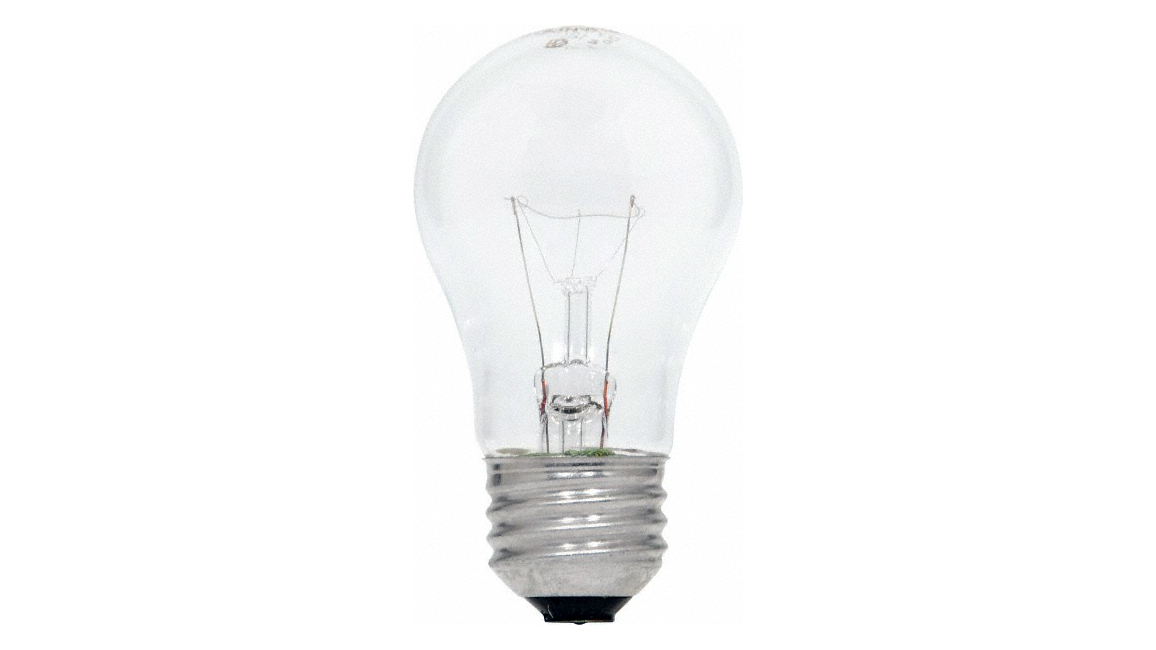
An incandescent bulb, also called an incandescent lamp, is a type of electric light that produces light by heating a metal filament, which then generates light and heat. Incandescent lamps are available in a range of sizes, wattages, and voltages.
Halogen vs. Incandescent Light Bulb
Explore MSC Industrial Supply’s guide to learn the differences between halogen and incandescent light bulbs, including their design, efficiency, and lifespan.
What Is an Incandescent Light Bulb?
How Does an Incandescent Light Bulb Work?
An incandescent light bulb produces light when an electric current heats its tungsten filament until it becomes incandescent. The lifespan of the bulb depends on the thickness of the filament; thicker filaments last longer but generate less light because they don't reach as high a temperature. This creates a trade-off — a longer lifespan means lower brightness, while higher brightness reduces longevity.
How Does a Halogen Lamp Work?
A halogen lamp is a type of incandescent lamp that offers three key advantages over standard incandescent bulbs: it is brighter, whiter, and longer-lasting. Its thin filament produces more light, giving it superior brightness and a whiter glow. But how does it outlast standard bulbs despite its thinner filament? The answer lies in the Halogen Cycle. Within a halogen lamp, the filament is housed inside a glass capsule filled with halogen gas. This gas captures broken-down tungsten and redeposits it onto the filament before it can settle on the lamp's walls. This process replenishes the filament and keeps the lamp clean, bright, and long-lasting.
Halogen & Incandescent Light Bulb Shapes
-
Letters designate the shape of the glass lamp.
-
Numbers indicate the diameter of the lamp in eighths of an inch.
-
For example, "G-40" indicates a globe-shaped lamp having a diameter of 40 eighths or 5 inches
Halogen & Incandescent Light Bulb Bases
Screw bases are typically made from aluminum, brass, or nickel-plated brass:
-
Aluminum is the most cost-effective option.
-
Brass and nickel-plated brass are corrosion-resistant, making them ideal for outdoor lamps, long-life applications, or environments where corrosion could cause the lamp to seize in the socket, complicating replacement.
To request a quote, please login to your existing account or register a new one. This helps us provide you with a personalized experience and keep track of your requests.