



• Never attempt to disassemble the grinder’s controller.
Grinder Safety Starts Here
MSC Industrial Supply's grinder safety guide helps you prevent injuries and stay compliant. Your safety is our priority. Pneumatic grinder safety centers on matching the grinding wheel's rated speed to the tool's actual free speed (measured in RPM), using the correct wheel guard for the wheel type, and inspecting the pneumatic grinding wheel before every use.
Grinder Safety Rules to Always Follow
1. Check the Grinder’s Free Speed
Never use a tool if the actual free speed exceeds the nameplate RPM.
Use a tachometer to confirm that the grinder’s free speed at 90 PSIG (6.2 bar/620 kPa) does not exceed the RPM on the nameplate.
Check the grinder before mounting a wheel, before use, after repairs, and at least once per shift.
Free speed is the RPM a grinder's spindle reaches when running unloaded, and it should never exceed the RPM rating printed on the wheel's nameplate. This check should be repeated before mounting a new wheel, before each use, after any repair, and at least once per shift, matching the grinder's actual RPM to the wheel's rated speed every time.
2. Always Use the Wheel Guard
Only use the wheel guard provided by the manufacturer. Failure to do so could result in injury.
Replace any damaged, bent, or worn guards immediately.
Do not use a wheel guard that has been subjected to a wheel failure.
Make sure the guard opening faces away from the operator and the wheel doesn’t project beyond it.
Wheel guards generally fall into a couple of common types, including standard band or clamp-style guards used with straight (Type 1) wheels and adjustable guards designed for depressed-center wheels. Regardless of type, the guard must be the one furnished by the manufacturer for that specific wheel and grinder combination, since a mismatched guard may not contain a wheel failure properly.
3. Match the Wheel to the Tool
Do not use a wheel with an operating speed lower than the grinder’s free speed.
Inspect wheels for cracks, chips, or water damage before mounting.
Do not use a wheel that has been soaked in water or any other liquid.
Avoid using wheels that fit too loosely or too tightly on the arbor. Use only manufacturer-recommended bushings.
A wheel that isn't matched to the material being worked, or one that's worn, chipped, or damaged, is more likely to catch or grab on rough or uneven material edges. This is why inspecting the wheel before mounting and matching it to both the tool's free speed and the workpiece material is critical to safe operation.
4. Mounting Best Practices
Plain-hole wheels should have no more than 0.007" (0.17mm) diametrical clearance.
After installing a new wheel, test the air grinder under a bench or inside a casting for at least 60 seconds before using it. If the wheel is defective, improperly mounted, or the wrong size or speed, this is when it will usually fail.
Make certain no one is within the operating plane of the grinding wheel during testing and use.
Plain-hole wheels should have no more than 0.007 inch (0.17 mm) of diametrical clearance on the arbor, and every newly mounted wheel should run for at least 60 seconds in a protected test area, such as under a bench or inside a casting, before it's put into service.
5. Safe Operation Techniques
When starting a cold wheel, apply it to the work slowly until the wheel gradually warms up.
Avoid bumping the wheel or applying excessive pressure.
Maintain smooth, steady contact with the workpiece.
6. Wheel Flanges and Blotters
Use flanges that are at least one-third the diameter of the wheel.
Ensure they are free of burrs, nicks, and sharp edges.
Always install a blotter between each flange and the wheel to ensure proper clamping pressure. The blotters must be at least as large in diameter as the wheel flanges.
Always use the wheel flanges furnished by the manufacturer
Never use a makeshift flange or a plain washer
A blotter is a compressible washer placed between the wheel and each flange to distribute clamping pressure evenly across the wheel's surface, and it should always be at least as large in diameter as the flange itself.
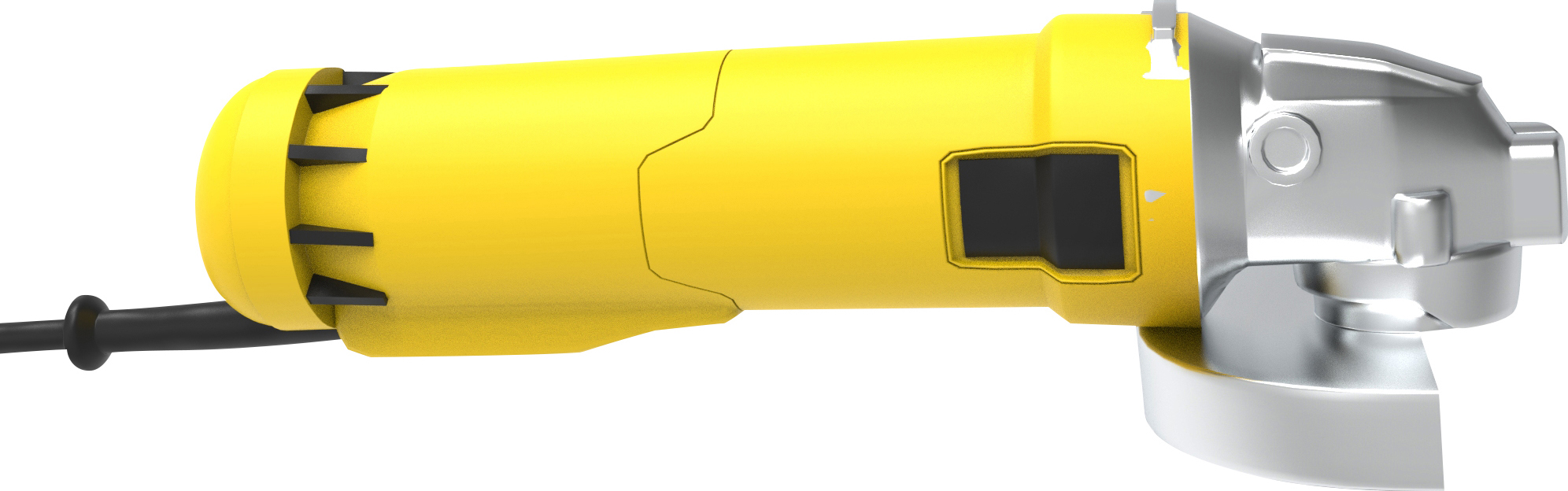
7. Do Not Modify Internal Components
• The controller is a sealed unit and is guaranteed for the life of the tool if it is used properly.
Frequently Asked Questions
Free speed is the RPM a grinder's spindle reaches when running unloaded, with no wheel contact against a workpiece. It should always be checked with a tachometer and must never exceed the RPM rating printed on the wheel's nameplate.
Free speed should be checked before mounting a new wheel, before each use, after any repair, and at least once per shift.
A wheel guard contains fragments if the wheel fails during use, protecting the operator from injury. Only the guard furnished by the manufacturer for that specific wheel and grinder combination should be used, and it must be replaced immediately if it's damaged, bent, worn, or has been exposed to a previous wheel failure.
A blotter is a compressible washer installed between each flange and the wheel to help distribute clamping pressure evenly. It should always be at least as large in diameter as the wheel flange it's paired with.
A newly mounted wheel should be run for at least 60 seconds in a protected test area, such as under a bench or inside a casting, with no one standing in the wheel's operating plane. Most defective, improperly mounted, or incorrectly sized or rated wheels fail during this initial test period.
A wheel or bit that isn't matched to the material being worked, or one that's worn, chipped, cracked, or otherwise damaged, is more likely to catch or grab on rough or uneven material edges. Inspecting the wheel before mounting and matching it to both the tool's free speed and the workpiece material helps prevent this.
Common wheel guard types include standard band or clamp-style guards used with straight (Type 1) wheels and adjustable guards designed for depressed-center wheels. The correct guard type depends on the wheel being used, and it must always be the guard furnished by the manufacturer for that wheel and grinder combination.
Plain-hole wheels should have no more than 0.007 inch (0.17 mm) of diametrical clearance on the arbor. Wheels that fit too loosely or too tightly should not be used; manufacturer-recommended bushings should be used instead.
Glossary
Free Speed: The RPM a grinding wheel or tool reaches when running unloaded, with no contact against a workpiece.
PSIG: Pounds per square inch gauge, a unit of air pressure used to rate the operating pressure of pneumatic tools like air grinders.
Wheel Guard: A protective barrier mounted over a grinding wheel that helps contain fragments and protect the operator in the event of a wheel failure.
Arbor: The shaft or spindle on a grinder that a grinding wheel mounts onto.
Blotter: A compressible washer placed between a grinding wheel and each flange to help distribute clamping pressure evenly.
Flange: The disc-shaped hardware that clamps a grinding wheel onto the arbor.
Tachometer: A device used to measure the rotational speed, in RPM, of a spinning tool or wheel.
Bushing: An insert used to adapt a wheel's arbor hole to properly fit a grinder's spindle diameter.
Shop Power Grinders
To request a quote, please login to your existing account or register a new one. This helps us provide you with a personalized experience and keep track of your requests.