Video Transcript
Narrator: This episode is brought to you by Accupro. If you're looking for real-world insights, tips from leading industry experts, the latest trends in products and technology, you've come to the right place. From MSC Industrial Supply, this is Tooling Up.
TONI NEARY: Hi everyone, and welcome to Tooling Up. I'm your host, Toni Neary. And before we get started today, let's take a moment to hit those Like and Subscribe buttons so you never miss an episode from MSC and our industry partners. Today on Tooling Up, we're talking about the growing demand for smaller, more complex components and the precision cutting tools manufacturers need to machine them accurately and efficiently.
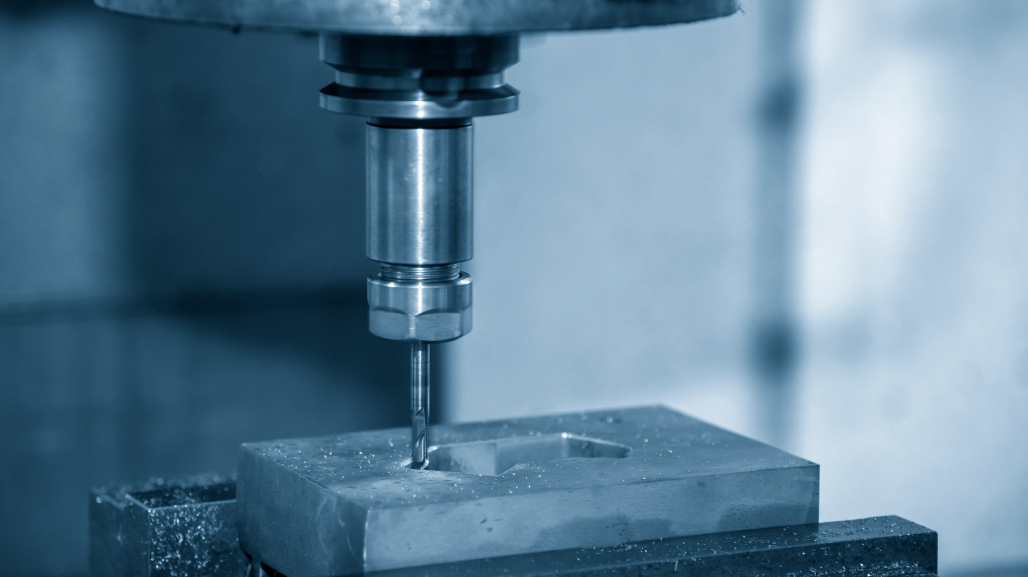
More specifically, we're taking a closer look at Accupro universal miniature end mills, and how they're designed to deliver micro-scale precision across a wide range of materials and applications. Joining me today is Dr. Michael Gomez, Director of Manufacturing, Research and Technology at MSC Industrial Supply. Michael, welcome back to Tooling Up.
DR. MICHAEL GOMEZ: Thank you so much, Toni. I'm looking forward to our conversation.
TONI NEARY: So Michael, before we dive into miniature tooling, you bring a very interesting mix of research, engineering and real-world manufacturing experience to this conversation. So tell us a little bit about your journey in manufacturing and what ultimately brought you to MSC.
DR. MICHAEL GOMEZ: Absolutely. So I lead our Manufacturing Research and Technology team here at MSC, and we're focused on deploying both technologies to our metalworking specialist teams, which then proliferate to customers. But then also on the research side, thinking about what new technologies, what new solutions are available to customers so that we're ready whenever they're ready to take that next step towards innovation.
So my background is, of course, in machining dynamics, metal cutting mechanics, and so on. I actually have a PhD from the University of Tennessee at Knoxville. And again, part of this manufacturing research and technology team is to take a lot of this academic knowledge that's always been out there and start to translate that for customers, so that it makes sense for the technologies that they're using on their shop floor.
TONI NEARY: Okay, Michael, that's a ton of manufacturing knowledge and expertise that you bring to the table. But tell us more about the manufacturing, research, and technology team as a whole and what they're ultimately doing to support MSC customers.
DR. MICHAEL GOMEZ: Absolutely. So this is a dynamic team of a lot of engineers, PhDs and people that wake up every day thinking, how can we make our customers' lives better? So that's ultimately what we focus on. And again, oftentimes that's through brand new technologies, that's through older technologies that just might need a new twist or a way to rethink how they're deployed.
And ultimately what that leads to is better productivity, better solutions, and better services for our customers.
TONI NEARY: So with that perspective on where manufacturing technology is headed, let's talk about what you're seeing at the micro scale. So we're seeing products and components get smaller and more complex across a number of industries. But like what is driving that trend and where do miniature cutting tools really come into the picture?
DR. MICHAEL GOMEZ: I love it. We are going to take a macro look at the micro scale. So first and foremost, you know, certain industries come to mind. Certainly medical and dental, mold and die, you know, aerospace and defense, electronics and semiconductors. But ultimately for us, when we think about our customers, we think about what they're looking for. We want to make sure that we have the right parts, stocked, no matter the feature, no matter the size.
So as components are getting smaller, our customers are always looking for the tools that can help them make those parts kind of as small as they need to be.
TONI NEARY: So that brings us to Accupro. When you're dealing with those kinds of precision requirements, it's such a small scale. How are the universal miniature end mills designed to meet all of those challenges?
DR. MICHAEL GOMEZ: I think it's important to think about what ultra-fine means, right? So the conventional grade of carbide is roughly 1 to 3 micrometers in size, and then the ultra-fine is actually an order of magnitude smaller. You can think of it as 200 to 300 nanometers; even so... At about 10 thou, the tool is only a few hundred carbide grains wide.
And really, that does two things for us. The first is that the largest flaws that any cross-section that's smaller, the tool can be stronger in bending. And then we can grind a sharp enough edge to actually shear a chip instead of rubbing against the tool. So you can think about things like increased hardness, increased compressive and fatigue strength. And again, ultimately better tool life, edge sharpness, and so on.
TONI NEARY: All right I want to dig into that carbide substrate just a little more. Why is the substrate particularly important when you're talking about tools this small?
DR. MICHAEL GOMEZ: Oftentimes when we're talking about cutting tools, we're thinking about geometry. We're thinking about coatings. We're thinking about all of these macro variables. One of the things that becomes more and more important is the scale of the kind of micro variables, particularly in the carbide substrate. So with a much better carbide substrate, you get better performance, better tool life.
And ultimately, when you're thinking about making these really small parts and these really difficult-to-machine materials, that carbide performance, that substrate performance really plays a significant factor. And so that's something that we're really proud to have really considered when we've released this product line.
TONI NEARY: So we've talked about what's built into these tools. But let's translate that to the shop floor. What do these features ultimately mean for the manufacturer that's using them?
DR. MICHAEL GOMEZ: First and foremost is micro-scale accuracy. Things like improved surface finish. You want to make sure that your feature comes out right the first time. Ultimately, with these universal grades that we have, it's also less tools for the job, right? So we all know that carbide can be really expensive these days. So ultimately, you want to kind of reduce the number of tools that you're using and use one for the entire operation.
TONI NEARY: And the word universal is really important here too. And what does that mean in practice, especially for a manufacturer working across different materials?
DR. MICHAEL GOMEZ: Universal simply means that the geometry is the same, and you as a user can find the right coating to use, whether that's uncoated, diamond-like coatings, AlTiN and AlTiN+, and some of the other grades that we have that are more specific to your materials.
TONI NEARY: So one tool platform across multiple materials is something that manufacturers definitely like to hear. So I'm hearing that when you're dealing with these very small, detailed features, you're simplifying the tooling without sacrificing the precision or performance that the application requires.
DR. MICHAEL GOMEZ: That's exactly right. I always like to say it's simpler selection, fewer tool changes, and less downtime.
TONI NEARY: So Michael, earlier you talked about making advanced manufacturing technology more accessible. And there's actually another Accupro initiative that ties directly back to that idea. Tell us about the new collaboration with Autodesk and what it means for customers.
DR. MICHAEL GOMEZ: So we're working with Autodesk to help digitize the entire Accupro cutting line so that it's available to any manufacturer within Autodesk Fusion so that they're able to use those specific cutting tools while they're programming and trust that that geometry is accurate. And then tie it back to a specific MSC product. What we want to do again, we talk about reducing downtime.
That doesn't always mean time in the cut, right? Sometimes that's just process downtime. So in this case we're digitizing Accupro so that anybody can find their favorite Accupro SKU, including this universal mini line. All of those will be available inside of Autodesk Fusion for you to program off of directly.
TONI NEARY: All right. Before we wrap up our conversation today, what's the main takeaway that you want manufacturers to have about Accupro universal miniature mills?
DR. MICHAEL GOMEZ: We have an entire platform with over 4000 SKUs in this Accupro miniature end mill line. Again, we've simplified the selection. We've made tools really universally available to you. We're starting to work on this kind of digital path for this tooling to be available to you and your favorite CAD/CAM programming software. So ultimately, I always like to say there's the right tool for the right job.
And so we want to make sure that's available to you. Make it easy to find and access. And so again, as your features become more difficult to machine, as you're starting to think about more complex parts that you might want to make, we certainly have the tool available for you.
TONI NEARY: Michael, it is always great talking manufacturing technology with you. Thank you so much for joining us again on Tooling Up.
DR. MICHAEL GOMEZ: Thanks so much, Toni. It's great to be here, and it's always a pleasure.
TONI NEARY: It was so great having Michael back on the show today. And to learn more about Accupro Universal Miniature End Mills, visit www.mscdirect.com/products/accupro-mini-end-mills or contact your local MSC representative or metalworking specialist. Don't forget to subscribe to our channel so you never miss an episode. Thanks for watching, and we'll see you next time on Tooling Up.
Narrator: Want more insights and ideas to improve the efficiency and productivity of your operations? Check out the Tooling Up video playlist to hear tips that can take your company to the next level, and subscribe to our channel so you won't miss out.