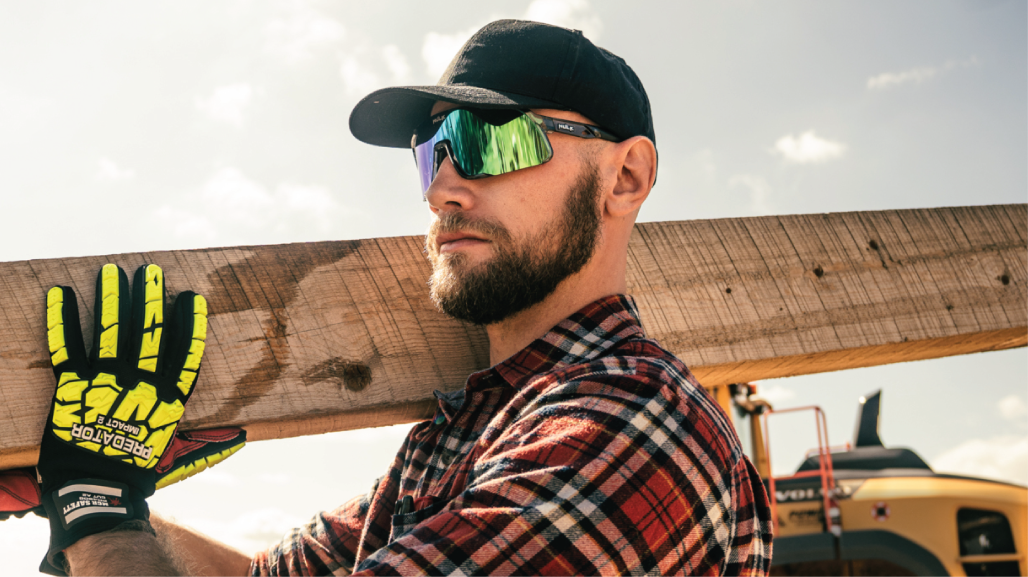
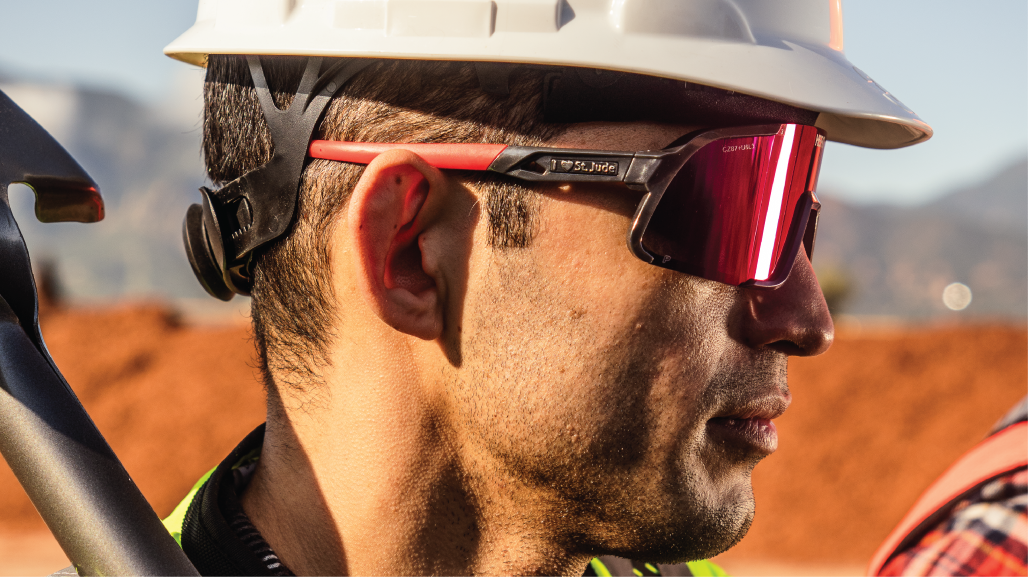
Concrete laborers take on challenging projects involving significant amounts of risk. Working conditions range from cement burns to crush hazards, both major concerns for employers concerned with protecting their employees.
MCR Safety is committed to understanding all concrete-related risks and developing the best hand protection available for the concrete industry. To help highlight this commitment, a concrete-dedicated page has been created, educating laborers on the most common concrete hazards and their product solutions.
One of the hazards covered are crush hazards. Beyond what is covered below, be sure to check out MCR Safety's Impact Protection page covering all back-of-hand protection hazards a worker might face.
The Truth about Hand Injuries
Here are some important statistics construction and concrete professionals should take into consideration before making personal protection equipment (PPE) decisions:
Over 1,000,000 hand injuries occur every year.
20% of disabling workplace injuries involve the hands—with the primary cause being equipment not performing as expected.
With crush and pin point hazards ranking second overall, concrete industry laborers demand quality impact gloves designed with state-of-the-art materials.
Crush and Pin Point Hazards Defined
The Occupational Safety and Health Administration (OSHA) defines crush and pin point hazards as “Injuries resulting from a person being squeezed, caught, crushed, pinched, or compressed between two or more objects, or between parts of an object. This includes individuals who get caught or crushed in operating equipment, between other mashing objects, between a moving and stationary object, or between two or more moving objects.”
Hazard Prevention and OSHA’s Hand and Arm Protection Guidelines
OSHA has identified four general elements that are critical to the development of a successful safety and health management program:
Management commitment and employee involvement
Worksite analysis
Hazard prevention and control
Safety and health training
The team at MCR Safety is dedicated to addressing the specific element of hazard prevention.
They have accomplished this by developing the most durable, dynamic and high-performance PPE a worker can wear. Aside from the moral responsibility of protecting employees from workplace hazards, OSHA has also set forth specific guidelines regarding hand and arm protection. Their PPE manual 3151-12R 2004 states: “If a workplace hazard assessment reveals that employees face potential injury to hands and arms that cannot be eliminated through engineering and work practice controls, employers must ensure that employees wear appropriate protection.”
When needing PPE for the hazards you face, MCR Safety has you covered with safety gear discussed in the following sections.
Back-of-Hand Materials Designed to Offer Maximum Protection
Due to the high number of crush-related hand injuries, MCR Safety has taken extra care in developing PPE that provides maximum protection. Choosing the best technology and materials is the key in designing the best PPE, which is no small task. One way they select new, innovative material is by extensively testing materials in their Innovations Testing Center (ITC) Lab.
D3O® Technology
D3O® is the latest innovative technology used in the development of MCR Safety impact gloves. This technology specializes in impact dissipation and shock absorption. The unique patented material is soft, flexible and contains maximum shock-absorbing properties for protection against crush hazards.
MCR Safety Video for D3O® Technology
How Does D3O® Technology Work?
As described by the developers of the material themselves, “Based on non-Newtonian principles, in its raw form, the material’s molecules flow freely, allowing it to be soft and flexible, but on impact, lock together to dissipate impact energy and reduce transmitted force.”
This technology undergoes the highest standards of testing through a small-scale, rapid prototyping facility. D3O® works in several independent test laboratories to verify the effectiveness of its products including SATRA Technology, National Physical Laboratory, INSPEC, and British Standards Institute. (D3O® is a gold member at SATRA technology.)
FF2930 ForceFlex® Offering D3O® Technology
Part of the revolutionary ForceFlex® series, the FF2930 is made with D3O® Technology and provides users with the highest level of impact protection.
Some standout features of this glove are:
Thermoplastic Rubber Technology (TPR)
Always reliable and versatile, TPR technology is used in a wide variety of gloves engineered by MCR Safety. Thermoplastic rubber (also known as TPR) was one of the first materials to revolutionize the hand safety industry. This simplistic, sturdy and flexible material is perfect for adhering to gloves and back-of-hand protection against impact and crush hazards. With this versatile material, MCR Safety has won new product awards for the ZB100 and HV200.
The Evolution of Thermoplastic Technology (TPR)
The material itself is a simple rubber containing intuitive shock-absorbing properties and superior elasticity. Over time, MCR Safety has transitioned to using sonic welding to adhere the material to the glove itself. This offers the highest level of comfort, avoiding the placement of stitching which can cause irritation.
Be sure to check out the entire TPR timeline.
MC503 UltraTech Multi-Task Offering TPR Technology
One of the toughest gloves on the market, the MC503 provides outstanding TPR back-of-hand protection. It boasts an impressive lineup of additional features.
Some standout features include:
Previously featured on MCR's Safety blog.
For more information on MCR Safety products, please visit MSCDirect.com.