From electronics to medical components, our world is getting smaller and more intricate, and machining tools must also scale down to meet the demand for manufactured parts.
Micromachining presents unique difficulties such as tool fragility, chip evacuation and tolerance control. Understanding how miniature end mills behave—and how to select and run them properly—can make the difference between reliable production and costly tool breakage.
“In the microchip and medical arenas, the need for high-precision microtools is on the rise,” says Scott Walrath, senior brand ambassador for Accupro.
“Choosing the right tool is going to increase productivity, and when you do that, you’re going to cut into the labor portion of the cost-of-manufacturing pie.”
Scott Walrath,
Senior Brand Ambassador,
Accupro
Using these tools effectively means overcoming obstacles inherent at such small sizes.
“We manufacture down to 5,000th of an inch—the size of a hair,” Walrath says. “Inspection equipment is required to be able to see and measure. Tolerances are very challenging, too.”
Why Micromachining Tools Behave Very Differently
To hold up at tiny diameters, miniature end mills must be extremely hard—Accupro’s are typically made from premium solid carbide substrate at around 92 on the Rockwell hardness scale, Walrath says.
Although that hardness helps maintain cutting edges, it also introduces brittleness, which requires stability throughout the machining process.
“Typically, when you have something that hard, it’s not very ductile, so if you don’t have a rigid environment—both in the toolholding and the workholding—it can lead to breakage,” he says.
“The challenge for us as a manufacturer is that we have to make sure the geometry is as robust as possible.”
Read more: New Accupro Indexable Cutting Tools Meld High Performance and Affordability
As a solution to brittleness of mini end mills, Walrath recommends a few micromachining best practices.
“You definitely want to minimize any overhang, and make sure everything is shortened to only the length of cut that you actually need,” he says. “Try to use as large a diameter as you can get away with. Make the tool as rigid as possible. That’s going to minimize the breakage.”
Another tip for precision cutting with mini end mills: Invest in proper toolholding. Without it, as Walrath explains, it’s a lot like buying premium tires for your car but failing to balance and align them.
Qualities of High-Performance Miniature End Mills
Quality miniature end mill design is a careful balance of cutting performance and structural strength.
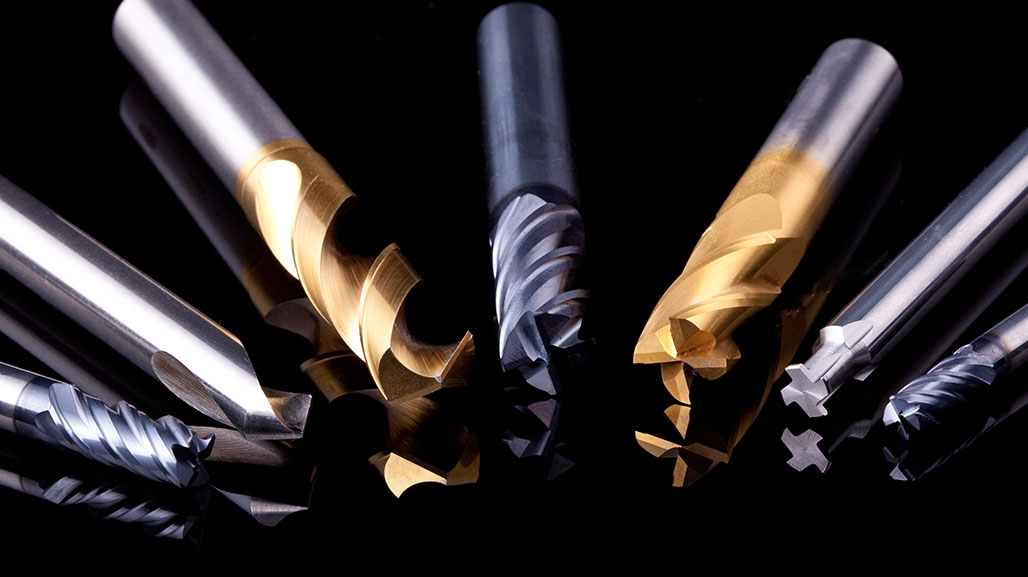
One key factor is the relationship between flute depth and the core diameter of the tool.
“You have an effective way of cutting and removing the material with the flute depth,” Walrath explains. “But by the same token, because you’re dealing with such a small tool, you want to maximize the core diameter. That’s what is going to help make it rigid and robust.”
A larger core value increases rigidity, helping the tool withstand cutting forces.
Read more: Premium Meets Practicality and Value: Accupro HS Series
Flute count also plays a role. Multiflute tools can improve stability in some applications.
“Four flutes tend to be a little bit more robust than two flutes,” he says, noting that there are special considerations. Decisions around geometry are driven by the application and machining strategy.
“If you’re in a very tight pocket area and you’re dealing with, let’s say, a 10,000th of an inch diameter end mill, a four-flute may not be conducive for chip evacuation,” he says. “But if you’re cutting on the periphery of the part, then I would encourage people to go with a multiflute, because the more teeth you have engaged over the workpiece, the more stability you’re going to pick up with the tool.”
The Real Cost of Getting Micromachining Wrong
In most machining operations, tooling is a small element of the total manufacturing cost. But focusing solely on price can be misleading.
“When you look at the pie chart of the true cost of manufacturing, tooling cost only represents about 4 percent or 5 percent,” Walrath says. “The biggest chunk is labor and material and overhead.”
That said, Walrath adds: “Don’t be so focused on the cost of the tool, because choosing the right tool is going to increase productivity, and when you do that, you’re going to cut into the labor portion of the cost-of-manufacturing pie.”
Read more: Accupro Makes Its Mark at Top Shops 2025
On the other hand, choosing a cheaper tool could sacrifice quality that leads to scrapped parts, wasted time and other added costs down the line. “You can go an economical route, but when you’re dealing with miniature end mills, they’re not going to last very long, and you’re going to go through a lot of tools,” he says.
Fortunately, manufacturing facilities don’t have to trade cost for performance and reliability.
Cutting tools from Accupro, part of MSC Industrial Supply’s Exclusive Brands, feature fine-grain carbon substrate, advanced geometries, tight tolerances around corner radii, thin-film PVD coatings, temperature-controlled manufacturing processes and rigorous inspection protocols.
“Getting all those attributes into an end mill that’s competitively priced against the market, the value is huge,” he says. “It’s among the best in the industry. We’ve considered all facets of the manufacturing process to ensure that the tools coming out of our manufacturing facility are top-notch and highly precise.”