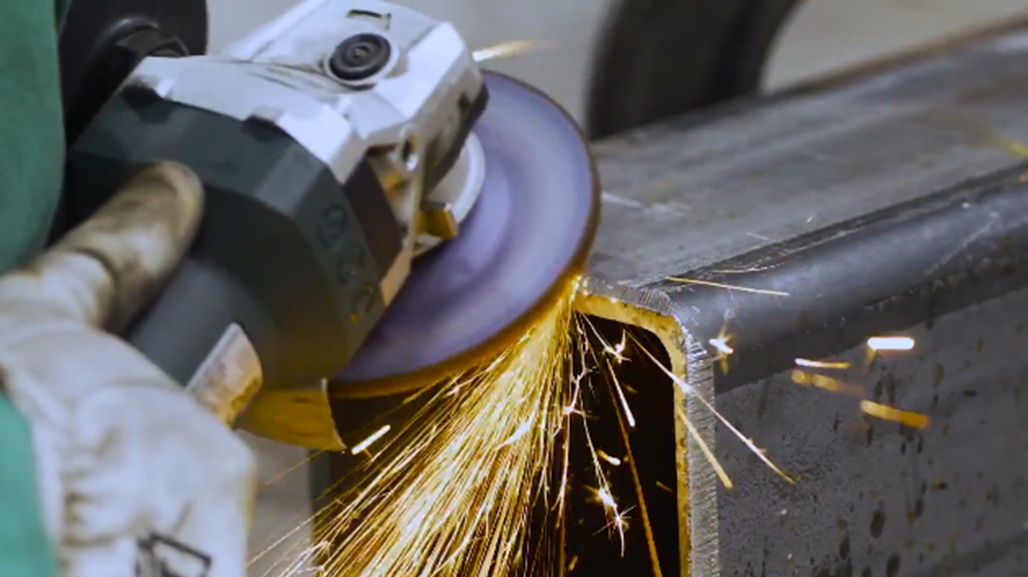
Abrasive choices in manufacturing facilities often get made on habit. Operators reach for the same wheel or disc that’s worked before, and as long as the part passes inspection, the process usually doesn’t get a second look.
But these products play a much bigger role in performance than they’re given credit for.
“What you think is a cost-cutting measure will end up costing you more money and lowering your productivity.”
Dana Cass,
Abrasive Specialist,
MSC Industrial Supply Co.
The Risks of Using the Wrong Abrasive
Dana Cass, an abrasive specialist with MSC Industrial Supply, says the wrong abrasive—or even the right abrasive used the wrong way—can slow material removal, shorten tool life, cause safety hazards and introduce variability that leads to scrap and rework.
“What you think is a cost-cutting measure will end up costing you more money and lowering your productivity,” Cass says. “If you use a product that’s not right for the application, you’ll burn through a high number of abrasives and you still won’t get the parts out the door.”
Nick Ostendorf, an abrasives sales trainer at 3M, echoes that sentiment. “The concept of being able to save money by using the same type of abrasive on different materials sounds great, but in reality you’re just losing productivity all over the plant.”
A common example would be using the same abrasive on carbon steel and stainless steel. “Those are two very different materials, and abrasives interact very differently with them,” Ostendorf says. “When you’re working on stainless, you really need an abrasive that has some type of a grinding aid or supersize coat to really protect the material from unnecessary heat buildup.”
Brad Heraghty, national account manager at Norton | Saint-Gobain Abrasives, says choosing the right abrasive for the job can end up saving your shop time and money, even if the abrasive you’re using is more expensive.
“Your abrasive cost goes up 15 percent, but now you’re not scrapping 10 percent of your parts—you’re down to only 5. That’s 5 percent more parts out the door. Getting more parts out the door per day means you’re making more money,” Heraghty says.
Proper Technique Is as Important as Abrasive Selection
Even if you’re using the correct abrasive, technique can make or break performance. One major issue is running worn-out discs and trying to force them to cut, Cass says. “I see a lot of operators using worn-out abrasives. They’re applying a lot more pressure, and that can end up overheating the metal and you’ll see a bluish tint to the metal where it’s been heated up, which means it has to be scrapped,” he says.
Using incorrect angles or the wrong RPMs can also cause problems. Cass says making sure you’re matching the grinder’s speed to the abrasive’s maximum RPM rating is one of the easiest ways to reduce both scrap and safety risks.
“We see this a lot out in the field with quick-change discs. A shop will have a die grinder that’s running 25,000 RPMs, but the quick-change disc is only rated for 18,000,” Cass says. “That’s a major concern because now you have the potential for that disc to come flying off and hit somebody because it’s spinning at a much higher RPM than what it’s rated for.”
By paying attention to how abrasives are selected and used, shops can turn common mistakes into everyday opportunities to cut faster, work safer and deliver more parts.
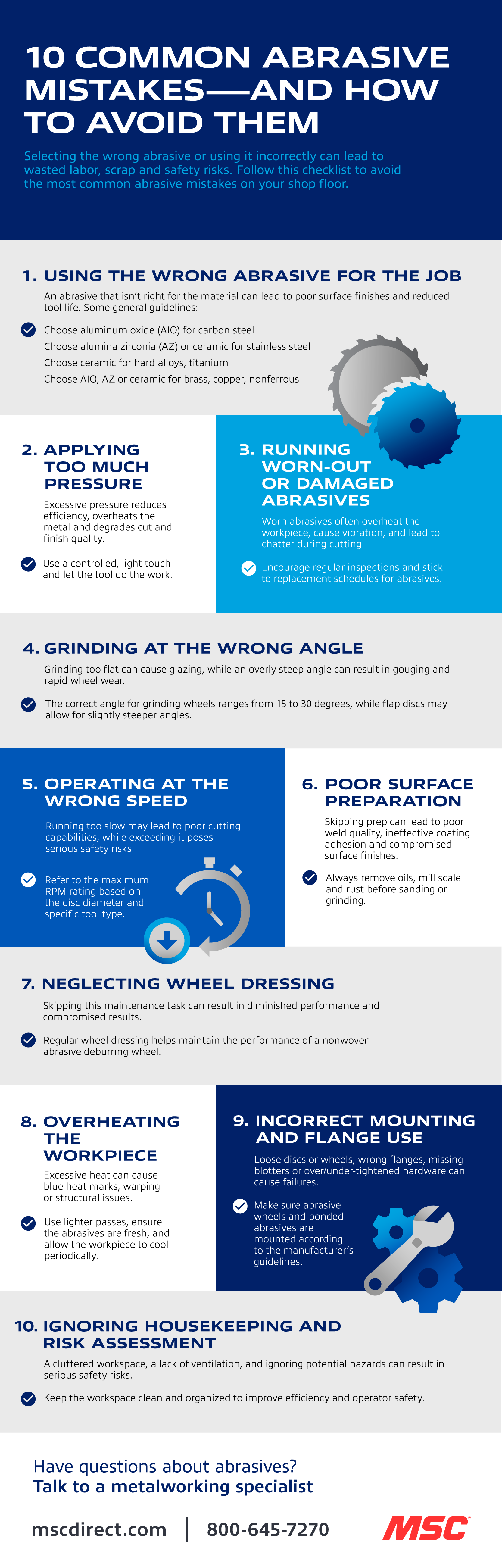
To learn more about the most common abrasive mistakes and how to avoid them, see the infographic below:
Check out MSC Industrial Supply’s Buying Guides for abrasives:
• Quick Change Discs: Maximize Efficiency with Every Turn
• Deburring and Grinding Wheel Types, Terminologies, and Materials
• Choosing Depressed Center Grinding Wheels
• Grinding and Cutoff Wheels Technical Information: Types and Selection
• Hand Deburring Buying Guide
• Metal Files: Your Complete Selection Guide
• Sandblasting Basics: Media, Equipment & Applications