Video Transcript
JACOB SANCHEZ: Every machinist has that one material that they love, and that material that they know is going to be a challenge, whether it's a new stainless, titanium or a super alloy like Inconel, these materials are developed for the toughest environments imaginable, but sometimes those properties that make them best suited for those environments are what make them difficult to machine.
They can generate extreme heat during the machining process. They can wear out your tools insanely fast, and it can sometimes turn a job you think is going to be a one and done into a very, very long one. So what can experienced machinists do about it? Well, you can better understand your materials and the applications where they're going to be utilized. You can better understand new tooling options that are available to you, and you can really rethink your machining strategy to today's age of metalworking. That's why we're here with the Mitsubishi Materials team, and we're going to be teaching you how to machine difficult materials.
Don't be afraid to ask for help. Get back in the classroom. Get the knowledge you need to get the job done. That's why I'm here right now with Brian.
BRIAN JEWELL: Hey. How you doing?
JACOB SANCHEZ: Good to see you again, man. So I have a new kind of predicament that I'm in, right? I'm trying to better understand how to machine difficult materials. What knowledge do you have on what makes these materials just so hard?
BRIAN JEWELL: There's so many of them. A lot of times it has to do with the amount of nickel content or chromium content. Of course, there's some other things mixed in there, but that can affect the abrasive wear that's happening, or the heat that's being generated into the part or at the cut.
JACOB SANCHEZ: And I think at the end of the day, what we're trying to do, right, as machinists is we want heat to get away from the part. And we also want to get it away from the tool. So we need to put it into our chips. So if I'm doing everything I'm supposed to do, what's going to be good for me, my tool, and my part?
BRIAN JEWELL: Your end result, if you have the right coatings and the right geometries, is that you're going to extend tool life and be able to speed your process up. So sometimes we can combat some of that heat and wear through different coatings, right? CVD coating would maybe be a little better at combating heat. PVD coating’s going to stay sharp and help us to shear that material, get it away from the cutting zone faster. So, you know sometimes it can be in those coatings. Other times it's in geometries. And how do we get that chip curled and formed and cut and moved away from the cutting zone so we can take that heat, put it in the chip and get it away from the part.
JACOB SANCHEZ: David, how's it going, sir?
DAVID CASEY: Hey, welcome back, Jacob.
JACOB SANCHEZ: Good to see you again, man.
DAVID CASEY: You too.
JACOB SANCHEZ: So I was just talking with Brian again, and today we're really trying to help me and the audience figure out how to go about machining difficult materials, right? And you got tons of materials here. Various features. What’s some of the insight that you have to tackling features?
DAVID CASEY: Yeah. so when we’re approaching something we start at the beginning with machine type, milling or turning. You know, if we're on the turning side, are we on a conventional lathe, or are we on a Swiss lathe where we're trying to take everything in a single pass. Milling side, what kind of spindle do we have, how much horsepower, fixturing situation, whether it's something a little finicky or something super rigid and, you know, tool length required to reach all the features and all that.
JACOB SANCHEZ: So you mentioned something about the machine, David, and I want to get your opinion on what goes into understanding, what do you need to understand, on your machine side that then transfers to you understanding what you can do with the tooling on the material to attack a feature.
DAVID CASEY: So again, it goes back to application. Are we roughing that feature out? Are we finishing it? Do we have a big enough machine where we've got the horsepower in the mass for an aggressive roughing operation? And then on the flip side, when we're trying to finish doing contours, surfacing, do we have the speed on the spindle side to run where we want to run with our tools.
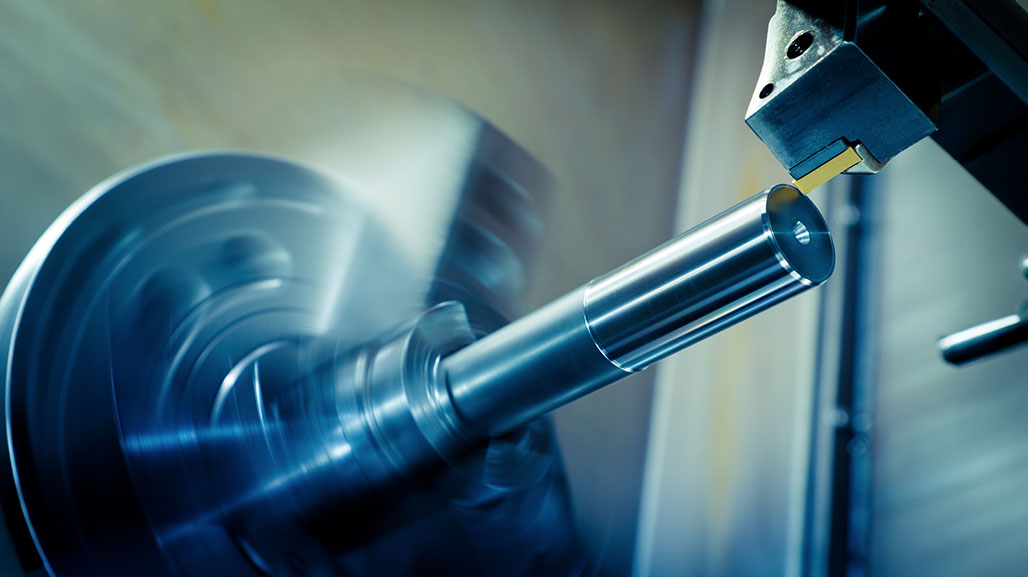
So on the first M.O. we're looking at, we're looking at a lathe part, just doing some rough and finish passes and Inconel 718, two pretty exciting grades there with our MP9000 series and then a newer grade and a MV9005 series. Extremely hard substrate, handles heat very well and can allow you to run some more aggressive surface footage and alloy class materials like Inconel or something like that.
JACOB SANCHEZ: Nice. Sounds good to me. Let's get the machines up and running. Spindles warmed up and I'm ready to see some chips fly.
We've talked a lot today. It's time to get cutting. Brian, thanks for coming back. We're talking about chips. I'm seeing some chips here. Give me a rundown of the tools that we use to create these chips and what we're trying to accomplish.
BRIAN JEWELL: All right, so, you know, we want to get everything lined up, especially in HRSA materials. It's really important that we're controlling the heat, getting it away from the workpiece and combating that heat correctly. So we did a roughing pass here 80,000 depth of cut. We're using a PVD coated insert that's going to combat that heat well. Remain stable.
And then we did a finishing pass at 18-thousandths depth of cut with a CVD coated. So our PVD coated insert will be the MP9015. Then our CVD coated insert will be our MV9005. And since that's a little harder insert, we're able to finish a little bit faster. And then to aid both of those with that chip control, will be our high-pressure, coolant-through holders.
So you can see that there's a coolant port here and a coolant port coming out of the clamp. Both of those are helping to aid in chip formation, as well as keeping that cutting edge cool at the cutting zone.
JACOB SANCHEZ: But you were just talking about chip forming. And so we don't always have to break off to something like that. We can have it chipped like this, which is okay. And you said even this right here is a good chip, correct?
BRIAN JEWELL: With that material, it's sticky. It's sometimes hard to actually break that chip. But if we can keep it away from the cutting edge so that we're not recutting it, then we can extend some tool life there. And so that directional coolant, high-pressure coolant, is going to help to push that chip away from the cutting edge. And so even though it didn't break, as it starts to become longer and keeps the weight kind of pulling it in the right direction, we're not pushing that back into the cutting zones.
JACOB SANCHEZ: You saw the Okuma running, you saw some turning. It was great being over in lathe land and understanding materials, tooling, geometry, how chips are formed. But you know me and you know I'm always bringing it back to a mill. I'm here with my friend Kim. Hey, how's it going, Kim?
KIM LY: Good.
JACOB SANCHEZ: So we're learning today about difficult-to-machine materials.
And now that we're over here in mill land, I want you to help me understand. I see you already have some chips that were formed. Tell me a little bit about these chips. What are the differences?
KIM LY: So these two sets of chips come from the same cutters, just different like the two cutters just have different number of teeth. So this one is coarse. And it has more room for the chip to evacuate versus this one is fine pitch. The chip has nowhere to go. You can see like it packs together.
So when you try to like do like a high depth of cut and a high width of cut... the fine pitch, like it has no room for the chip to evacuate. That's how you get this type of chip.
JACOB SANCHEZ: Nice. And so what else do you want to see out of a good process? Let's say I have the right insert. I have the right tool. It's fitted for my material and the feature I'm going to be tackling. What else do you want to see that's good?
KIM LY: Consistency in chip, and chip evacuation, less vibration... And you want to also have a smooth cutter engagement. And also like a good surface finish, depends on your print callout.
JACOB SANCHEZ: We're here on one of my favorites, titanium on a five-axis with my colleague Devin. How's it going, sir? So I want you to give me a quick rundown on just the properties of titanium. What makes this so difficult to machine?
DEVIN SMITH: So titanium, as well as other heat-resistant superalloys, they don’t absorb heat as fast as a lot of your other materials, like steels. So your heat is localized at the cutting edge. So we have to focus on getting that chip and that heat away from the part.
JACOB SANCHEZ: What information do you have for me on the chip side?
DEVIN SMITH: So we want to use a sharp cutting tool, whether it be an end mill, an indexable cutter, along with a high-efficiency toolpath with a longer depth of cut and a lighter step over to get that chip away from the part.
JACOB SANCHEZ: And you have some examples for chips here. So tell me a little bit about the chips you have on the table.
DEVIN SMITH: So this chip right here, that's a standard end mill chip.
So your chip is as long as your depth of cut. Here we have chips from an end mill with chip splitters. It breaks them into much smaller pieces. Therefore they're easier washed away with coolant or air.
JACOB SANCHEZ: Nice. And what else are you looking for, so the chips are looking good. What are you looking to get out of a tool to know that it's right for the machine and for the part when you're working with titanium.
DEVIN SMITH: So we want something sharp. And when we get to end mills, we want something with a corner radius. A sharp corner does not hold up near as well as a corner radius tool.
JACOB SANCHEZ: And then let's get into the actual part that you machined. Tell me about the order of operations, how coolant played into this. What went into making this part?
DEVIN SMITH: So first we'll look at roughing the part. Hopefully we can make an aggressive cut. We'll get it to near net and then we'll start looking at each individual pocket. Choose the right tool and the right toolpath strategy and attack it from there.
JACOB SANCHEZ: And what does coolant look like for you. How important is it when you're doing all that?
DEVIN SMITH: Coolant is very important. With titanium it cools the cut down as well as lubricates and helps wash the chips away from your part.
JACOB SANCHEZ: As machinists, we understand that the parts that we produce get put out into the industry. They’re in aerospace, underwater, and even in our vehicles. And that means they need to be perfect. And with the information that you learned today, you're going to be able to do that every time. You now better understand materials. You now understand how to use the right tool for the material.
And, above all else, you understand the right machining strategy to use with that material, with that tool. That will help you get the job done every time. And it's because of the Mitsubishi Materials team and their expertise. They're helping you and I get it done. So big shout out to them. And, you know what? Thank you to the viewers for being here and learning with me, another day, in how to machine difficult materials.
Narrator: For more metalworking tips and industry best practices, stay tuned for the next How To episode and subscribe to the MSC Industrial Supply YouTube channel, a source of original manufacturing content Built To Make You Better.