OSHA’s top 10 list of safety violations—which the Occupational Safety and Health Administration releases each year—is highly anticipated and shines a light on the main areas of concern for workplace safety across all industries.
For manufacturing businesses, however, this can be misleading, as the list is heavily influenced by construction, which has fundamentally different safety risks.
“If I’m a manufacturing safety manager who’s brand-new, OSHA’s top 10 is the short list of the things I need to be prepared for. The problem is, this is not preparing me for the environment in which I live,” says Gil Truesdale, leader of safety services at MSC.
By mainly focusing on that list, he says, “you’re trying to deliver solutions to things that you don’t necessarily have problems for, and unfortunately it takes your eye off the ball, and something hits you in the head because you’re looking the other way.”
To address this concern, Truesdale consulted with OSHA and created a manufacturing-specific list based on the agency’s published data. It removes construction but keeps all other verticals, more accurately reflecting the top violations among manufacturers.
Dropping off the list are fall protection general requirements, ladders, fall protection training requirements and scaffolding. Removing these construction-heavy violations pulls new standards into the list that affect more general industry: confined spaces, electrical wiring, injury and illness reporting, and walking-working surfaces.
In looking at the complete manufacturing list, Truesdale surfaces three violations that he considers a priority for safety managers wanting to reduce their risk quickly: hazard communication, lockout/tagout and machine guarding.
“That’s going to reduce the most injuries, give you the best safety program and touch the most people who could be affected,” he says.
Here is the manufacturing-specific OSHA top 10 list of safety violations for 2025.
1. Hazard Communication
Standard: 1910.1200. Violations (general industry): 2,546.
Hazard communication is No. 2 across all industries, but when construction is removed from the mix, it becomes the top safety concern among manufacturers.
This standard requires employers to maintain chemical labeling systems, safety data sheets, written programs and employee training that cover chemical storage, mixing, solvents, coatings, adhesives and maintenance chemicals.
“Hazardous communication is a double whammy, because it deals with chemicals, and chemicals fall under the Environmental Protection Agency,” Truesdale says. “You’re going to get double-dinged on that one.”
2. Lockout/Tagout
Standard: 1910.147. Violations (general industry): 2,177.
Lockout/tagout moves up two spots from OSHA’s all-industries list.
The standard requires the control of hazardous energy during servicing and maintenance of equipment. It applies to machine repair, jam clearing, line changeovers, bypassing guards and maintenance shutdowns.
“The No. 1 way that you get hurt, maimed or killed is because you don’t lock or tag something out when you’re trying to repair a machine,” Truesdale says.
Read more: Your Guide to OSHA Lockout/Tagout Rules: Preventing Deadly Accidents
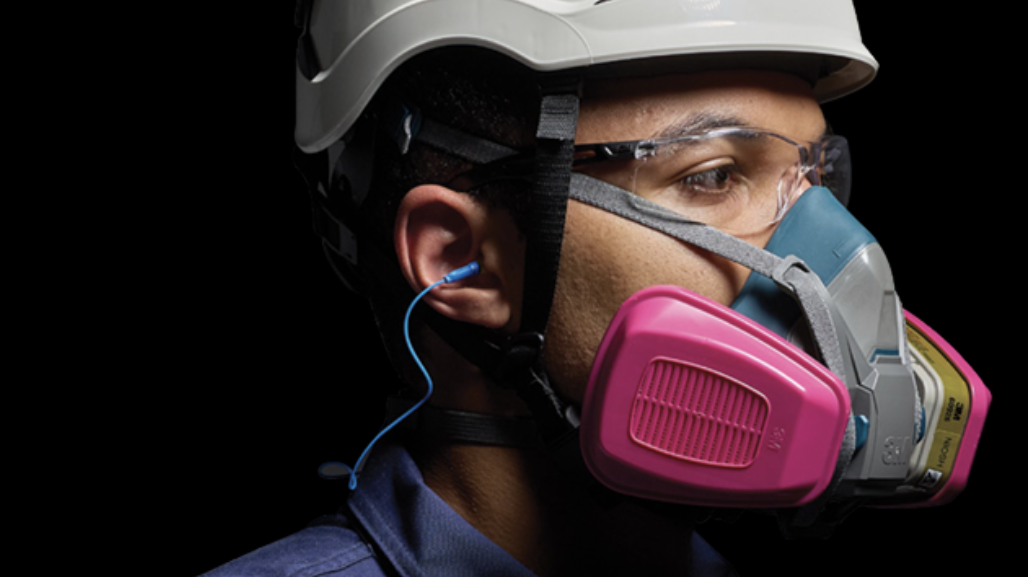
3. Respiratory Protection
Standard: 1910.134. Violations (general industry): 1,953.
By removing construction violations, respiratory protection rises two spots.
This standard requires a written respiratory program, medical clearance, fit testing and employee training, and it covers exposure to dust, fumes, vapors, mists, welding operations, spray applications and silica-related tasks.
Respirator use can signal to inspectors that there’s a deeper issue going on. “It’s just really dusty in here, so we thought we’d put a respirator program in” will only invite more questions, Truesdale says. Employers should have a clear policy backed by data such as air analyses.
4. Powered Industrial Trucks
Standard: 1910.178. Violations (general industry): 1,826.
Powered industrial trucks moves up four spots, from No. 8 for all industries to No. 4 for manufacturers and other non-construction verticals.
The standard covers forklift safety, operator training, inspections and safe operation, and it includes forklift traffic, pallet movement, loading docks, material handling and staging areas.
Lift trucks and other PITs are where fall protection shows up in the manufacturing list. “If you’re more than 4 feet off the ground, you have to wear a body harness,” Truesdale says.
5. Machine Guarding
Standard: 1910.212. Violations (general industry): 1,239.
When construction is removed, machine guarding rises five places—from No. 10 to No. 5—including a leap over eye and face protection.
The standard requires safeguards to protect against moving parts, pinch points, nip points and flying debris. It applies to production machinery, conveyors, presses, mixers, cutters, rollers and automated equipment.
Along with hazcom and lockout/tagout, machine guarding is one of the three key areas that manufacturing employers should focus on, Truesdale says.
“Since you’re actually manufacturing something, machine guards protect your hands from going into the grinding wheel,” he says.
Read more: The 4 Most Common Industrial Injuries and How to Avoid Them
6. PPE: Eye and Face Protection
Standard: 1910.133. Violations (general industry): 1,111.
Eye and face protection is No. 9 for all industries but moves up three spots for manufacturing and other non-construction verticals.
This standard requires appropriate eye and face personal protective equipment wherever hazards are present—including grinding, cutting, chemical handling, splashing, flying particles and maintenance activities.
“Everybody in the plant for the most part is wearing PPE,” he says. In manufacturing, “you have a lot of eye and face injuries—flying debris from grinding wheels, particulate, things like that.”
7. Permit-Required Confined Spaces
Standard: 1910.146. Violations (general industry): 1,052.
Confined spaces may not be top of mind for many employers, but they are high-risk areas in manufacturing, as borne out by the number of OSHA violations.
The standard covers identification, permitting, atmospheric testing and controlled entry into confined spaces such as tanks, vessels, pits, silos and other enclosed spaces with limited entry, hazardous atmospheres or engulfment risks.
8. Electrical – Wiring Methods
Standard: 1910.305. Violations (general industry): 1,004.
“Electrical is always there” in manufacturing, Truesdale says. It has ties to lockout/tagout, powered industrial trucks and machine guarding.
This standard requires safe installation, maintenance and use of electrical wiring and equipment. It covers panels, circuits, grounding, flexible cords, temporary wiring and protection from damage or exposure.
Read more: OSHA Recordable vs. Reportable Incidents: How to Tell the Difference
9. Recordkeeping – Injury and Illness Reporting
Standard: 1904.29. Violations (general industry): 982.
On a construction site, as soon as the structure is built, the manager leaves for the next job, so there is no need for long-term, on-site recordkeeping, Truesdale says. “In manufacturing, you have a safety manager who lives there and likely will continue to live there. They have to make sure that the records are kept.”
This standard requires accurate OSHA logs, incident tracking and reporting of serious events. It covers OSHA 300 logs, 301 forms, recordable injuries and timely reporting of severe incidents.
10. Walking-Working Surfaces
Standard: 1910 Subpart D. Violations (general industry): 941.
“Slips, trips and falls are always an issue,” Truesdale explains. “You’ve got so much food manufacturing and wet manufacturing—things like cement plants and chemical plants.”
This standard requires floors, aisles, platforms, stairs and passageways to be maintained in a safe condition. It addresses slip, trip and fall hazards such as cluttered aisles, dock edges, mezzanines and wet production floors.