For decades, hand protection in industrial environments has been designed around a series of compromises. Comfort, precision and tactility were often treated as secondary to protection, particularly in jobs requiring extended wear and precise hand movements.
That mindset is changing.
Today, precision comfort is increasingly recognized as critical to how workers use protective equipment and perform intricate tasks. When gloves feel hot, restrictive, or tiring, workers are more likely to remove them in order to operate more freely, leading to inconsistent use. Comfort is no longer a “nice to have” for the worker. It directly influences their ability to perform tasks effectively throughout the day.
Why Comfort Matters in Precision Work
In many industrial tasks, hands are in constant motion. Repetitive movements, fine handling, and long shifts place continuous demands on the wearer. Studies estimate that workers may perform thousands of hand movements during a typical shift, and even minor restrictions in comfort can contribute to fatigue and task interference. When gloves limit natural hand movement or trap heat, the impact goes beyond discomfort:
Reduced dexterity affects task accuracy and can slow task completion, as gloves can significantly change how hands perform manual work compared to bare hands 1.
Heat buildup leads to hand fatigue and glove removal, a common reason workers take off protective gloves during shifts. Surveys show that a substantial share of workers cite discomfort, including heat and fit issues, as barriers to consistent PPE use 2.
Lower compliance increases safety risks, as many hand injuries are associated with inconsistent or improper PPE use. While U.S. Bureau of Labor Statistics data highlights the high prevalence of nonfatal hand injuries overall, industry analyses based on BLS and CDC injury data indicate that up to 70% of hand injuries occur when workers are not wearing gloves 3.
Comfort supports performance by allowing hands to move freely and stay cooler over time. Breathability and tactile sensitivity are not cosmetic features. They directly influence how long gloves are worn, how consistently protection is used, and how well workers can stay focused on the task at hand. The challenge for PPE manufacturers is delivering this level of comfort without compromising protection.
A New Approach to Coating Technology
Many gloves struggle to balance protection requirements with the needs of users performing detailed or repetitive work.
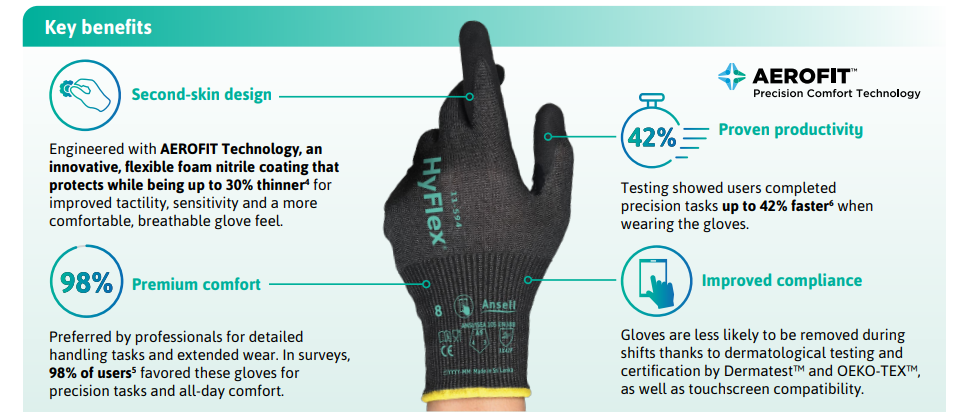
AEROFIT™ Technology takes a different approach. By focusing on coating structure, dexterity and air circulation, it is designed to support natural hand movement and enable air flow for sweat management during extended wear. This reflects evolving from simply adding material toward optimizing the glove’s fit and interaction with the hand.
The HyFlex™ Precision Comfort Series with AEROFIT Technology
The HyFlex Precision Comfort Series with AEROFIT Technology is built for tasks where precision, comfort, tactility and control matter most.
By prioritizing how gloves feel and perform over time, this series supports a better user experience and encourages consistent use throughout the workday.
Looking Ahead
The future of hand protection is not defined only by technical specifications. It is shaped by how well protective equipment integrates into real working conditions.
By elevating comfort and breathability through AEROFIT Technology, the HyFlex Precision Comfort Series reflects a broader shift in the industry toward protection that works in harmony with the wearer.
1 Sosa, E. M. et al. (2024). Assessing the impact of industrial glove use on perceived hand dexterity, function, and strength. Applied Ergonomics, Elsevier.
2 Ada, Y. R. et al. (2025). Strategies to improve compliance with personal protective equipment use in the textile industry: a scoping review. BMC Public Health, 25, Article 2743. https://doi.org/10.1186/s12889-025-24037-9.
3 U.S. Bureau of Labor Statistics. (2024). Nonfatal occupational injuries and illnesses tables. https://www.bls.gov/iif/nonfatal-injuries-and-illnesses-tables.htm; supplemented by industry analyses and safety professional surveys reporting PPE non-use and discomfort as key factors in non-compliance.
4 Versus standard Ansell gloves with the same level of protection.
5&6 Based on a survey of 52 users comparing Ansell gloves (specifically HyFlex 11-574) to competitors, potentially varying for others in the series.
Download a PDF of the complete article here.