



Understanding Acetone: Uses, Risks and Safety Precautions
While widely used, acetone poses health risks, especially in settings with significant exposure, requiring careful handling and safety measures.
While widely used, acetone poses health risks, especially in settings with significant exposure, requiring careful handling and safety measures.
Known for its colorless appearance and distinct, sweet odor, acetone (chemical formula: C3H6O) is the simplest ketone and plays a crucial role in several industries.1 From paint thinners to medical instruments, its ability to dissolve other substances makes it a valuable solvent. However, while widely used, acetone poses health risks, especially in settings with significant exposure, requiring careful handling and safety measures.
Industrially, acetone is synthesized from benzene and propylene.2 These compounds form cumene, which, after oxidation, yields cumene hydroperoxide, producing both phenol and acetone as byproducts.2 The demand for acetone continues to grow, largely due to its extensive use across various industries.
One of the most significant applications of acetone is as a solvent. In 2024, approximately 36.2% of acetone is projected to be used for this purpose.3 Its solvent properties are essential for dissolving substances like paints, plastics, resins, synthetic fiber, and glues.3
1. Chemical: The chemical industry is the largest consumer of acetone, responsible for 68.4% of its global use in 2021, underscoring its importance in chemical and industrial processes.4
2. Manufacturing: Acetone is used in the production of plastics, resins, and lacquers. It is also a key ingredient in the formulation of adhesives and coatings, providing the necessary properties for effective bonding. Additionally, acetone serves as a cleaning agent for removing glues, paint, and grease from components.
3. Pharmaceuticals: In the pharmaceutical industry, acetone serves as a solvent for active ingredients and fillers in medications. It aids in the formulation of drugs, ensuring that they are effective and stable.
4. Textiles: Acetone is employed to remove grease and sticky substances from fabrics and is used in the production of synthetic fibers. Its solvent properties help in dyeing processes and cleaning textiles.
5. Electronics: In the electronics industry, acetone is crucial for cleaning and degreasing electronic components. It ensures that surfaces are free from contaminants, which can affect performance and reliability.
6. Cosmetics and Personal Care: Acetone is a primary ingredient in nail polish removers and is used in various cosmetic formulations. Its ability to dissolve oils and other substances makes it effective for removing makeup and other residues.
Exposure to acetone can occur in several ways:4,5
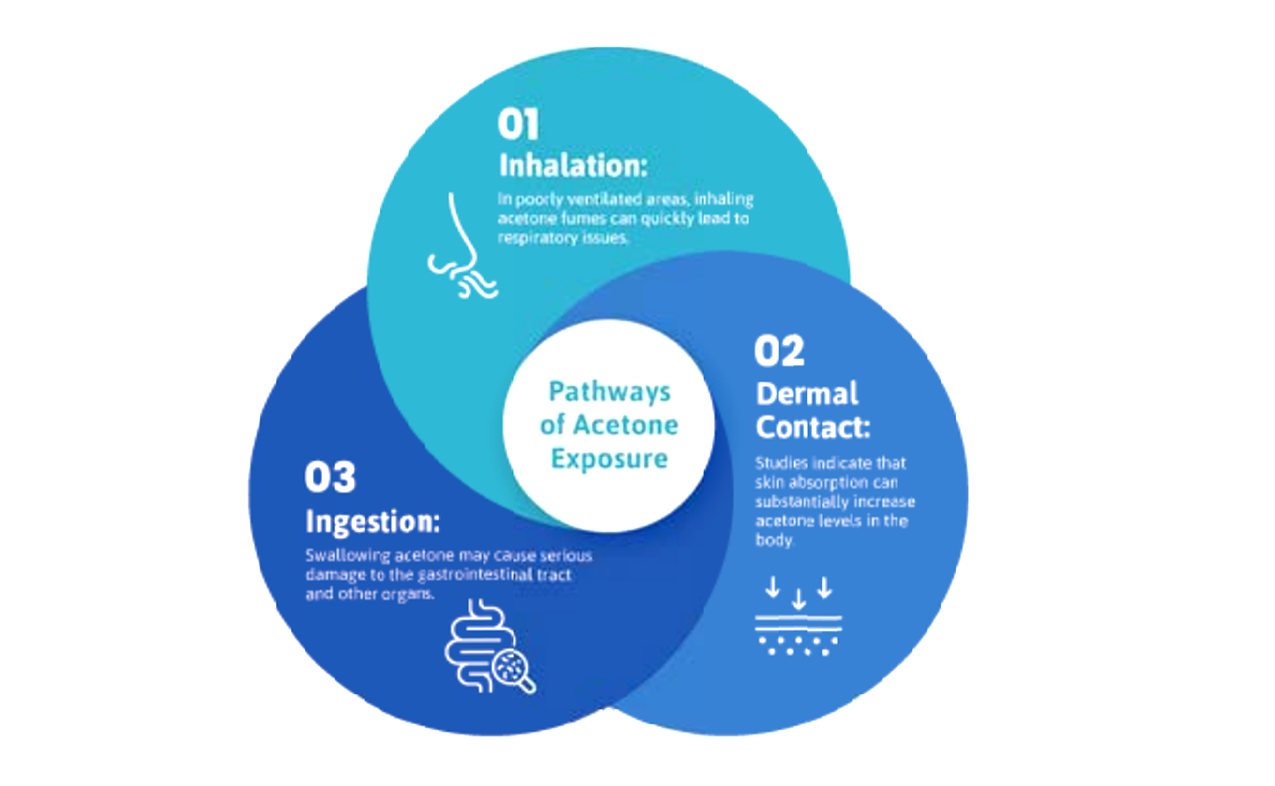
Understanding these pathways is vital for individuals working in environments with acetone exposure, as it highlights the need for comprehensive safety protocols.
While small amounts of acetone are metabolized harmlessly by the liver, moderate to high levels of exposure can pose health risks. The short-term effects of exposure can vary but commonly include:4,8
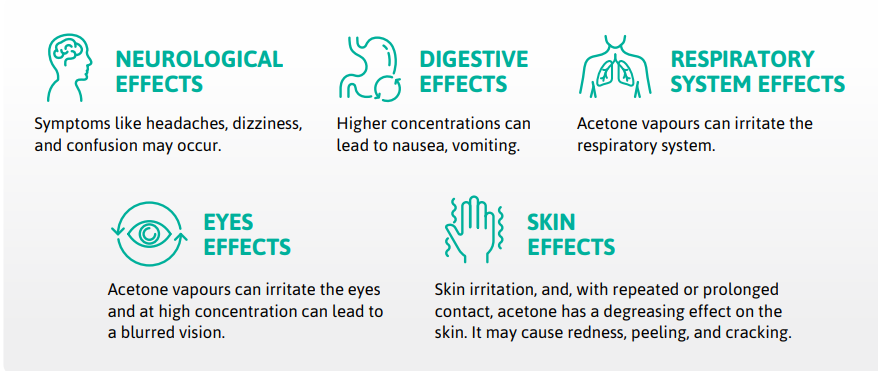
In severe cases, acetone exposure may result in respiratory failure, coma, or, in rare instances, death.4 Additionally, research indicates that women may experience shortened menstrual cycles with high exposure levels.4 Proper handling, therefore, becomes critical in reducing the risk of severe outcomes.
A study conducted by Fukabori et al. in 1990 explored the absorption of acetone through the skin, revealing critical findings about its impact on the body. The study applied acetone to participants‘ skin for 2 hours per day over four days, which resulted in detecting traces in the blood, alveolar air, and urine. The results showed that:5
• Increased Exposure Time: Doubling exposure time to four hours per day more than doubled the acetone levels in the body.
• Inhalation Equivalence: Dermal exposure for two to four hours mirrored the effects of inhaling acetone over two hours.
These findings emphasize the importance of using protective equipment, such as gloves, to limit dermal contact, given how readily acetone is absorbed through the skin.
Given acetone‘s widespread industrial use, safety in the workplace is paramount. Statistics from the Occupational Safety and Health Administration (OSHA) indicate that acetone-related accidents can be deadly. In recent years, 4 out of 10 acetone-related incidents led to fatalities, underlining the chemical‘s potential hazards in industrial settings.6 Poison control data from 2019 reported 1,553 cases of acetone-related poisoning, with only one fatality, suggesting that while acetone is dangerous, lower concentrations typically aren’t fatal.7
To minimize risks, OSHA and other safety organizations recommend:1,2,6,8
Ventilation: Proper ventilation reduces the concentration of acetone vapor in the air. Acetone’s volatility is another factor that requires attention. Its high evaporation rate means it can quickly disperse into the air, increasing the likelihood of inhalation exposure in confined spaces. Therefore, ensuring adequate ventilation and routine monitoring of air quality in workplaces is essential.
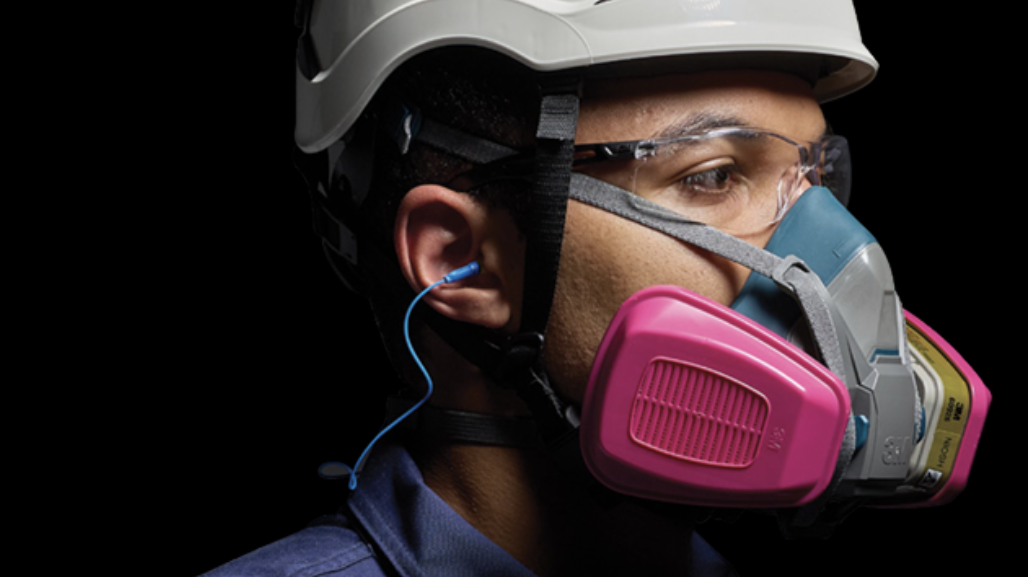
Personal Protective Equipment (PPE): Gloves, masks, and goggles can shield workers from inhalation and dermal exposure.
Exposure Limitation: Restricting the amount of time spent in contact with acetone reduces health risks.
Globally, the acetone market was valued at around USD 6.06 billion in 2023.9
In 2024, North America accounted for approximately 28.4% of the global acetone market.10
This strong market share is driven in large part by established chemical manufacturing infrastructure, robust demand from the pharmaceutical industry, and widespread use of acetone in solvents, coatings, and specialty applications.11,12
According to Reports & Data, the North American acetone market alone was valued at USD 1.8 billion in 2024 and is forecasted to grow to USD 3.2 billion by 2034, at a compound annual growth rate of 5.9%.13
As some industries, especially pharmaceuticals, personal care, and electronics, continue to expand, North America is expected to remain a key driver of global acetone demand.14
Download a PDF of this brochure here.

Ansell manufactures innovative products that provide unmatched quality, comfort and technology to millions of consumers, workers and first responders. All our gloves benefit from over 100 years of Ansell research and development, patented technology and state of the art manufacturing. Anywhere in the world Ansell helps workers finish their job more safely, more comfortably and more productively.




To request a quote, please login to your existing account or register a new one. This helps us provide you with a personalized experience and keep track of your requests.