Before automating an abrasives operation, a new solutions lab can help fabricators put it to the test first.
Consumers typically set their expectations high. Using past experiences as a baseline, assumptions can be made about that next restaurant or a second product purchase. When there is no baseline, consumers must go in blind and hope for the best. But going in blind isn’t an option when it comes to large investment in capital equipment and automation.
So when Norton | Saint-Gobain Abrasives established its Abrasive Process Solutions (APS) program and lab at the Higgins Grinding Technology Research Center in Northborough, Mass., one of the goals was to help customers set expectations about what the experience of automating their grinding operations might look like. To understand the process, Modern Abrasives & Deburring (MAD) got the opportunity to talk to Nathan Jackson, automation application engineer, and Andrew Biro, group leader for advanced application engineering and the APS lab.
MAD: How do customers get connected with the APS team?
Biro: We utilize our extensive sales network across North America that is in front of customers every day. They bring customers up to speed on what the APS lab can deliver for them. Our team can also help connect customers with our field and APS application engineers to discuss details. From there, we have a list of criteria that we go through to determine how to best support and deliver value to the customer. Once we have this understanding, we begin discussing specifics with the customer on deliverables.
The criteria for successful projects often comes down to whether the customer is ready for automation and specifically abrasives in automation. Do they have a background in it? Have they automated before? Does their grinding process align with automation, and if not what would it take to get them there? Are they working with or plan to work with an integrator?
We try to look for customers that are ready to automate their abrasive process, have a project champion who can articulate goals and objectives, and have done some homework ahead of time. That helps things go quickly and much more smoothly.
Jackson: From a technical standpoint, we also look to see if our products are a good fit and whether we have the resources in the lab to demonstrate it. The robotic cell at the APS lab was built to be comprehensive and all-inclusive, and because the Norton product range is so broad, we haven’t really turned anyone down.
What does an initial outreach look like?
Biro: Our customer needs can vary significantly, but there are often common threads we see. One example is, “I know how to process my material by hand, but I don’t know how to do it with automation.” Requests can also be as simple as, “We have material A, but we’re going to material B and need help figuring out how to work with it.”
We also work closely with integrator partners on answering questions they have regarding abrasives. Many of them say things like, “We know how to build the robotic cell, but we don’t know the correct grinding products or process to achieve the required goals.”
There are also the cases where a process is currently being done by hand, but the customer isn’t looking to automate yet; they just want a better process. We can run those types of projects, too – they typically revolve around optimizing a product or process conditions to get better life, faster material removal rates or better-quality parts. Overall, about 90 percent of our projects are automation focused.
Can you talk about the non-automation scenarios?
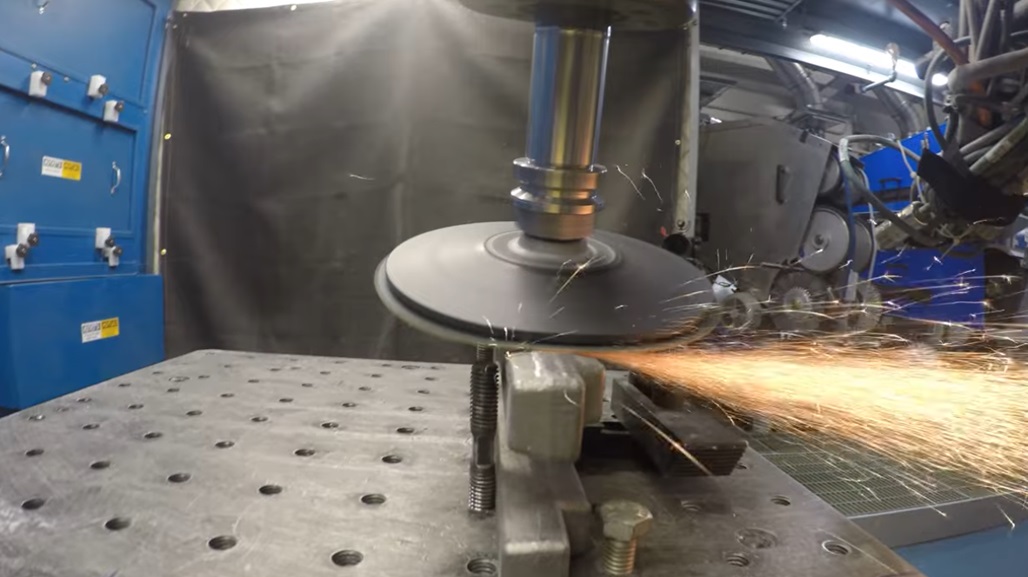
Jackson: Typically, we focus on automation, but we recently had a customer that was manually using our bonded snagging wheels and was looking for a better option. We suggested switching to a diamond wheel and invited them to the lab to watch the robot simulate what their operators were doing. In a direct one-to-one comparison, we put both wheel types on the robot and showed the data to the customer, revealing how much faster they could go by using a different wheel technology.
There are also instances where an application isn’t ready for robotic automation, but would work in a CNC setup, such as with a milling machine. When you start talking material removal of less than a thousandth of an inch, that’s a case where a robot might not be able to hold that tolerance as well as a CNC machine. We can prove out the concepts on the robot in the APS lab and then move to a CNC machine at the customer location. It’s not that it can’t be done with abrasives, it might just require a different form of automation than robotics.
Beyond tolerance issues, we typically want to look upstream before automating. The most common example we see is with manual welding. When you’re talking about weld-grinding, most integrators won’t touch a product with manual welds because they can be so inconsistent. If you have an inconsistent irregular part, you may need to look upstream to establish the consistency before looking to automate the grinding.
What types of industries are reaching out to you the most?
Biro: The foundry and aerospace industries are the two largest industries we support. Aerospace deburring has been a hot topic over the last several years, and the foundries are all at capacity, so they’re looking to improve their processes to get parts out the door faster and more safely.
Jackson: Buff shops also reach out to us quite a bit. Aerospace demand is driven by consistency and repeatability while the foundries and buff shops are driven by labor challenges. Often the automation requests are to replace or assist with the most dull, dirty and dangerous jobs in the shop.
Once a customer has passed the initial criteria, what’s the next step?
Jackson: Typically, we send one of our engineers to the customer site to see how things are currently being done and then we’ll take their actual parts into our lab where we’ll design the fixturing and order the abrasives we’ll need for testing. The actual test will take about a week, depending on how complex the setup will need to be. The customer is then invited onsite to do the testing alongside us, so they can watch the parts run and provide feedback.
Throughout that week, we can test changes in parameters, speeds and pressures to really dial in a process. Once we’ve determined what we think works best, we’ll turn to the customer to see if there’s anything else they want to try. Maybe they want to see it go faster or use higher force. After getting the customer’s approval, we send a report with everything we’ve done, including videos and photos.
If they’re already working with an integrator, we’ll work alongside them and use our report as a recipe for the integrator to work off. If the end customer is totally new to automation, we can help connect them with appropriate robotic integrators.
We understand everyone is very busy, so customers don’t always join us onsite for test trials. However, we have seen those who do have an increased awareness of the developed process. They can also gain knowledge by spending some time with our automation team to learn concepts or ask questions to get better prepared for automation.
Biro: The lead time for when we accept a project and start testing in the lab is somewhere between seven and nine weeks, depending on project complexity and what’s coming down the pipeline. That gives us time to review the process, order the abrasive products, design the fixtures, etc. That also gives our customers time to look at their calendars and plan time to be onsite with us.
See automated grinding solutions in action at the Norton APS Lab in this short video:
Can you talk about some success stories?
Jackson: Aerospace deburring has been a huge problem for the industry. It’s something that’s more manual than you would think, so we’ve pushed to lead the charge on helping to automate these processes.
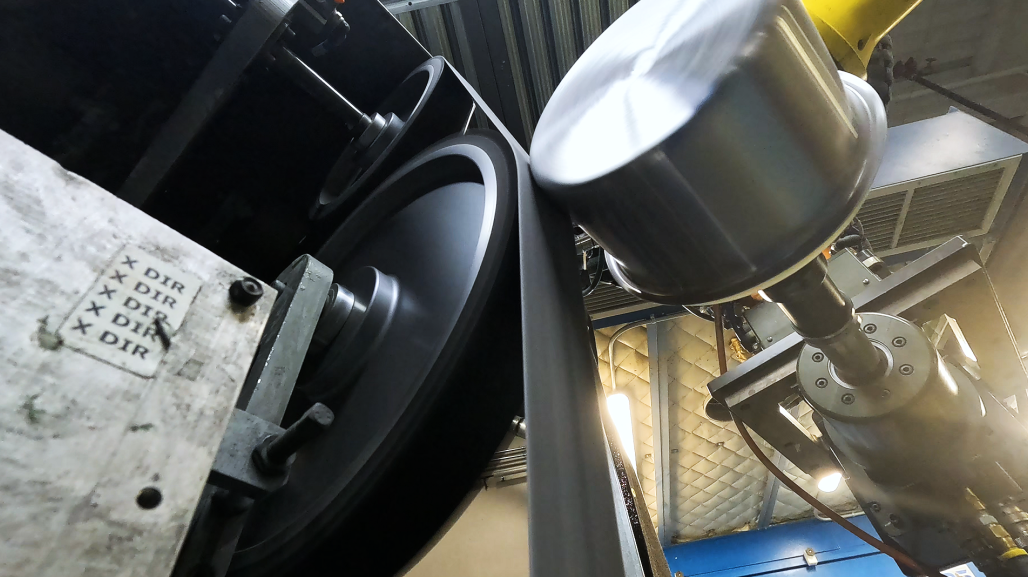
The current industry standard is to use a filament brush, which can be inconsistent. They often don’t last long, and the consistency changes throughout the product’s life due to its design and wear characteristics, so we recently started using a bristle disc with grain embedded in a resin, which is a little more consistent and automation friendly. These brushes are very compliant, and we’ve done a lot of testing with them over the last several years. We’ve been able to expand from testing on a robot in APS and successfully implemented these products and applications on CNC applications.
Biro: It’s a good example of developing something in the lab with a robot and expanding it to other platforms. Aerospace deburring has been a huge challenge for many years, and I think we finally have something that can work for a vast majority of customers to help them with throughput.
Jackson: Another success story came from a foundry that was looking to automate the gate-removal process, which had become a bottleneck. They needed to remove 5 lbs. of steel in 1 min. – it was a highly demanding application. Honestly, we were a little skeptical, but our RazorStar® product was new, so we really hadn’t tested its upper limits yet. Through testing, we found that with a RazorStar belt and 125 lbs. of force, we could take off the amount of material they required.
The foundry had already chosen a certain size motor, but because we can track and monitor horsepower data as we’re grinding in the APS lab, we recognized that the motor the integrator had ordered was too small. We went back to the integrator and they doubled the size of the motor and have not had any issues. It’s not something the end user or the integrator would have known until we tested it, so not only do we help on the abrasives side, but we can help spec out the equipment down the road, too.
It was a good example of the opposite ends of the spectrum. We can take off two thousandths or can burn through 5 lbs. in a min. We must be ready for both.
Can you talk more about how you work with integrators?
Jackson: We’ve seen instances where a customer will start talking to integrators before they come to us, and they’ll get three entirely different proposals. It can be kind of daunting if you talk to three different experts and they give you three different answers. So we’re trying to bridge the gap between the integrators and the customers. The integrators know the robotics; we’re just here to be the abrasives experts to remove that risk for both parties.
Biro: The APS lab is a great starting point for folks that don’t know where to start on their grinding automation journey. By coming to the APS group, we can help bridge the gap between the need of the customers and the deliverables of the integrators. We’re a very good intermediary to pull risk out of the process of connecting the two groups and answering key questions for both.
The formula seems to be working because we’re constantly busy, which is a good thing. We want to be busy and help move the industry forward. We know that there are so many more applications that we haven’t touched or been asked about yet, so we’re excited for those challenges in the future.
This article was previously featured on Norton's blog. Originally published in Modern Abrasives and Deburring, a special addition to FAB Shop Magazine Direct. Reproduced with permission.