Summer is brutal on heating, ventilation and air-conditioning equipment. As temperatures climb outside, HVAC systems work overtime to maintain comfortable, productive conditions inside. Yet it’s often during these critical months that preventive maintenance gets postponed.
That can be a costly trade-off. Although an HVAC issue may not immediately stop work, it can slowly affect the indoor environment and the people working there.
“If you don’t change your air filters, you put extra stress on the equipment, because now it’s trying to overcome the resistance of a dirty air filter.”
David Heritage,
Vice President of National Accounts,
Filtration Group
“Everyone expects the air conditioning to run well, but when your system is down, the whole facility gets very upset,” says Jeff Vendt, vice president of marketing at Nu-Calgon. “Maintaining your system keeps everyone happy. It’s so important in the summertime.”
Summer Pushes HVAC Systems to Their Limits
Summer is uniquely demanding on both equipment and maintenance teams. HVAC systems run longer, and there is less room for error.
“It’s much harder to cool a space than it is to heat a space,” says David Heritage, vice president of national accounts at Filtration Group. “Not only is it more expensive, but it’s also more difficult on the equipment.”
Read more: OSHA Heat Regulations: Compliance Guide for 2026 and Beyond
When systems begin struggling, the warning signs often appear gradually.
“When it’s 80 degrees out, my system can stay at 72 all day long,” Vendt says. “When it’s 102 degrees, my system may have a hard time maintaining 72 degrees. The hotter it gets outside, the more your air conditioning creeps up, and it starts getting warmer inside. The system just can’t keep up.”
The most common culprits are surprisingly routine, he says: dirty filters, dirty coils and refrigerant leaks.
Filters and Coils: Big Problems Start with Small Maintenance Tasks
For the root of most summertime HVAC issues, Vendt and Heritage each point to neglected filters.
“Filters are the No. 1 thing that people forget to change,” Vendt says. “Dirty filters tend to be the biggest problem for cutting down the flow of air.”
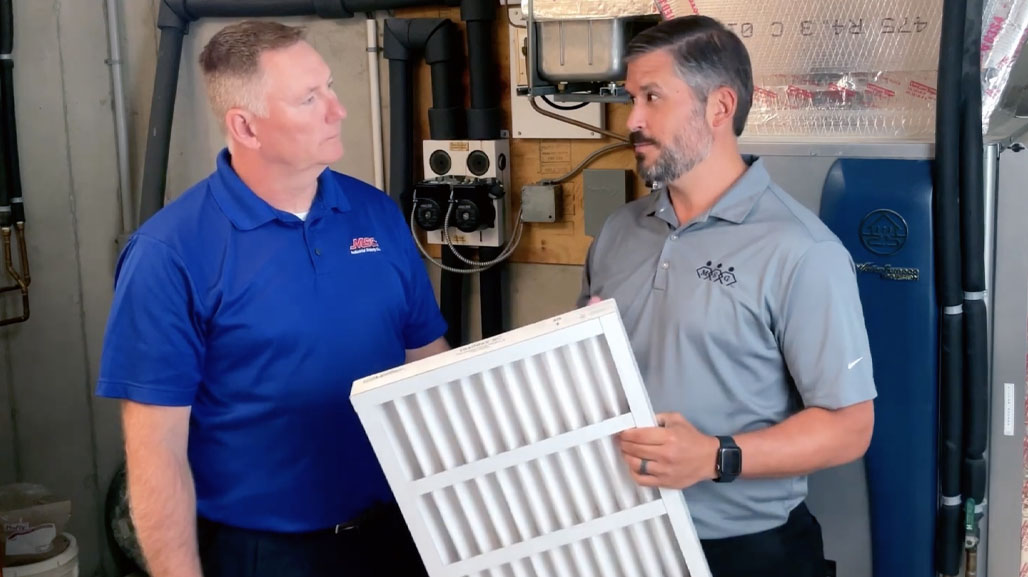
Heritage explains why replacing air filters matters so much. “If you don’t change your air filters, you put extra stress on the equipment, because now it’s trying to overcome the resistance of a dirty air filter,” he says. “The dust will keep going through the filter, and it’ll no longer be doing its job, and it’ll clog up your unit.”
WATCH: In this episode of MSC’s Quick Tips, we hear from Jason Board of MSG about how understanding MERV ratings can lead to cost savings in energy consumption with air filters:
As airborne dust and debris collect on the cooling coil, they further restrict airflow and reduce the system’s ability to remove heat.
“The cooling coil is like a radiator with very small fins that allows the system to take heat out of the air,” Heritage explains. “But if you don’t run the right air filtration, the coils essentially become an air filter, and they will get clogged up. They no longer transfer heat because you won’t get the airflow through them, and that dust and debris becomes an insulator.”
Routinely changing filters and cleaning the cooling coil will go a long way in keeping the HVAC system operational.
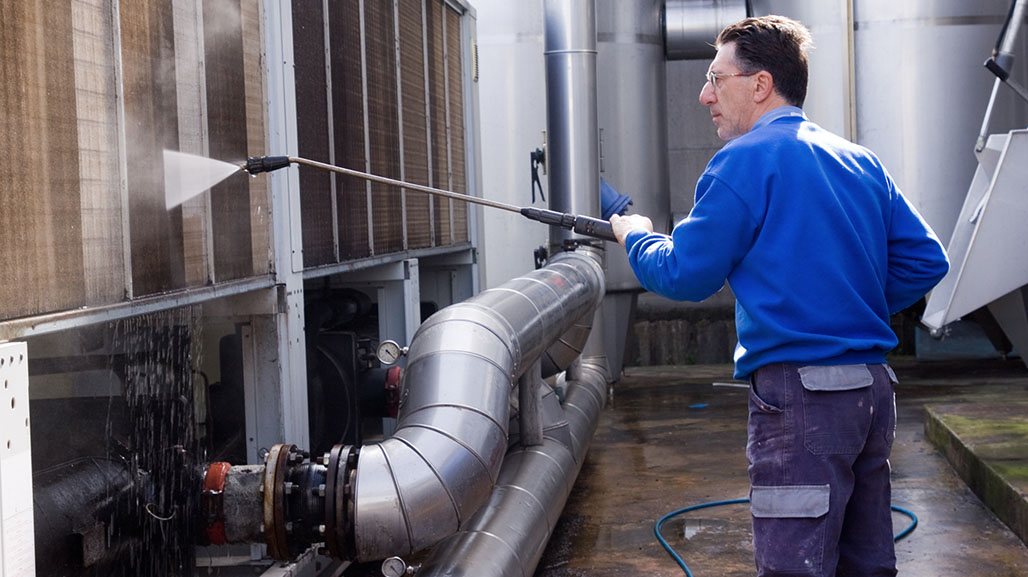
But as Vendt notes, cleaning the coils requires more than simply spraying them off.
“A lot of people just use water,” he says. “If I just use water to wash my hair, that’s not going to clean my hair. You need some type of soap or degreaser to take the dirt off the coils.”
Read more: Summer Safety: Beat Workplace Heat Stress with Cool Air, Ventilation and HVLS Fans
Deferred Maintenance Can Become Expensive Maintenance
Neglected maintenance isn’t necessarily intentional. It’s more that resources get diverted to other areas.
“People think that by not changing their air filter, they may be saving money,” Heritage says. “We see that a lot where people say, ‘We’ve got budget constraints, so we’re going to stretch these filters longer.’”
Vendt sees that, too. “One of the first things that gets cut during recessions is air-conditioning maintenance,” he says. “They change the filters less. They clean the coils less. It’s the first thing that goes, because people don’t see the benefits of it.”
The decision usually leads down one of two paths, Heritage says.
“You’re either going to stress the system to the point where it’s going to break sooner because it’s working harder all the time, or you’re going to clog it up to the point where it’s no longer operating the way that it should,” he says. “You’re going to end up having a break-fix call.”
HVAC Troubleshooting: Start with the Basics Before Assuming the Worst
When cooling performance begins to sag, start with the simplest solutions before moving to more complex ones.
“Putting a new air filter in is the least-expensive option compared to calling in a maintenance contractor,” Heritage says. “Then you go to the next steps as to what might be causing your system to not operate correctly.”
Calling on your HVAC expert—“whether it be your system engineer, your contractor or your vendor,” Heritage says—can help you determine the best filter for your system, which is a balance of filtration and airflow. “Look at things such as performance, total cost of ownership and your maintenance needs,” he says.
Read more: Air Filtration: What Are MERV Ratings and How Do They Protect Your Workers?
Vendt recommends that maintenance include cleaning coils and checking the refrigerant charge. “If you see a drop in your refrigerant, that means you may have a leak, and you’ll have a system issue real soon,” he says.
HVAC systems are typically maintained in the spring and fall, Vendt says—in March or April to get ready for the hot season, and in October or November to prepare for winter.
“If you regularly maintain the facility’s air-conditioning system by changing the filters, cleaning the coils and checking the refrigerant,” Vendt says, “the system could last a long time.”