Why protecting construction workers matters, and how PPE plays a critical role.
Construction shapes the world around us. from highways and hospital, to homes and high-rises, the industry builds the foundation for everyday life. In the United States alone, over 7.5 million people are employed in construction-related jobs, according to the Bureau of Labor Statistics (BLS). This significant workforce undertakes tasks that range from residential building to large-scale infrastructure projects.
But construction is also one of the most hazardous industries in the country. With heavy equipment, elevated work, electrical systems and constantly changing jobsite conditions, the risks are real, and they’re significant. Understanding those risks and how to change them is essential to protecting the people who keep the industry moving.
The Scale of Construction Safety
When you consider how many workers are active on jobsites across the U.S., the importance of safety becomes even clearer. Millions of individuals are exposed daily to potential hazards in residential, commercial and industrial environments.
That scale alone demands comprehensive safety programs, not just policies on paper, but real-world practices, training and protective solutions that workers can rely on every day.
The Biggest Dangers in Construction
Construction sites are dynamic environments. Conditions change quickly, multiple trades work simultaneously and hazards often overlap.
Some of the biggest dangers in construction include:
Falls: Falls are the leading cause of fatalities in the construction industry. Workers often perform tasks at significant heights, making fall protection measures crucial.
Struck-By Incidents: These occur when workers are hit by moving vehicles, falling objects or equipment. Proper training and the use of PPE can mitigate these risks.
Electrocution: Contact with live electrical wires and equipment can result in severe injuries or death. Ensuring proper insulation and adherence to safety protocols is essential.
Caught-In/Between Incidents: These involve workers being caught in or compressed by equipment or objects. Awareness and the use of protective devices are vital in preventing such accidents.
According to the Occupational Safety and Health Administration (OSHA), in 2023, approximately 1 in 5 worker deaths occurred in construction. Additionally, non-fatal injury rates are also alarmingly high, with common injuries including sprains, strains, fractures and lacerations.
In 2023, there were 1,034 fatal injuries in the construction industry.
Falls accounted for 370 of these fatalities.
Struck-by incidents resulted in 120 deaths.
Electrocutions caused 85 fatalities.
Caught-in/between incidents led to 55 deaths.
These statistics underscore the critical need for stringent safety measures to help protect construction workers from harm.
Where PPE Fits In
Personal Protective Equipment (PPE) is often described as the “last line of defense.” It doesn’t replace proper planning, engineering controls or safe work practices, but when hazards can’t be fully eliminated, PPE becomes critical.
More importantly, PPE is part of a larger safety culture. It only works when workers are training, properly fitted and understand why consistent use matters.
Here’s how key PPE categories can help reduce risk on the jobsite:
1. Head Protection
Hard hats and safety helmets are designed to absorb impact from falling objects or overhead hazards. For workers near electrical sources, selectin the correct helmet is essential.
Class C (vented) helmets provide airflow for comfort but do not offer electrical insulation.
Class E (non-vented) helmets provide additional electrical protection.
Type II helmets add side impact protection, an increasingly important consideration in high-risk environments.
Newer technologies, including advanced impact-absorbing materials, like Mips® (Multi-directional Impact Protection System), are helping reduce rotational and blunt force trauma to the brain.
2. Hand Protection
Hands are among the most frequently injured body parts in construction. Gloves protect hands against cuts, abrasions, chemicals and rough materials. From material handling to tool use, selecting the right cut level or chemical resistance rating is essential.
Advancements in high-performance fibers and engineered coatings, like on G-Tek® Paradox™ and PosiGrip MAX™ gloves, are helping improve cut resistance while maintaining dexterity and grip. Enhanced abrasion resistance extends glove life, reducing replacement frequency and overall waste. Some modern coatings also improve grip in oily or wet conditions, helping reduce slip-related hand injuries without sacrificing comfort or flexibility.
3. Hearing Protection
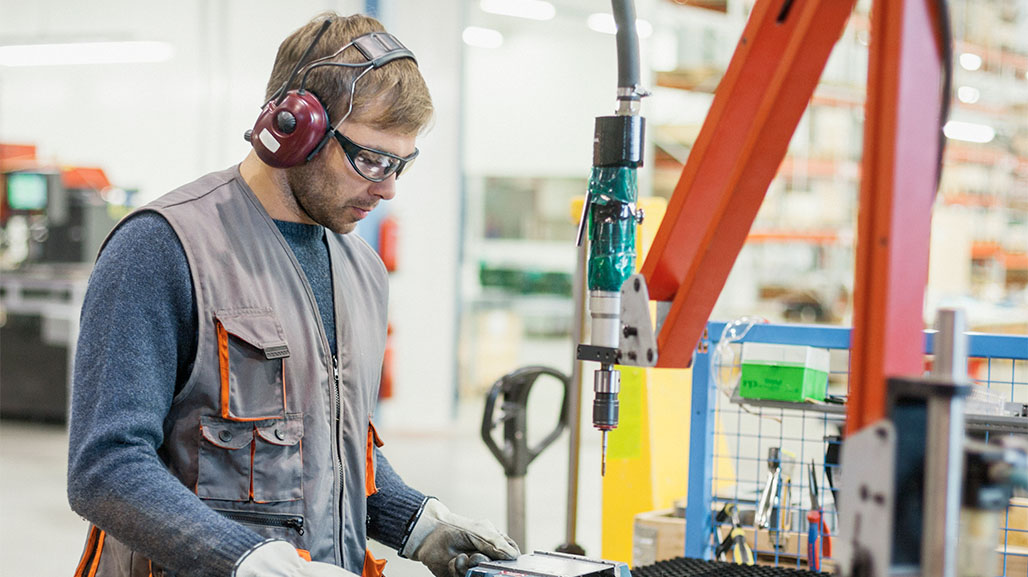
Construction site noise can permanently damage hearing, often long before workers realize it. Ear plugs and ear muffs reduce exposure to hazardous noise levels. Accessible dispensers serve as a visible reminder to protect hearing before stepping onto the jobsite. For teams struggling with proper fit, fit-testing programs or helmet-mounted ear muffs can improve compliance and protection.
4. Fall Protection
Safety harnesses and lanyards are crucial for workers operating at heights. These devices secure the worker and help prevent devastating falls, which are a leading cause of fatalities in the industry. You should also consider things like fall clearance when choosing between SRLs or PFLs and shock-absorbing lanyards.
5. Protective Footwear
Reliable work boots do more than protect toes. Safety footwear with protective toe caps, puncture-resistant soles and slip-resistant outsoles helps guard against crushing injuries, sharp debris and slick surfaces. Comfort and stability also support productivity, reducing fatigue and likelihood of slips and trips.
Building a Culture of Protection
Construction will always involve risk. But risk doesn’t have to mean inevitability.
By understanding the most common hazards, implementing layered safety strategies and reinforcing proper PPE use through training and accountability, the industry can continue to drive down injuries and fatalities. At the end of the day, safety isn’t just about compliance, it’s about making sure every worker goes home in the same condition they arrived in, and that’s a responsibility the entire industry shares.
This article was previously featured on PIP's blog.