



The Most Common Glove Mistakes That Put Workers at Risk
Think any glove is better than no glove? Think again. Discover the seven critical PPE mistakes—from "general purpose" traps to hidden chemical permeation—that put your workers at risk.
Think any glove is better than no glove? Think again. Discover the seven critical PPE mistakes—from "general purpose" traps to hidden chemical permeation—that put your workers at risk.
There is a dangerous misconception: that putting any glove on a worker’s hand is better than no glove at all. At SHOWA, they've spent decades pioneering hand protection, from the first ever nitrile glove to their latest biodegradable innovations, and they've seen one truth remain constant: A glove that is wrong for the task can be just as dangerous as using your bare hands.
When hand protection fails, the consequences aren’t just line items on an insurance claim; they are life-altering injuries. Yet, the “mistakes” that lead to these injuries are rarely due to a lack of equipment. They are almost always due to errors in selection, maintenance, and behavior.
Here are the most common glove mistakes currently putting your workforce at risk and the roadmap to correcting them.
1. The “General Purpose” Trap: One Glove Does Not Fit All
The most frequent mistake in high-volume facilities is trying to save money by choosing a single “jack-of-all-trades” glove model. While a high-quality general-purpose (GP) glove is a miracle of modern engineering for basic tasks, it is not a suit of armor for every hazard. Using one glove for everything is a shortcut to hand injuries.
The Risk:
Using an abrasion-resistant glove for chemical handling, or a thin disposable glove for high-cut glass work.
SHOWA Solution: Sentinel by SHOWA eliminates the “General Purpose Trap” by providing a site-specific glove matrix tailored to your facility’s unique hazards. By mapping trade-specific needs, from high-cut resistance to specialized polymer coatings, this program ensures workers always use the correct protection. A customized glove board simplifies selection across 8+ industrial environments, reducing PPE misuse and lowering overall costs.
2. Ignoring the “Hidden” Hazard: Chemical Permeation
Many safety managers look at a glove and, seeing no holes or tears, assume the worker is safe. This is a serious error when dealing with chemicals which can have wide-ranging implications.
The Risk: Permeation is different from penetration. While penetration happens through a visible rip, permeation happens at a molecular level. The chemical “soaks” through the glove material without changing the appearance of the glove.
SHOWA Solution: This is why SHOWA has developed ChemRest®, one of the world’s most comprehensive online resources for chemical resistance. The mistake isn’t just picking the wrong glove; it’s not checking the breakthrough time. If a glove has a breakthrough time of 30 minutes for a specific solvent and your worker’s shift is 8 hours, they are at risk for the final 7.5 hours of their day if that glove is only used once.
3. Optimizing Hand Safety Through Correct Fit (Incorrect Sizing)
If you provide only “Large” and “Extra-Large” gloves to save on inventory costs, you are actively creating hazards.
The Risk:
Gloves too large, with an excess of material at the fingertips, reduce tactile sensitivity and, more dangerously, create a snag hazard. A loose glove is easily caught in rotating machinery, pulling the hand into the “point of operation.” Gloves too small: This leads to hand fatigue. When a worker has to fight against the tension of the glove material just to close their hand, they will eventually experience cramping, reduced grip strength, and, eventually, the urge to take the glove off entirely which removes the required protection.
4. The “Second-Hand” Contamination: Poor Doffing Technique
You’ve picked the right glove, and the worker wore it all day. The danger is over, right? Wrong. The moment of removal (doffing) is when many chemical burns and cross-contaminations occur.
5. Laundering Without Testing: The Integrity Gap
In an effort to be sustainable and cost-effective, many people wash their cut-resistant knitted gloves. While SHOWA encourages sustainability, and SHOWA In Balance, their corporate sustainability strategy, is proof of that, laundering can be a double-edged sword.
The Risk: Repeated industrial laundering can “shrink” the fibers or degrade the coatings. More importantly, it can diminish the cut-resistance levels of the fibers.
SHOWA Solution: If you launder, you must have a “Retirement Policy.” A glove that has been washed five times may no longer meet the ANSI or EN Cut Level it had when it was new. Use a visual inspection system and periodic lab testing to ensure the “laundered” glove still provides the promised protection.
6. Over-Protection: When Too Much is Too Dangerous
While it seems safer, using a glove that is “too protective” for a simple task can actually create new dangers.
The Risk:
When wearing a heavy-duty, high-cut-resistant glove for a task that requires fine motor skills the worker can lose the “feel” for the part, apply too much pressure, or drop the item. Even worse, if the environment is hot, the worker’s hands may sweat excessively, which can lead to dermatitis or “maceration” (softening of the skin), which makes the hand more at risk of infection.
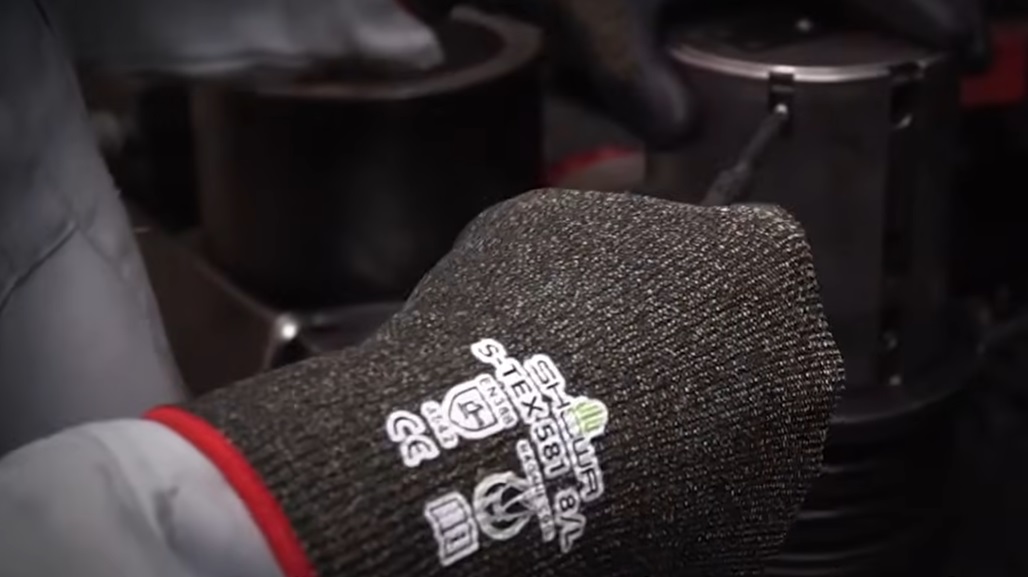
SHOWA Solution: Match the gauge to the task. A 13-gauge or 18-gauge glove, like SHOWA's S-TEX 581, offers a “second-skin” feel that maintains safety while allowing for precision.
7. Ignoring Sustainability as a Safety Factor
In 2026, skipping sustainability is a major safety error, and relying on cheap, low-quality gloves creates a “throwaway culture” that leads to waste and supply shortages.
The Risk: When cheap supplies run low, there is a dangerous temptation to reuse “single-use” gloves. Once these gloves are stretched or touched by sweat and chemicals, they become weak and easy to tear, leaving the wearer unprotected.
SHOWA Solution: Eco Best Technology® (EBT) means that being “green” doesn’t mean being weak. By choosing EBT you get high-quality biodegradable nitrile that is just as strong as standard gloves but breaks down in the ground, in a landfill environment, much faster.
Do you have a “No-Glove” policy for rotating machinery?
Have you checked the breakthrough times for your specific chemicals on ChemRest.com?
Are your workers using a specific doffing technique?
Do you offer at least four sizes (S, M, L, XL) for every glove type?
Are you still using “Leather” for tasks that require modern ANSI or EN Cut levels?
Identifying mistakes is the first step; fixing them requires an expert partner. SENTINEL by SHOWA is a comprehensive hand-safety on-site survey designed to eliminate the “guessing game” from your PPE strategy. SHOWA's specialists perform on-site surveys to identify your specific facility risks, optimize your glove selection for cost-per-wear efficiency, and provide the technical training your team needs to stay safe. Stop leaving your hand safety to chance—Schedule your SENTINEL Survey today and experience the SHOWA difference.
This article was previously featured on SHOWA's blog.

SHOWA stands for the highest degree of hand protection and innovation. With 9 production facilities across the globe, 5,500 employees worldwide and over 100 researchers, we innovate globally and locally. We pioneer the quality, performance and protection to give ordinary hands extraordinary abilities.



To request a quote, please login to your existing account or register a new one. This helps us provide you with a personalized experience and keep track of your requests.