Video Transcript
Narrator: This video is brought to you by Mitutoyo. Precision is our profession. If you're looking for real-world insights, tips from leading industry experts, the latest trends in products and technology, you've come to the right place. From MSC Industrial Supply, this is Tooling Up.
TONI NEARY: Hi everyone, and welcome to Tooling Up. I'm your host, Toni Neary, and I'm so glad that you joined us today. Before we get started, go ahead and click those Like and Subscribe buttons so you never miss an episode from MSC and our industry partners. Today we're talking about digitization, a topic that has been trending across manufacturing, but one that many companies still aren't quite sure how to approach.
Joining me is Isaiah Babcock, a social media specialist at Mitutoyo America Corporation who works closely with manufacturers looking to modernize their measurement and quality processes. Isaiah, welcome to Tooling Up.
ISAIAH BABCOCK: Thanks, Toni. It's great to be here.
TONI NEARY: Isaiah. Let's start with the big picture as we watch Industry 4.0 really morphing into Industry 5.0. It can be intimidating for small to midsize shops to really address digitization. Tell us why manufacturers should look at their processes now to assess digitization and what it can do.
ISAIAH BABCOCK: There's a number of reasons why manufacturers should be looking into digitization, and we can talk about a few right now. The first would be that measurement can take seconds. Manual recording often requires extra steps. Data often must be transferred and entered elsewhere after it's recorded. This can create delays and reduced visibility. Manufacturers most of the time want access to information. They want it quite quick and existing data can provide more value.
TONI NEARY: So it's not necessarily that manufacturers aren't collecting data; it's that they're looking for a better way to capture it, access it, and really put it to work.
ISAIAH BABCOCK: Right. Most manufacturers are already collecting the data. The problem is that they're just looking for more efficient ways to use it.
TONI NEARY: So Isaiah, I don't think we can talk about data and digitization without talking about risk and efficiency. So what are some of those risks with written or manually entered data?
ISAIAH BABCOCK: Right. So there are a few. The first and one of the most common is transcription errors. Either A: you write down something, and it's written down incorrectly, or B: a technician might be reviewing your handwriting and will perhaps create a transcription error. And so digitization can eliminate all of those, as it takes it directly from the measurement straight into your SPC software, and eliminates several different opportunities for error that would otherwise be there if you were writing manually.
TONI NEARY: And it's not just about transcription and writing, but it's actually a bottleneck as well as slower decision-making. So the issue isn't necessarily with the measurement itself. It's everything that happens after it's taken.
ISAIAH BABCOCK: Exactly, Toni, you can have the data, and most manufacturers already have no issues getting the measurements. It's everything that happens afterwards, and creating those opportunities for error in different misunderstandings that can affect your data and your output.
TONI NEARY: And you're looking at adding time, complexity, and opportunities for error. There are so many ways that Mitutoyo can help manufacturers really simplify that process.
ISAIAH BABCOCK: Exactly. That's SPC is essentially that next step. And it doesn't have to be all at once. You can create small steps to build you to something bigger and better eventually. But at the foremost, we offer a variety of different opportunities to create digitization at the speed that you're comfortable with.
TONI NEARY: All right. So I think a lot of people watching are probably thinking now, well, that sounds great, but what is this going to cost me? Is digitization typically like a major investment for manufacturers?
ISAIAH BABCOCK: No. And that's actually a common misconception. And what many manufacturers may not realize is that they're much closer to digitization than they might actually realize. So the first thing is that often what you only need to do is start using Excel, or set up a simple cable from your measurement to Excel, and that can be incredibly cost-effective.
And it really just comes down to how comfortable you are and how many steps you want to take with something as simple as Excel, all the way to something like MeasurLink® 11, which takes your entire shop floor and is outputting data real time as it happens at each section.
TONI NEARY: So this really isn't an all-or-nothing decision. A manufacturer can start with something simple, get comfortable with the process, and then build from there as their needs evolve.
ISAIAH BABCOCK: Yeah, absolutely. And it's easy to think about digitization as a sort of journey. So you can start simple with whatever you're comfortable with. And then you can learn and grow over time in scale, essentially based on your needs. You might not need to jump straight into the deep end right off the get-go. You can start something simple and small, and as your needs grow, so can your SPC software and digitization.
TONI NEARY: I love that because we've talked about the why. Now let's talk about the how. How does this journey really get started for a manufacturer?
ISAIAH BABCOCK: Right. Well, we usually recommend beginning with something simple. So that can be something that solves your immediate problem. So you can connect your existing tools to a computer, which many manufacturers don't realize that their tools might already have that capability, and that would immediately eliminate manual data entry. This would allow you to become more comfortable over time with digital workflows, instead of kind of how we were talking about before with jumping straight into the deep end.
You become comfortable with something simple, and then as your needs evolve, so would your software.
TONI NEARY: So once that first step is in place, what comes next?
ISAIAH BABCOCK: Well, the beauty is that manufacturers can expand based on their needs and at their own pace, which could mean connecting additional tools, exploring wireless options, sharing data more efficiently, and just really just building on that existing foundation as you're ready to do so.
TONI NEARY: So when you say wireless options, what does that actually look like?
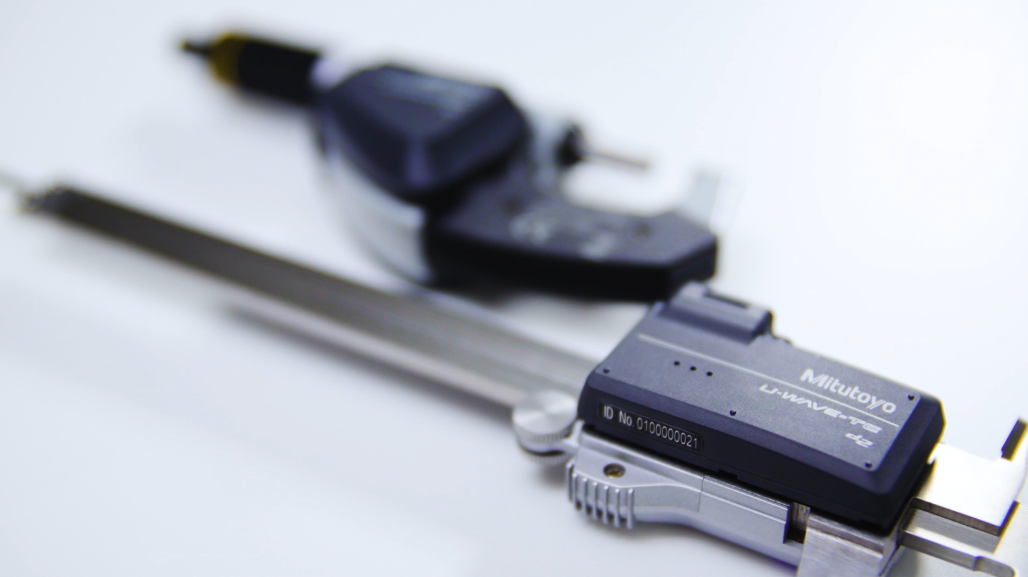
ISAIAH BABCOCK: Right. Well, that could look like a number of different things depending on the environment and requirements. So that could look like wired connections. It could be Bluetooth solutions. We also offer you U-Wave technology. And this can also differ based on security and compliance considerations.
Not everyone can use Bluetooth. And so in that scenario, you can use something like U-Wave or just a cable. And that will help you circumvent some of those security concerns that you might have.
TONI NEARY: So it's really less of a sizable technology upgrade and more of a progression.
ISAIAH BABCOCK: Exactly. It's we really like to think of it as a progression, as a journey. And the most successful implementations usually happen just one step at a time. And I really want to stress that here, is to start where you're comfortable and just gradually make those changes. Solve the immediate challenges first, expand as your needs evolve and build as value becomes more clear to you so that you're not taking on too much at once, that will put you off digitization altogether.
TONI NEARY: So there are a lot more options, and I think most people realize. But once that information is available digitally, like what becomes possible, how can manufacturers begin turning that data into really meaningful insights?
ISAIAH BABCOCK: And that's really where the value of digitization starts to multiply. The value can extend beyond collection. You're able to identify trends in your data. You can monitor your processes more easily and closely. You can have a faster response to issues as they happen, instead of waiting for the part to be complete, and potentially have manufactured several different parts before you realize that there was a problem much earlier in the chain and essentially allows you to see the bigger picture. You have a better understanding of your processes and how you can make them improve one step at a time.
TONI NEARY: So. Isaiah, we've touched on SPC. We've kind of hinted at solutions. Is this where Mitutoyo software comes into the conversation?
ISAIAH BABCOCK: Yes. So Mitutoyo offers something called MeasurLink®, which is an advanced proprietary SPC solution that essentially helps manufacturers turn measurement data into actual information because it can organize data, visualize dashboards and reporting, it can improve process visibility and offer early issue detection and increase traceability, which really helps you trace issues back to their initial source, which could be something like low coolant.
And that will eliminate some of the questions that you might have with your data and with your output, and where some of your issues might be coming from.
TONI NEARY: Isaiah, I think you're being a little humble because this is some pretty powerful software. So let's take a deeper dive into some of those real-world issues that MeasurLink can help solve.
ISAIAH BABCOCK: Sure. Admittedly, MeasurLink 11 is quite powerful. With this solution, manufacturers can not only identify trends earlier, detect process drift, and investigate root causes, but also you can see tool wear, machine issues, material issues and ultimately reduce scrap and rework times to save yourself a lot of headache.
TONI NEARY: Isaiah, before we wrap up, if there's one thing that you'd like manufacturers to take away from today's conversations, what would it be?
ISAIAH BABCOCK: If there was one thing I'd say, don't let the idea of digitization feel overwhelming. We never want manufacturers to feel alone in the process, and you can start small. And that's one of the reasons Mitutoyo created its ‘Break the Pencil’ initiative. The idea is simple. If it's important enough to write down, it's important enough to capture digitally. You can eliminate manual data entry, increase visibility into your process, and ultimately make more informed decisions.
TONI NEARY: That is great advice and the perfect note to end on, Isaiah. Thanks so much for joining us today and sharing all of your insights.
ISAIAH BABCOCK: Toni, thank you so much for having me.
TONI NEARY: It was great having Isaiah with us today. And if you're ready to take the first step towards digital data collection and to learn more about Mitutoyo solutions, visit www.mscdirect.com/products/mitutoyo-digital.
And don't forget to subscribe to our channel so you never miss an episode. Thanks for watching and we'll see you next time on Tooling Up.
Narrator: Want more insights and ideas to improve the efficiency and productivity of your operations? Check out the Tooling Up video playlist to hear tips that can take your company to the next level, and subscribe to our channel so you won't miss out.