



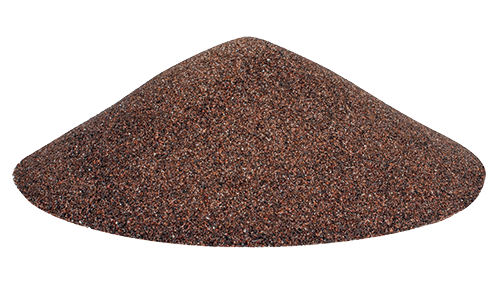
Grit: Choose a smaller grit number (coarser grit) to remove material efficiently over larger contact areas. Use a larger grit number (finer grit) for applications in small areas where the final finish is essential.
Sandblasting Basics: Media, Equipment & Applications
Learn about abrasive blasting, explore blasting media types, and find out which sandblasting equipment you need for the best results for your applications.
What Is Sandblasting?
Sandblasting, also known as abrasive blasting, is a surface preparation method that uses pressurized air to propel abrasive media to remove paint, rust, and coatings from a surface. It also cleans, smooths, or texturizes the material underneath.
Blasting media cleans, finishes, deburrs, and peens applications. Round, spherical particles create a smooth finish and lightly peen the surface, making them ideal for applications where tolerance is important. Angular, harder, or sharper media types clean more aggressively by penetrating deeper into the surface.
Industrial sandblasting and abrasive blasting are used across manufacturing, aerospace, automotive, and marine industries to prepare metal surfaces before coating, welding, or inspection. The process is also known as grit blasting or media blasting, since abrasives beyond sand, including glass, garnet, and aluminum oxide, are commonly used.
Grit/Grade:
Grade: Select the abrasive grade based on your surface finish needs. Use a coarser grade to quickly remove material across large contact areas. Switch to a finer grade for smaller areas where a precise finish is critical.
Materials:
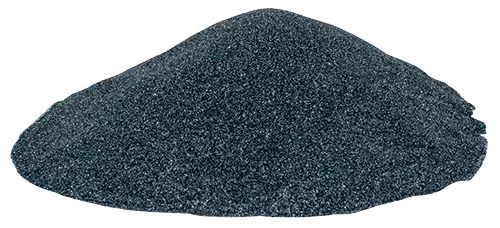
Choosing the right sandblasting abrasive for metal depends on the finish and material removal rate you need. Aluminum oxide and silicon carbide remove material quickly on ferrous and nonferrous metal, while glass bead and crushed glass provide a gentler clean without changing part dimensions.
- Aluminum oxide is the most commonly used abrasive. It is tough, fast-cutting, economical, and fracture-resistant. Use it on ferrous alloys, high-tensile materials, and wood. Common applications include removing paint, rust, and coatings. It is best for general-purpose deburring, blending, plating, and welding.
- Aluminum oxide–glass bead mix typically consists of 70% glass bead and 30% aluminum oxide. Use this blend when standard aluminum oxide proves too aggressive for your application.
- Crushed glass is an angular-shaped blasting media ideal for aggressive surface profiling and removing paint, epoxy, and coatings. Crushed glass blasting media is free of heavy metals like lead, asbestos, and titanium, making it a safer blasting option.
- Silicon carbide is the hardest and fastest-cutting blasting media available. Its high cutting speed and abrasive hardness reduce blasting time. It contains no free silica, doesn’t create static, and can be recycled multiple times. Use it on nonferrous metals and in low-pressure blasting applications.
- Garnet is a fine-cutting abrasive that quickly removes rust, corrosion, and coatings from the substrate. It also works well for removing burrs and preparing metal for coating.
- Glass bead is commonly used in blast cabinets for honing, polishing, peening, finishing, and removing light burrs. It produces a clean, bright satin finish without dimensional change of the part and peens surfaces without overstressing the metal.
- Walnut shell is an angular media ideal for cleaning soft metals like aluminum without damaging the substrate.
Abrasive Media Comparison Chart
Glass | Garnet | Crushed | Walnut | Silicon | Aluminum Oxide | Aluminum Oxide Glass Bead Mix | |
|---|---|---|---|---|---|---|---|
Cleaning Speed | Med | High | High | Med | High | Med/High | High |
Cleaning Metal | Med | Good | Good | Low | Very Good | Good | Med |
Blast Pressure | 20-60 | 60-100 | 20-50 | 20-60 | 20-90 | 40-90 | 20-60 |
Metal Removal | Very Low | High | Low/Med | Low | High | Med/High | Med |
Hardness (MOH Scale) | 5.5 | 7.5 | 5.5 | 1-4.5 | 9 | 9 | 5.5-9 |
Shape of Granule | Spherical | Granular | Spherical | Granular | Angular | Angular | Spherical/ Angular |
Dust Level | Low | Med/High | Low | Low | Med | Med | Med |
Continued Use Ability | Med/High | Med | Low | Low | Low/Med | Med/High | Med/High |
Blasting Equipment from MSC Industrial Supply
MSC Industrial Supply carries all the sandblasting equipment your facility needs. Learn more about each of them below:
Sandblasters
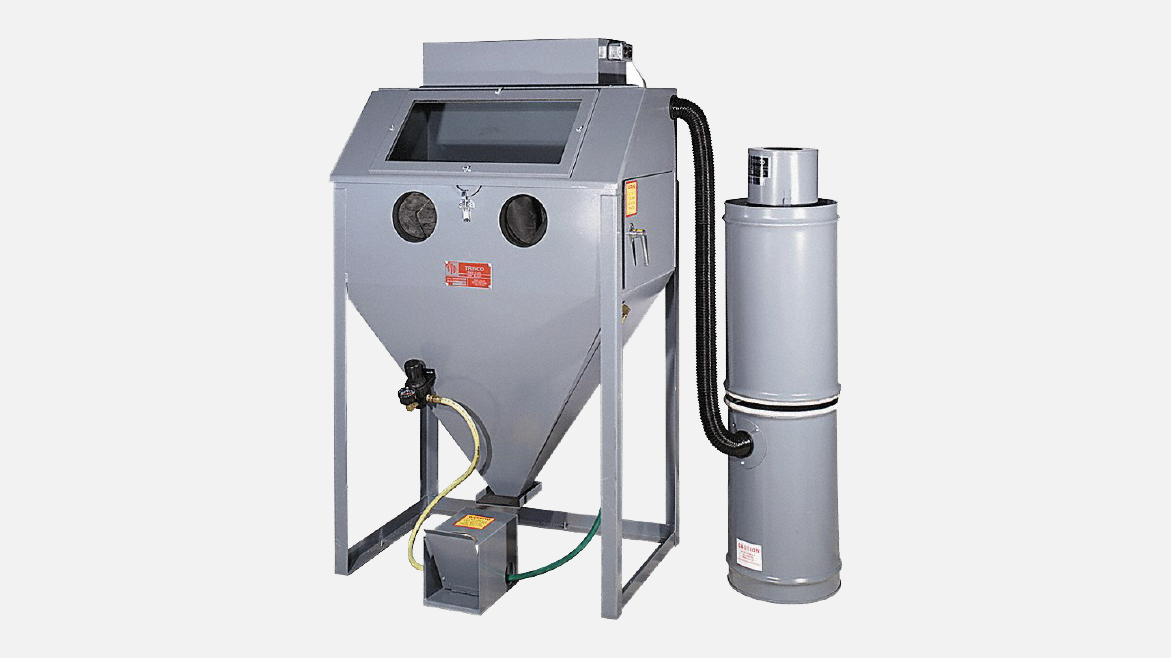
Sandblasters clean, strip, and finish large metal surfaces. They also remove paint, rust, or any other surface material. Choose from free-standing cabinets, bench-top cabinets, handheld, and portable kits.
Guns and Nozzles
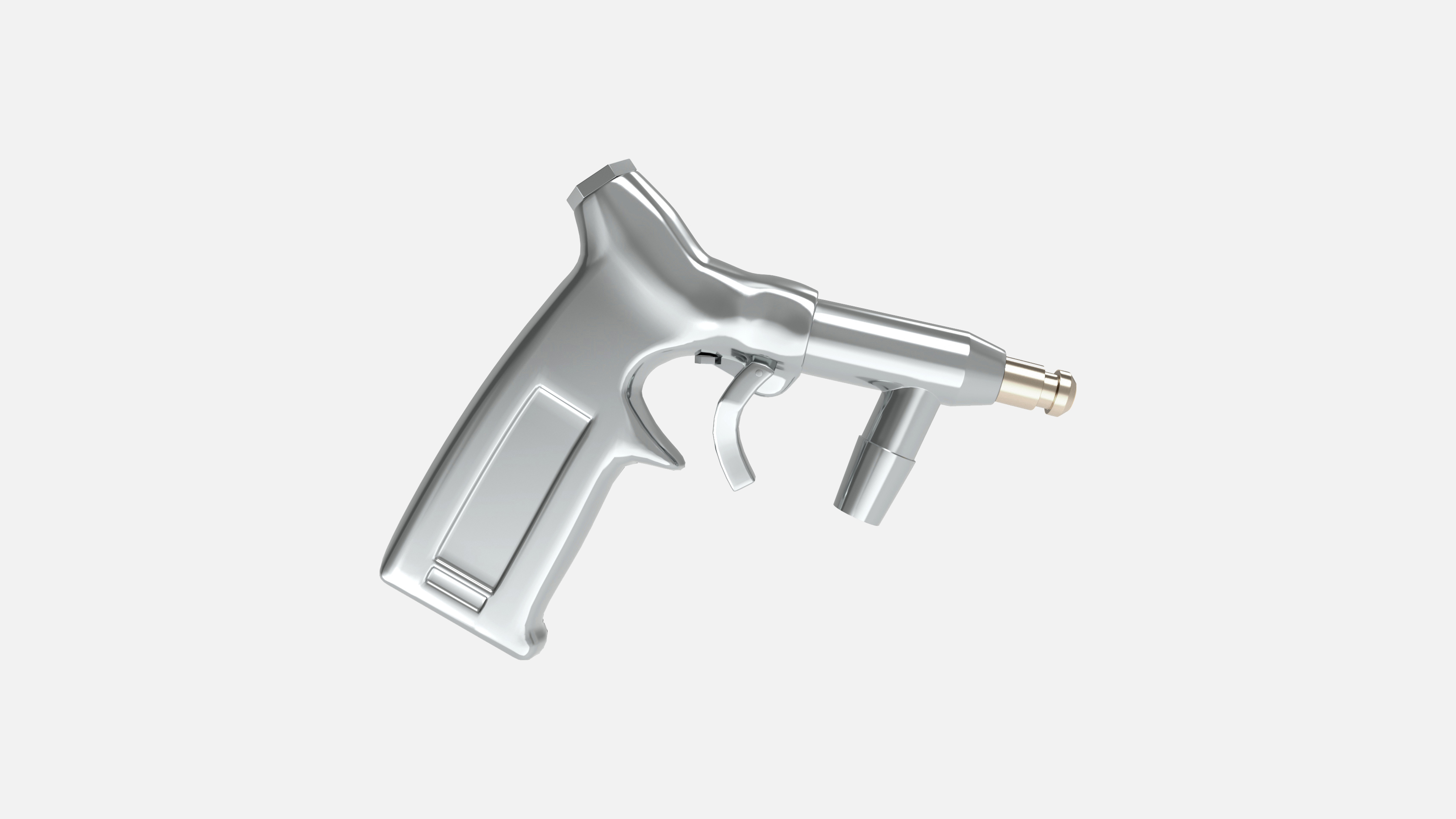
Guns and nozzles can make all the difference when blasting media. Create a uniform pattern when using fine-to-medium grains by controlling the way the abrasive media flows while working. Find nozzle and jet materials, including aluminum, tungsten carbide, and hardened steel.
Sandblasting Cabinet Accessories
Sandblasting cabinet accessories can help your cabinets perform continuously at peak performance. Select from cabinet replacement parts, dust collectors, turntables, underlayment, and filter bags.
Shop Abrasive Blasting Media
Frequently Asked Questions
Abrasive blasting, also called sandblasting or grit blasting, is the process of propelling abrasive media at high pressure to clean, strip, or texture a surface. It removes rust, paint, and old coatings while preparing metal for a new finish.
Sandblasting and grit blasting both describe the process of propelling abrasive media at a surface under pressure, and the terms are often used interchangeably. Grit blasting is sometimes used specifically to describe blasting with angular media, such as aluminum oxide or crushed glass, rather than natural sand.
No. Sponge blasting uses abrasive-impregnated foam media instead of traditional blast media like sand or aluminum oxide. It produces significantly less dust than standard sandblasting, making it useful for enclosed spaces or projects with strict containment requirements.
Grit size depends on the finish you need. Coarser, lower-numbered grits remove material and coatings faster over larger areas, while finer, higher-numbered grits are better suited for small areas where a precise, smooth finish matters.
Low-dust sandblasting media, such as glass bead or crushed glass, produces less airborne particulate than more aggressive media like aluminum oxide. This makes it a better choice for indoor work or environments with limited ventilation.
The right abrasive depends on your material and desired finish. Use aluminum oxide or silicon carbide for aggressive material removal, garnet for fast rust and coating removal, and glass bead or walnut shell for a gentler finish on softer metals.
No. Sandblasting removes surface material using pressurized abrasive media, while grinding uses a rotating abrasive wheel or disc for direct mechanical material removal. Sandblasting typically covers larger areas more evenly, while grinding is better suited to targeted material removal.
To request a quote, please login to your existing account or register a new one. This helps us provide you with a personalized experience and keep track of your requests.