



AWG (American Wire Gauge) is a standardized system used to indicate wire diameter—the higher the AWG number, the thinner the wire. In multi-conductor cables, AWG also refers to the gauge and number of conductors. For example, 14/2 denotes a cable with two conductors, each 14-gauge in size.
Basics of Cords and Cable: Types, Voltages, and Uses
Cable cords are essential in industrial environments, delivering power and electrical signals to a wide range of equipment. Designed to handle high voltages, they ensure machines operate efficiently and reliably. For safety and organization, cords can be stored on an extension cord reel, keeping them neatly arranged during use and storage. Most industrial cords feature double insulation to protect both the user and the equipment, minimizing the risk of electrical shock.
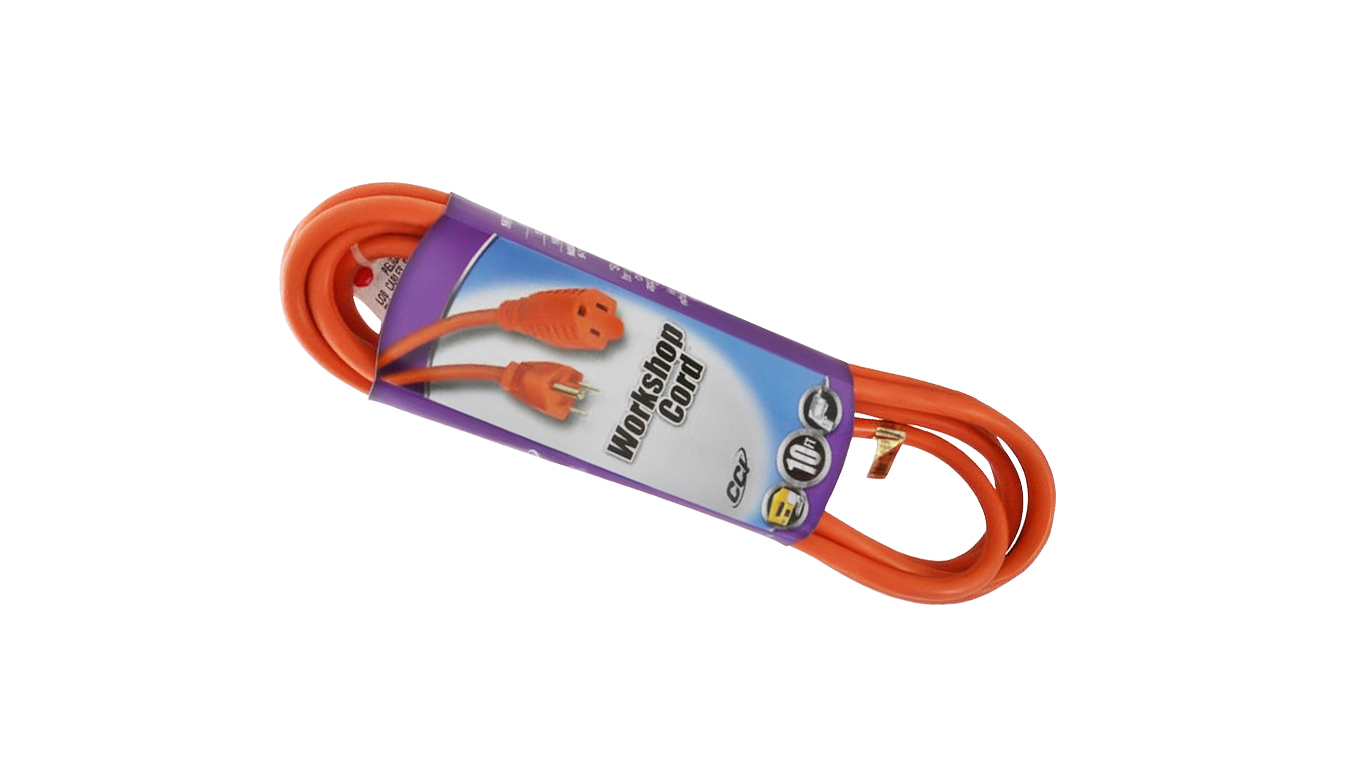
Electrical Cord Standards
OSHA (Occupational Safety and Health Administration) refers to the Occupational Safety and Health Act, enacted in 1970, which establishes comprehensive regulations to ensure workplace safety and health across all industries.
PVC (Polyvinyl Chloride) is a thermoplastic compound commonly used in cord types such as SJTW-A and STW-A for its durability, flexibility, and insulation properties.
SPT-1 is a thermoplastic, parallel-jacketed cord rated for 300 volts, featuring 2 or 3 conductors of 18-gauge wire.
SPT-2 is similar to SPT-1 but features a heavier construction for increased durability. It typically uses 18- to 16-gauge conductors.
SPT-3 builds on the design of SPT-2 with even heavier construction for added durability and a higher capacity. It supports conductors ranging from 18 to 10 gauge.
SRDT is a heavy-duty cord used for ranges and dryers, featuring either three parallel conductors or four insulated conductors in a durable thermoplastic construction.
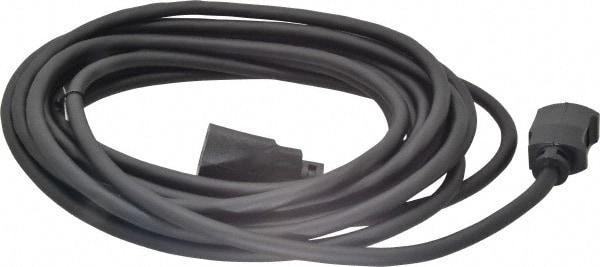
Cord Types
- T*Prene is a thermoplastic elastomer compound used in polar/Solar cords, such as SEOW-A and SJEOW-A, offering flexibility, durability, and weather resistance.
- S = Standard cord designation; rated for use at 600 VAC.
- J = Junior cord designation; rated for use at 300 VAC.
- E = Elastomer insulation or jacket, providing flexibility and durability.
- P = Parallel construction, where conductors run side-by-side without twisting.
- WA = UL and CSA certified for outdoor use.
- V = Lightweight, round, ribbed vacuum cleaner cord.
- T = Thermoplastic insulation or jacket.
- O = Oil-resistant outer jacket.
- OO = Oil-resistant insulation and outer jacket.
Cord Type | Jacket | Voltage Rating | Duty |
|---|---|---|---|
SVO | Neoprene | 300 | Light |
SVT | Thermoplastic | 300 | Light |
SPT | Thermoplastic | 300 | Light |
SJOOW-A | Neoprene | 300 | Medium |
SJEO | Thermoplastic Elastomer | 300 | Medium |
SJEOOW | Elastomer | 300 | Medium |
SJEOW-A | Thermoplastic Elastomer | 300 | Medium |
SJT | Thermoplastic | 300 | Medium |
SJTO | Thermoplastic | 300 | Medium |
SJTW-A | Thermoplastic | 300 | Medium |
SJO | Neoprene | 300 | Medium |
SJOW-A | Neoprene | 300 | Medium |
SO | Neoprene | 600 | Heavy |
SOW-A | Neoprene | 600 | Heavy |
SOOW-A | Neoprene | 600 | Heavy |
SEOOW | Elastomer | 600 | Heavy |
SEOW-A | Thermoplastic Elastomer | 600 | Heavy |
ST | Thermoplastic | 600 | Heavy |
STO | Thermoplastic | 600 | Heavy |
STW-A | Thermoplastic | 600 | Heavy |
To request a quote, please login to your existing account or register a new one. This helps us provide you with a personalized experience and keep track of your requests.