



Gage block grades determine the accuracy and tolerance levels required for different inspection and calibration environments. They are available in five standard tolerance grades: K, 00, 0, AS-1, and AS-2.
Precision Starts with the Right Gage Block Grade
Compare gage block grades and tolerances to find the right level of accuracy for your measurement and calibration environment.

What Are Gage Block Grades?
These grades define the allowable variation in flatness, parallelism, and overall length of the block. Each block's nominal length falls within specific limits set by the ASME Gage Block Standard, which outlines maximum deviations allowed from the nominal size and the allowable variation within a single block. These tolerances apply regardless of the block’s material or shape.
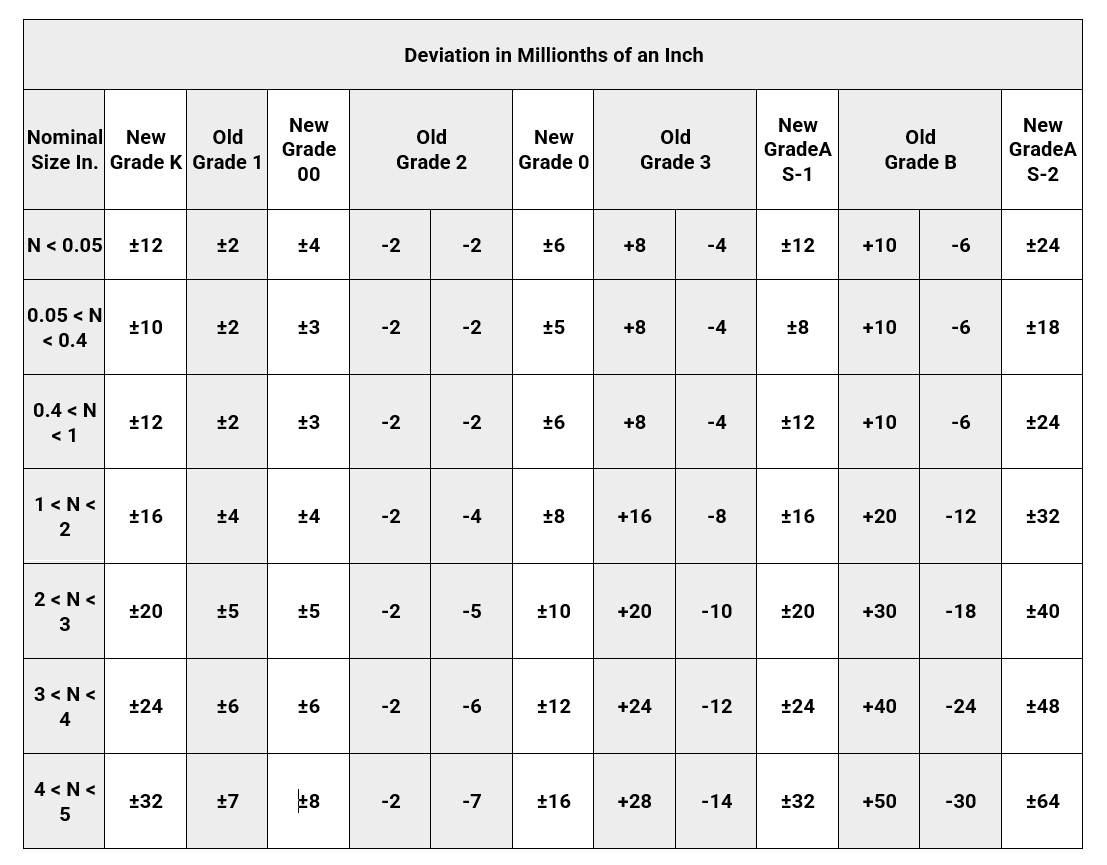
For example, multiple Grade 0 gage blocks with the same nominal length must each fall within ±6 millionths of an inch to meet spec, meaning they could range from 0.999994" to 1.000006".
Understanding gage block grades helps ensure you select the right level of precision for your inspection setup.
Certificate and Serial Number
Each gage block must carry a unique serial number to support calibration and verify the block’s actual size down to the nearest millionth of an inch. For accuracy and traceability, a Certificate of Accuracy is typically included with every gage block or gage block set, unless otherwise specified. These certificates are traceable to NIST (National Institute of Standards and Technology), ensuring compliance with industry calibration standards.
Gage Block Grade Comparison Chart
Use the chart below to compare gage block grade tolerances based on nominal size ranges.
To request a quote, please login to your existing account or register a new one. This helps us provide you with a personalized experience and keep track of your requests.