



Process Calibration Insights with Jim Shields | Full Q&A
In this in-depth Q&A, Jim Shields covers everything from process calibration basics to advanced topics like HART communication, milliamp loop testing, and the future of instrumentation.
In this in-depth Q&A, Jim Shields covers everything from process calibration basics to advanced topics like HART communication, milliamp loop testing, and the future of instrumentation.
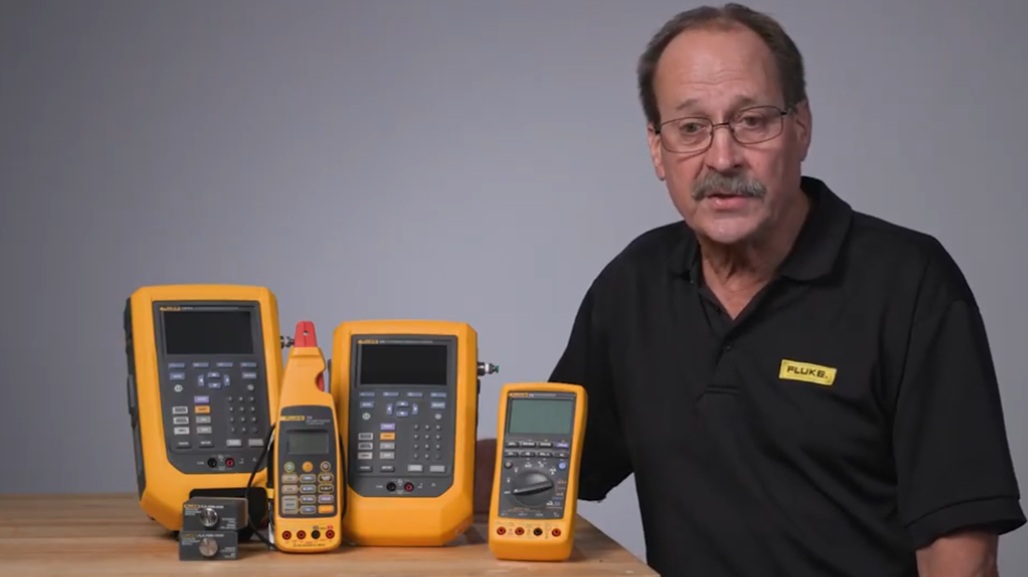
In this in-depth Q&A, Jim Shields covers everything from process calibration basics to advanced topics like HART communication, milliamp loop testing, and the future of instrumentation.
Learn why accurate 4-20 mA signals are critical, how to troubleshoot transmitters and valves, and what new trends—like DER (Distributed Energy Resource) tools—mean for the industry.
Ideal for technicians, engineers, and anyone seeking to understand the fundamentals and future of process calibration tools.
This video was previously featured on Fluke's YouTube channel.
Process calibration is the calibration of process instruments found in process manufacturing plants. The pressure and temperature transmitters in a refinery make measurements and convert them to 4-20 mA signals, and the accuracy with which they make that conversion determines how good the information is that's provided to the control system. So, the better the calibration on the process instruments, the better information the control system is fed, and the better decisions it can make about controlling the process.
The core is the 4-20 mA control loop which feeds into the control system. The accuracy of that milliamp signal in representing the process variable that's being measured, and when I say process variable, I mean the temperature, pressure, or flow, or pH, whatever, is being measured by the device. So, the conversion from what's being sensed on the sensing side to the milliamps is key to the kingdom, if you will, because that's where the control system gets its information to make decisions about the process. It might be opening or closing a valve, controlling a burner but the better the information the control system has, the better decisions it makes, and verifying those devices with a tool can be daunting.
To measure a milliamp signal with a traditional multimeter, you have to break the loop open for making the measurement, whereas if you have a process milliamp clamp meter, you can make that measurement without breaking the loop, talk to the operator in operations, and verify if the process is operating correctly.
Pressure calibration, the absolute accuracy of the pressure, is the primary attribute that's being tested, wherein with process calibration, you're measuring the accuracy of the conversion from pressure to 4-20 mA. And again, the more accurate that milliamp signal is converted, the more accurate the information that goes to the control system. Process calibrators are carried by a variety of professionals. The primary user is going to be the instrumentation professional who works on process instruments, exclusively. There's also dual craft folks that are instrumentation and electrical, who have both instrumentation and electrical responsibilities. In addition to the primary professionals, you have the plant commissioning contractors that are installing the devices and have to verify the performance before they turn over the process that's being installed at a facility to the process owner. So, commissioning, calibration, and troubleshooting of process instrumentation.
We put process calibrators into various classes. The most prevalent is the milliamp loop calibrator. Control loop in process is the most commonly troubleshot and repaired element in process instrumentation because it's consistent from pressure devices to temperature devices to flow devices. The 4-20 mA signal is prevalent in all of those, so it is frequently the troubleshot and repaired in loop calibrators or multifunction tools like a process meter would be the tools of choice for troubleshooting that element. If you need to look at more than just the milliamp control loop, you might need a temperature calibrator which would simulate a temperature into a temperature transmitter,
and then you could, by generating the signal into the transmitter, you can vary the resulting change in the milliamp signal to see if it's changing accordingly and adjust it so the milliamp signal best represents the temperature that's being measured.
Then we have pressure transmitters. A pressure transmitter converts a measured pressure into a 4-20 mA signal, so the pressure calibrators that are testing these devices have to be able to measure the pressure that's being generated or applied to the device we're testing, as well as measure the milliamp signal on its output, and from there, you can determine if the milliamp signal accurately represents the pressure that you're testing the device with.
Also, control valves are a common device that we're testing. Some of our milliamp loop calibrators have valve testing capability built into them to allow us to test a HART smart control valve, for example, as it moves across its open and close, we can verify that it's moving correctly by changing the milliamp signal and interpreting the HART feedback from the smart control valve. So, in addition to temperature, pressure, milliamps,
and control valves, there's also the control system I/O for verifying the direct inputs in the control system. Of course, you'd use a loop calibrator for that. Also there are some flow meters that can be tested. We can test the milliamp control on the output, but to test a flow meter requires a flow bench, and that typically is performed in a flow bench in a lab environment rather than out in the field.
HART communication is the most common digital protocol in the process industries. The HART communication protocol is managed by the Field COMM group,
and they ensure that the implementation of the HART communication digital communication protocol is consistent among all manufacturers. We have tools that have the ability to communicate with HART smart instrumentation. The HART smart instrumentation is a communication protocol that, with use of our smart devices, we can configure the instruments and commission them by providing the communication and configuration that HART communication allows.
HART communication, once the devices are configured and installed, could also be used for the adjustment and then trimming of the devices. For example, adjusting the milliamp signals on the output, testing that the pressure, A to D, is being performed accurately. So, the HART communication protocol allows you to look inside the HART instruments and perform, configuring, commissioning, and calibration.
If you're getting started in process calibration, I would suggest you first get comfortable with the DC series circuit that the 4-20 milliamp control loop represents. It is a simple DC series circuit, but it is often misunderstood and without that primary understanding, the rest of the understanding of the process and what matters becomes a lot more difficult. So, back to basics first, then build on the basic understanding. Understanding
how the pressure and the milliamps correspond to each other, how control valves
open and close when applied a milliamp signal, how temperature calibrators are used for verifying transmitters, as well as understanding perhaps how a dry block calibrator can be used along with a calibrator for verifying the sensor and the temperature transmitter electronics, all in one combined tool. If they wish to be a primary into process instrumentation, instrumentation courses would be the likely first step.
However, it's become very popular in industry that the process owners are looking for technicians and electricians that are dual craft. Electricians that also have an instrumentation knowledge and can work both instrumentation and electrical, or instrumentation folks that also then gather some electrical knowledge so they can work on high-energy circuits.
But I would caution, if folks are working dual craft, to be sure that you have the proper electrical safety rating for the electrical work when you're moved from instrumentation. Because instrumentation is typically 24 volts and below, and electrical work could be CAT III 1,000 volt, 483 phase, high-energy circuits that require due care and caution and protective equipment.

Fluke® Tools Corporation founded in 1948 is the world leader in compact, professional electronic test tools. Fluke tools range from electrical test equipment, precision measurement & quality control to HVAC. Fluke products are designed for day-to-day field troubleshooting and maintenance of electrical systems, electrical power systems, HVAC/R systems, and associated equipment. Find a wide variety of Fluke electrical test tools at mscdirect.com.

To request a quote, please login to your existing account or register a new one. This helps us provide you with a personalized experience and keep track of your requests.