CNC machines come with more built-in protection than ever—such as interlocks, enclosures and programmable stops—and federal programs continue to focus on worker safety around industrial equipment. None of these safeguards removes the risk, however, when a door is propped open, a tool gets modified or an operator runs equipment they haven’t been trained on.
Here’s what operators and safety managers need to know, from the hazards built into the machine to the habits and procedures that keep people out of harm’s way.
CNC Machine Safety Hazards
CNC machining is dangerous, even for the most experienced metalworking professionals. Just because CNC machines are programmable doesn’t mean they can’t hurt an operator, cause damage to your plant or hurt workers standing nearby.
If a part is not programmed correctly, the machine may crash, damaging the part, tools, spindles and other equipment inside the hood. Modern CNC machines protect operators and bystanders from flying metal chips or broken tools with safety interlocks that don’t allow the door to be opened until all motion has stopped.
On older CNC machines, however, you can manually override the locks when the machine is still operating, says Frank Quarato, president of the Center for Safety & Environmental Management.
“If you open the door while the machine’s running, you’ll have all the physical hazards that you can think of,” Quarato says. “The machines don’t slow down—they don’t even know you’re there.”
Read more: Good Vibrations: How to Optimize Your Machine Setups to Minimize Chatter
OSHA Requirements for CNC Machine Safety
The Occupational Safety and Health Administration (OSHA) requires employers to keep the workplace free of serious hazards, such as exposure to moving machine parts that could crush or amputate fingers or hands or cause burns or blindness.
Safeguards—ranging from guards and guard devices to personal protective equipment (PPE)—are “essential for protecting workers from these preventable injuries,” OSHA says. OSHA’s machine-guarding standard, 29 CFR 1910.212, requires that any point of operation presenting a hazard to an operator be guarded to prevent contact.
In 2025, OSHA extended its national emphasis program (NEP) on amputations in manufacturing industries, indicating that these kinds of hazards remain an issue.
To help keep employees safe when working with CNC machines, follow these 10 tips.
Tip 1: Know Your Machine’s Hazards Before You Start
Before running a new machine or an unfamiliar program, operators need training on that particular equipment—its danger zones, cycle behavior and failure points.
Investigations into machine-related deaths repeatedly identify the same gap: training or procedures that covered machine operation in general, but not the specific hazards of the machine involved.
Tip 2: Inspect Machine Guards and Safety Interlocks
Machine controls may include safety interlocks, but if the equipment does not come with them, other protections must be put in place. This protection could include temporary barriers and warning signs, along with operator training.
“Catastrophic accidents can happen to inexperienced CNC machine operators who don’t understand the danger of opening the hood before the machine has completely stopped, as well as to those who purposefully break the rules,” Quarato says.
Read more: Why Machine Guarding Is Key for Workplace Safety
Tip 3: Always Complete Pre-Operation Safety Checks
For true quality control, Quarato says, operators should review and dry-run all-new programming—without stock or tooling.
“In some cases, CNC machines have graphic displays that illuminate the toolpath so you know where that tool’s going to go and you can predict it because you’ve seen it run once already,” he says.
Read more: Machine Troubleshooting Tips: Preventing Common CNC and Equipment Problems
Tip 4: Keep the Doors Closed
Some operators who have received safety training still think it’s acceptable to keep the machine door open to watch the part while the machine is running, thinking it’s better for quality assurance, but “nothing could be further from the truth,” Quarato says.
“Even if the part doesn’t fall off the spindle onto your foot, you may very well get hit with a chip from a tool, or the stock itself,” he says.
Operators should always keep the door closed while the machine is cycling. How do you know when it is safe to open the compartment?
“Every CNC machine has a home position where it returns before starting another cycle, and operators need to learn what that is,” Quarato says. Always allow the machine to return home and power off before reaching into it, or into any of the actionable areas, he adds.
Tip 5: Follow Lockout/Tagout (LOTO) Procedures
Employers must adhere to OSHA’s lockout/tagout standard (29 CFR 1910.147) whenever a worker services or maintains a CNC machine in a way that exposes them to hazardous energy—whether it’s repairing a machine, clearing a jam, changing over a line or bypassing a guard.
In those situations, the machine must be shut down, isolated from its energy source, and locked or tagged out before anyone works on it. An effective LOTO program will include policies and procedures to identify points of hazardous energy and the steps for shutting down equipment, training on those policies and procedures, and locking and tagging devices.
Read more: Lockout Tagout (LOTO): A Comprehensive Guide
Tip 6: Know How to Use the Emergency Stop
Operators should never place any body part into the machine or near the spindle while attempting a power-up mode.
“Don’t put one hand on the emergency stop button and reach in with the other hand to start turning machine parts,” Quarato warns. “By the time you slap that stop button, the centrifugal force alone could suck you in the machine.”
Tip 7: Never Alter Your Tools
Cutting tools can be very expensive, and operators believe that if they use a cheaper tool, they can save a little money, Quarato says. But CNC user manuals warn against altering the tooling or working outside the programmatic functions of the machine, he notes, and with good reason.
“Alterations of any kind can cause incredible energy to be released if hardened steel tooling collides with other equipment, and it can literally cause tools to break through the enclosures, creating a safety hazard,” Quarato says.
Tip 8: Keep Your Machine and Work Area Clean
Most employers know that having a clean machine will not only protect and extend the life of the machine, but also produce higher-quality parts. At the same time, housekeeping and total clean machine policies are mandatory for safe operations of CNC machines, according to Quarato.
“The machines have sprayers that spray the part down with lubricants during operations, and if chips build up and block that spray pattern, it can cause the tempered tools to get hot and changes their chipmaking abilities,” he says. “This can cause your turnings and chips to get so hot, they can cut and burn you.”
Tip 9: Wear the Right PPE
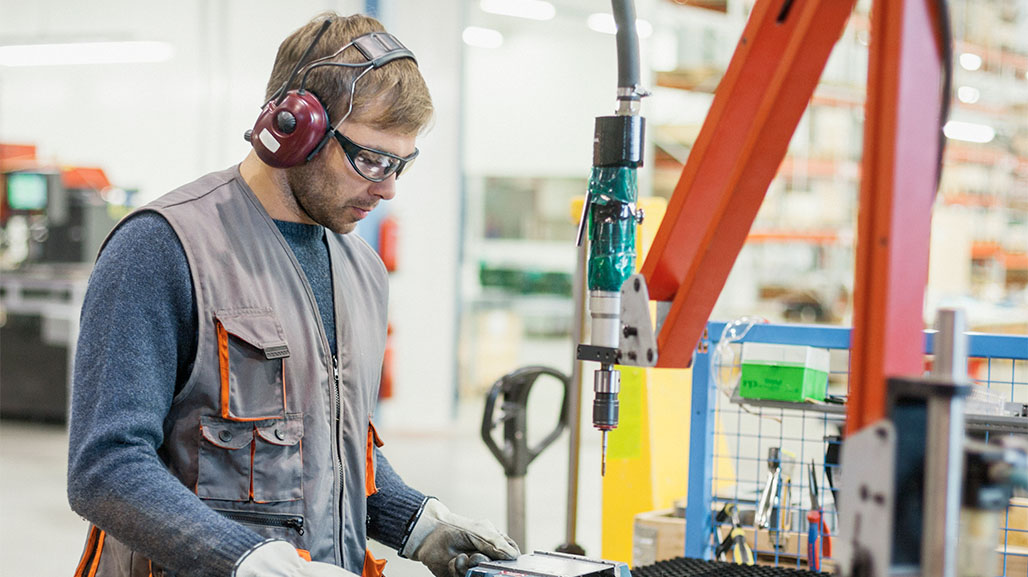
In addition to specific safety training for CNC machines, employers are required to provide equipment and training to meet the OSHA standard for noise protection and other PPE, including eye, face, foot and hand protection.
“While most CNC machines have good enclosure, wearing safety glasses, hearing protection and appropriate foot protection is always recommended to protect from things that might fly out or be dropped out of the machine once the part is done,” Quarato says.
“Technology is changing all the time, and older operators already know the most basic machining skills, such as waiting until the machine stops spinning and returns to home position, but younger ones don’t,” Quarato adds.
“Too often, today’s employees think that the machine knows what it’s doing, so if it looks like it’s done, even if it hasn’t returned home, they reach in there when the machine still has a couple of operations left,” he says. “It’s like reaching into a washing machine when you thought the spin cycle was done, but it had one more cycle to go.”
Tip 10: Invest in Operator Training and Safety Culture
Only qualified operators should be operating a CNC machine, Quarato adds, but too much automation allows employers to hire minimally skilled workers to perform the most difficult tasks. The bigger the gap between what the machine can do and the operator’s knowledge, the more likely that the operator can get themself and those around them in trouble.
CNC Machine Safety Checklist
Keep this list handy as a quick reference before every shift:
Confirm you understand the machine’s specific hazards and cycle behavior before running it.
Inspect guards and interlocks every shift. Never bypass or wedge one open.
Dry-run new or revised programs before loading stock or tooling.
Keep the door closed until the machine reaches home position and fully stops.
Lock out and tag out before any servicing that bypasses a guard or exposes hazardous energy.
Know your machine’s e-stop location, but don’t rely on it as a substitute for waiting.
Never alter or modify a cutting tool outside its intended use.
Clear chip buildup and keep lubricant sprayers unobstructed.
Wear required PPE, such as eye, face, foot, hand or hearing protection.
Treat training as ongoing, not a one-time onboarding step.