Video Transcript
The manufacturing industry is shocked. One of the most important materials in modern machining just became six times more expensive. The material is tungsten carbide. It's used in almost every high performance cutting tool on the planet. And this isn't just a price increase. This is an unprecedented barrier around affordability on a material you cannot substitute, cannot easily stockpile. And here's the part that's most concerning, cannot readily find a new source. The vast majority of tungsten carbide is sourced from just one country, giving them massive control over the market, and that country is China. So how did we get here, and what's going to happen now.
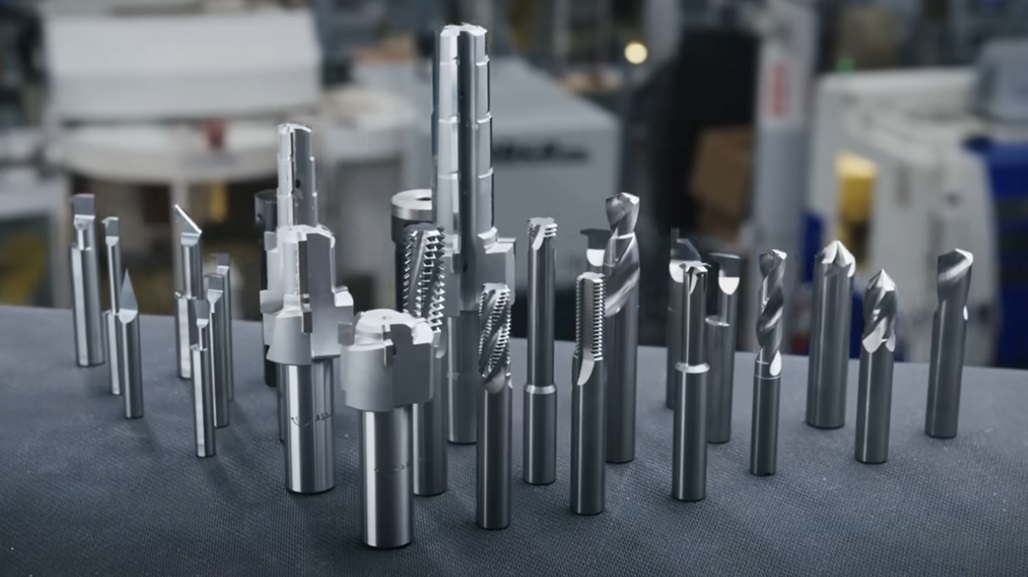
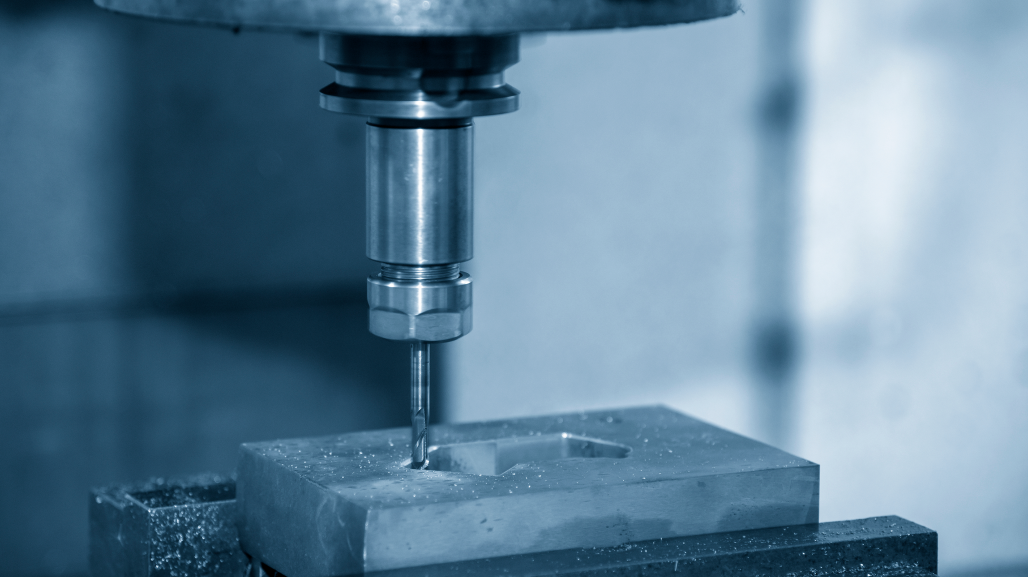
First, we have to take an honest look at their relationship with tungsten carbide. It's not new. It's been the backbone of precision machining for decades. It's in cutting tools, wear parts, mining equipment, defense components. Every manufacturer who works with hard materials knows what it is and uses it regularly, and the industry largely treated it like a commodity, like steel, like aluminum, something whose price fluctuates modestly, remains manageable and always comes back down. And for a long time, that assumption seemed reasonable, but there was something different in the details, something we didn't see, or something we chose not to see. All of this actually started back in the early 1980s. Up until that point, China had been a modest tungsten producer, mostly supplying its own domestic needs. Nothing particularly alarming.
Then, something shifted. Over the following decades, China aggressively expanded its tungsten mining and processing operations, leveraging low labor costs, fewer environmental restrictions and significant government subsidies. By the time the rest of the world was paying close attention, China had become the dominant force in global tungsten supply. Today, China accounts more than 80% of the world's mined tungsten and processed APT, ammonium pair tungstate, the intermediate form used to make carbide powder.
More than 80% from one country. With that level of market control, China had something most commodity producers never get, the ability to essentially set the global price, and they set it low, not low as in competitive. Low as in strategically suppressed. When your cost structure includes government subsidies, lower labor costs, and relaxed environmental standards, and you control 80% of the global supply, you can price the material at a level that makes it economically impossible for anyone else to compete. No new mine in the United States or anywhere else could justify that capital investment. No major recycling infrastructure could justify the build out. The rest of the world looked at stable, affordable tungsten carbide and made a rational business decision—don't invest in alternatives, just buy from China. And that's not by chance. That's what the system was designed to produce.
Then came 2025. Several things happened in rapid succession, and the combination was unlike anything the tungsten market had seen. First, China began tightening its own domestic production, an increase in environmental crackdowns and safety regulations reduced mine output, export conditions became more restrictive, and less material was leaving China than the global market expected. At the same time, geopolitical friction between the United States and China began escalating around critical mineral supply chains. Tariffs, retaliatory trade measures and conversations about export controls and strategic stockpiling created a new layer of uncertainty, and underneath all of this, demand kept growing. Electric Vehicles required tungsten carbide tooling to machine their components. Aerospace, oil and gas, defense, these sectors weren't slowing down, they were accelerating. And when supply contracts and demand expands, price goes up. We all know that. But there was one more factor that made this worse. When traders and manufacturers sensed this shift, they started buying up more than they needed, building inventory as a protection against shortages, or betting on prices continuing to rise.
That behavior pulled even more material off the market, accelerating the spike that was already underway. The price didn't just increase. It went vertical, and this is where things get interesting, because the spike itself isn't really the story. The spike is just the moment the system became jarringly visible. For decades, the manufacturing industry operated on an assumption that a stable, affordable global supply of tungsten carbide was a natural condition of the market. But it wasn't natural, it was constructed, maintained by a specific set of economic and geopolitical conditions that benefited one dominant supplier and quietly eliminated alternatives everywhere else. When those conditions shifted, when Chinese domestic policy changed, when trade tensions escalated, when demand outpaced the available supply, there was no buffer. No meaningful alternative supply chain had been built, no significant recycling infrastructure existed at scale. No new mines were ready to open. The vulnerability wasn't created in 2025, it was created over 40 years of market structure that the manufacturing world largely accepted without question.
So why does all of this matter? For manufacturers who make or buy carbide cutting tools, this changes the calculus on almost everything. Tool blank and insert costs are already reflecting the new pricing reality. Product pricing strategies need to be reconsidered. Inventory decisions that made sense two years ago may no longer be appropriate. Scrap and recycling programs that were previously marginal now represent a meaningful supply. The companies that assumed tungsten carbide would behave like a stable commodity are now navigating a market that looks more like a geopolitical risk asset than a raw material line item.
So now the most pressing question we're all feeling is, what happens next? The realistic answer isn't a single prediction, it's a range of scenarios. The first possibility is pricing may stabilize at a permanently higher plateau as new supply slowly develops outside China, enough to prevent acute shortages, but not enough to return to historically lower prices. That means planning for higher raw material costs as a new baseline, not waiting for a correction that may never come. Secondly, the market may remain highly volatile, with prices swinging sharply in response to geopolitical events, sanctions, export restrictions, regional instability. In this environment, risk management becomes as important as production efficiency, dual sourcing, verified supply chains and strategic safety stock. Or lastly, over the next two or three years, meaningful new supply emerges from the United States, South Korea, Australia and other producers, while recycling infrastructure expands enough to make carbide scrap a genuinely significant raw material source. In that scenario, some price relief is possible, and the companies that have built flexible, efficient supply chains will gain a real competitive advantage.
Any of these scenarios can unfold, possibly a combination of all three. Here's the bigger insight. Tungsten carbide will remain the backbone of precision machining and high performance tooling. That's not changing. The material is too difficult to replace where it matters most, but the era of treating it like a stable commodity, that's over. What this moment is actually revealing is something the manufacturing industry will need to reckon with. More broadly, the hidden risk in any supply chain where efficiency and low cost were optimized at the expense of resilience and diversification. Tungsten carbide got there first, but it won't be the last material that does. The question now isn't whether you can avoid tungsten. You can't. The question is, can you strategically manage it?
That means optimize tool performance and lifespan by selecting high quality tools and applying efficient programming practices, diversifying and building resilient supply chains, strengthening recycling and scrap recovery programs, keeping informed during periods of price volatility and pricing your products intelligently with transparency and flexibility. Even if tungsten carbide prices never return to previous levels, companies that adapt to this new reality can remain competitive and continue to thrive. I'm Brian Faulk with Scientific Cutting Tools. I've shared our thoughts on carbide pricing. Now, I want to hear your thoughts. Drop them in the comments, because this is a conversation that needs to happen.