



Threading operations involve creating helical grooves on a workpiece surface. External threads are cut on the outside diameter, while internal threads are cut inside a drilled hole. Both require the use of a variety of cutting tools.
Master External Threading
Understand the tools every machinist needs for cutting, repairing, and maintaining precision threads.
Dies
Dies are cutting tools designed for producing or repairing external threads on cylindrical workpieces. They come in various styles to suit new threading, rethreading, or repair applications.
Die Types
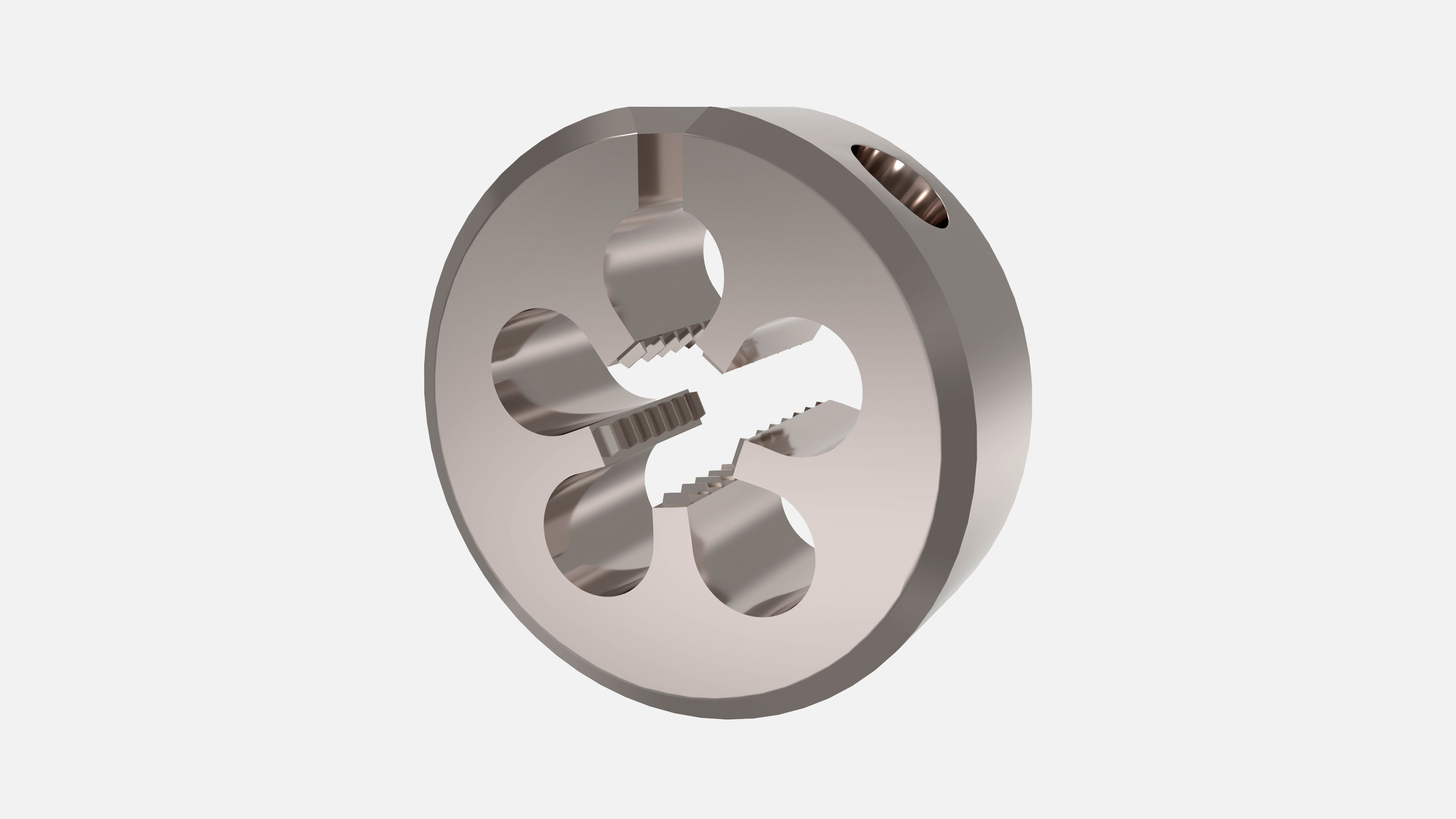
Round Adjustable Dies
- Originates new external threads.
- Ideal for maintenance jobs.
- Cuts external threads when held in a die stock.
- Chamfered on both faces: One side has a 2–3 thread chamfer for standard threading; the opposite side has a 1–1½ thread chamfer for threading close to the shoulder.
- Standard in right-hand Unified and American National Thread Form.
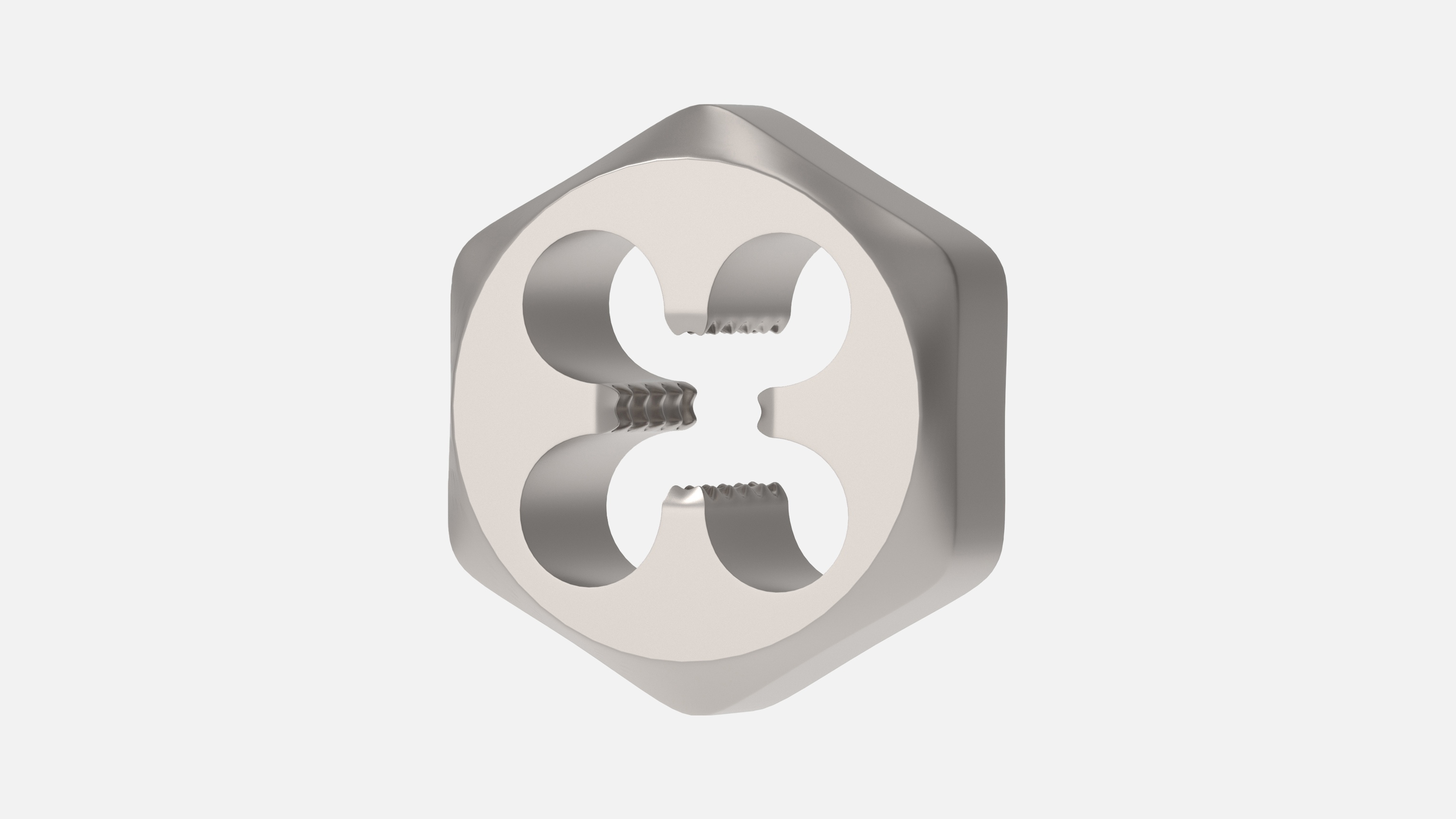
Hex Rethreading Dies
- Ideal for maintenance jobs.
- Designed to repair bruised or rusty external threads.
- Can be used in free machining materials.
- Most cost-effective tool for rethreading.
- Operates with a wrench; no die holder or die stock required.
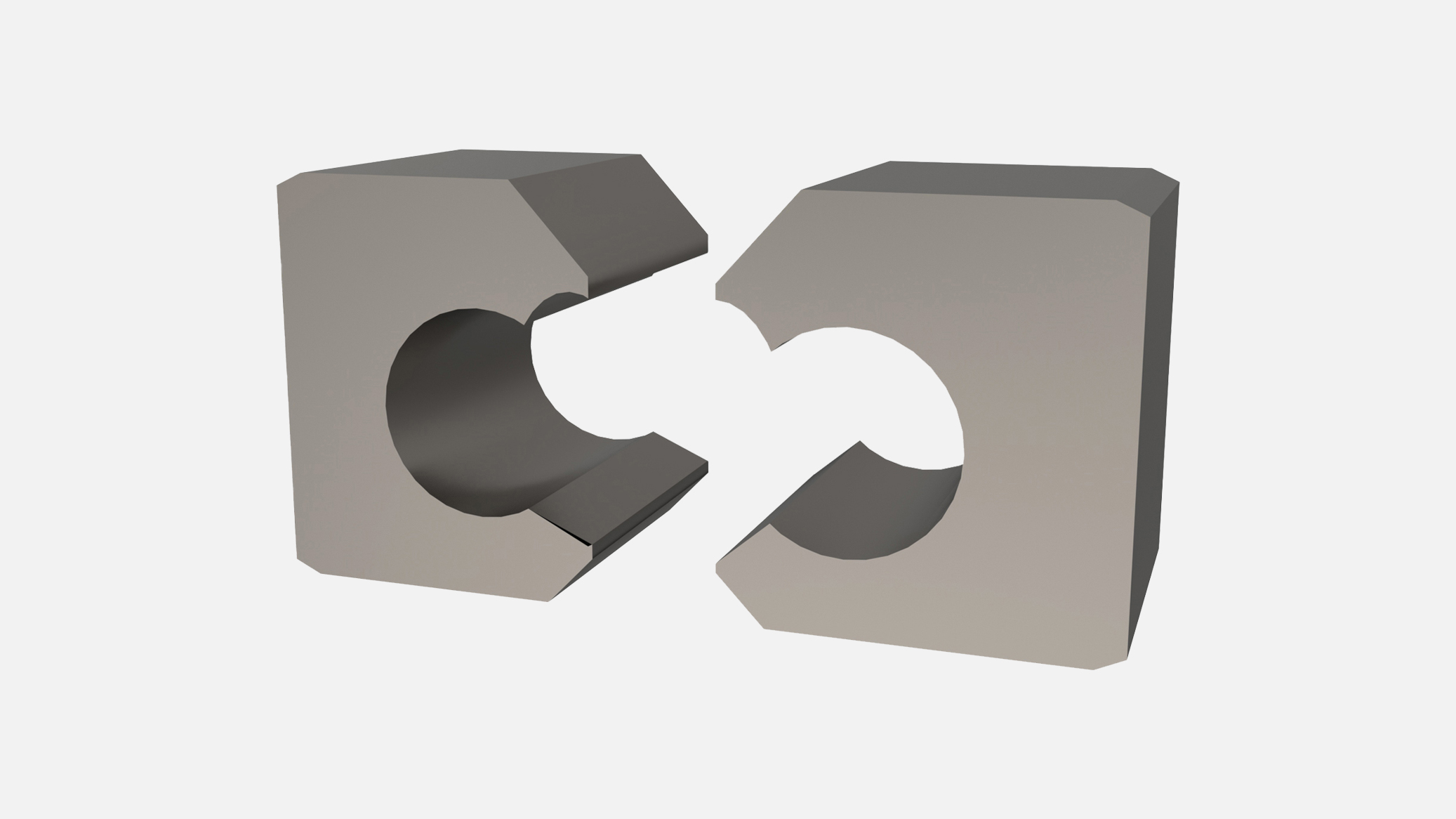
Two-Piece Die Blank Systems
- The Collet system offers greater adjustability for new threading or thread repair.
- Includes a cap and a guide (dies sold separately).
Die Accessories
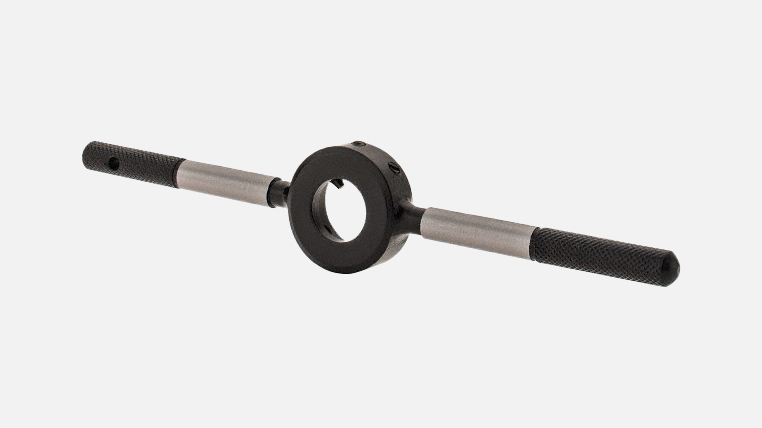
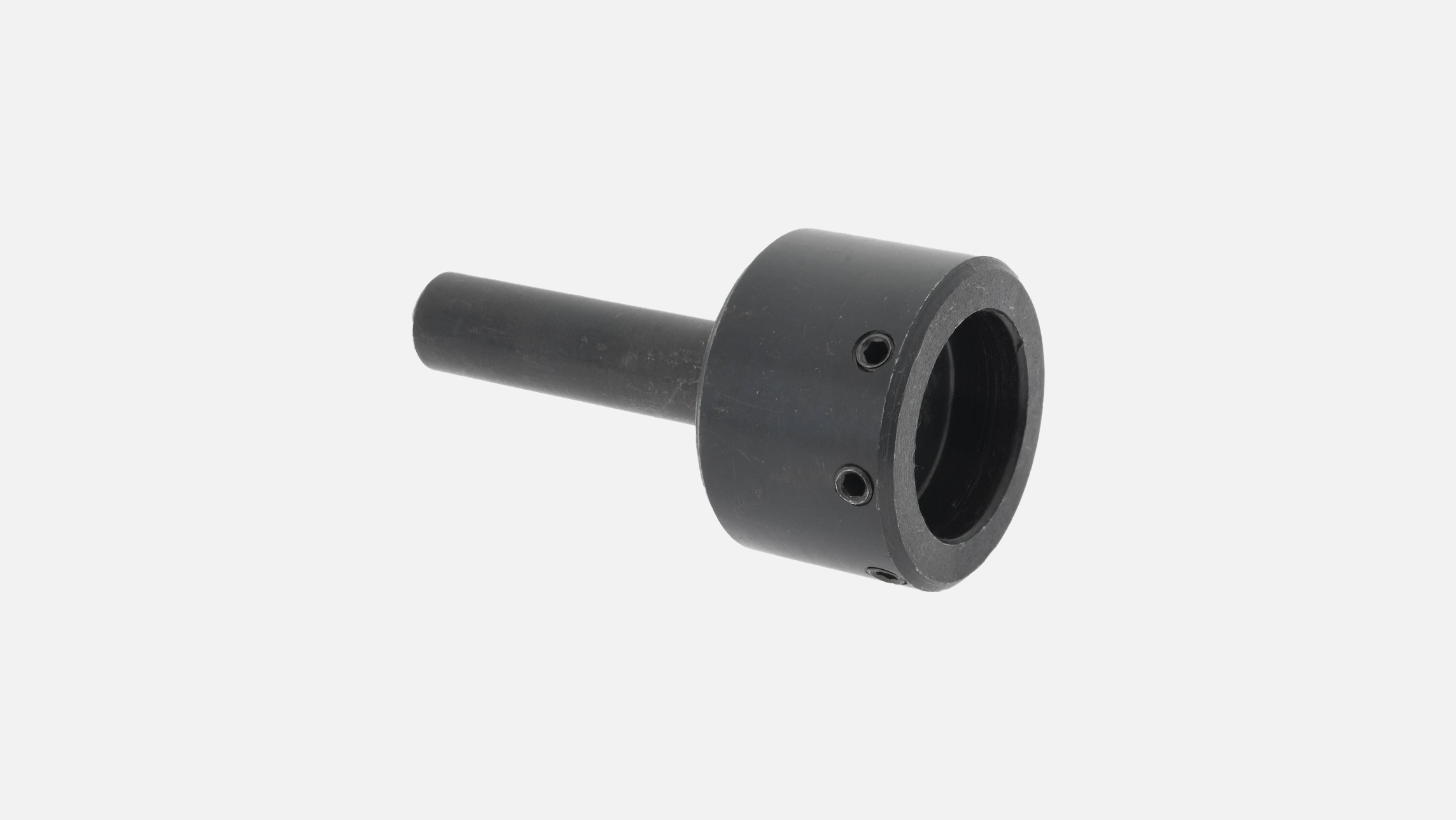
Die Stock
A die stock holds round adjustable dies and is specifically designed for holding open-type adjustment dies.

Die Adapter
A die adapter converts a round die into a hex die for tight spaces where die stocks can’t be used.
Die Materials
Chasers and Thread Rolls
Chasers and thread rolls are designed for both external and internal thread production in machine threading applications.
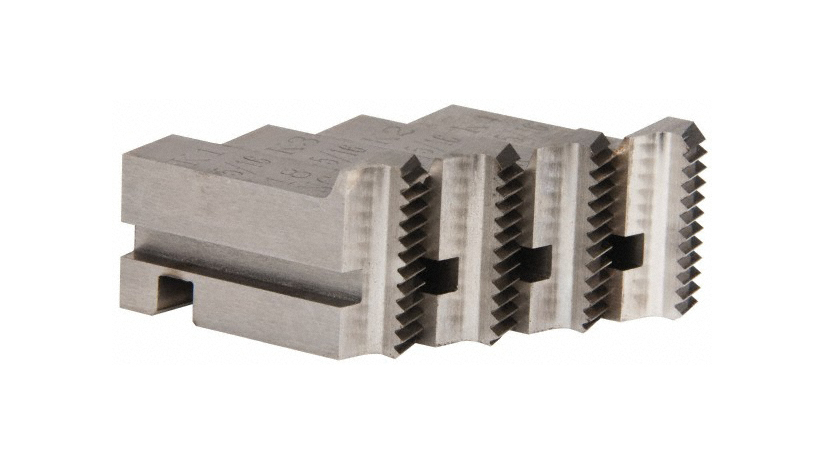
Thread Chasers
• Used to cut external threads.
• Consist of self-opening die heads and collapsing taps.
• Self-opening feature eliminates the need to back off after cutting.
• Slight protrusion from the die head face allows threading close to the shoulder.
• Supplied in sets of four.
• Ground threads provide a better surface finish and tighter tolerances.
• Suitable for ferrous and non-ferrous materials.
Chaser Styles
Thread Rolls
Thread rolls are reversible for extended use; both sides can be used.
Sold in sets of three.
Designed for rolling threads from the end of the workpiece.
Style N handles thread diameters from #6 to 1-1¼".
Usable in rotating or stationary setups.
Available in low or standard helix angles.
Tip: Always match the die or chaser style, size, and material to your workpiece and whether you are cutting internal threads or external threads. Proper tooling selection ensures accuracy, thread quality, and tool longevity.

To request a quote, please login to your existing account or register a new one. This helps us provide you with a personalized experience and keep track of your requests.