



Vibration pads act primarily as noise breakers. While they offer minimal deflection, they interrupt hard surface-to-surface contact and reduce high-frequency vibration. Ideal for basic vibration isolation in low-impact environments.
Vibration Isolation Made Simple
From pads to springs, learn how to minimize vibration, protect equipment, and reduce noise with the right isolation solution.
Understanding Deflection in Vibration Isolation
Deflection is the difference in height between an isolator's unloaded and loaded state. It plays a critical role in vibration isolation: the more deflection an isolator has, the better it absorbs and reduces vibration.
Soft, flexible supports generally outperform stiff ones when it comes to minimizing vibration transfer. Based on deflection, there are three main classes of vibration isolators.
Types of Vibration Isolators
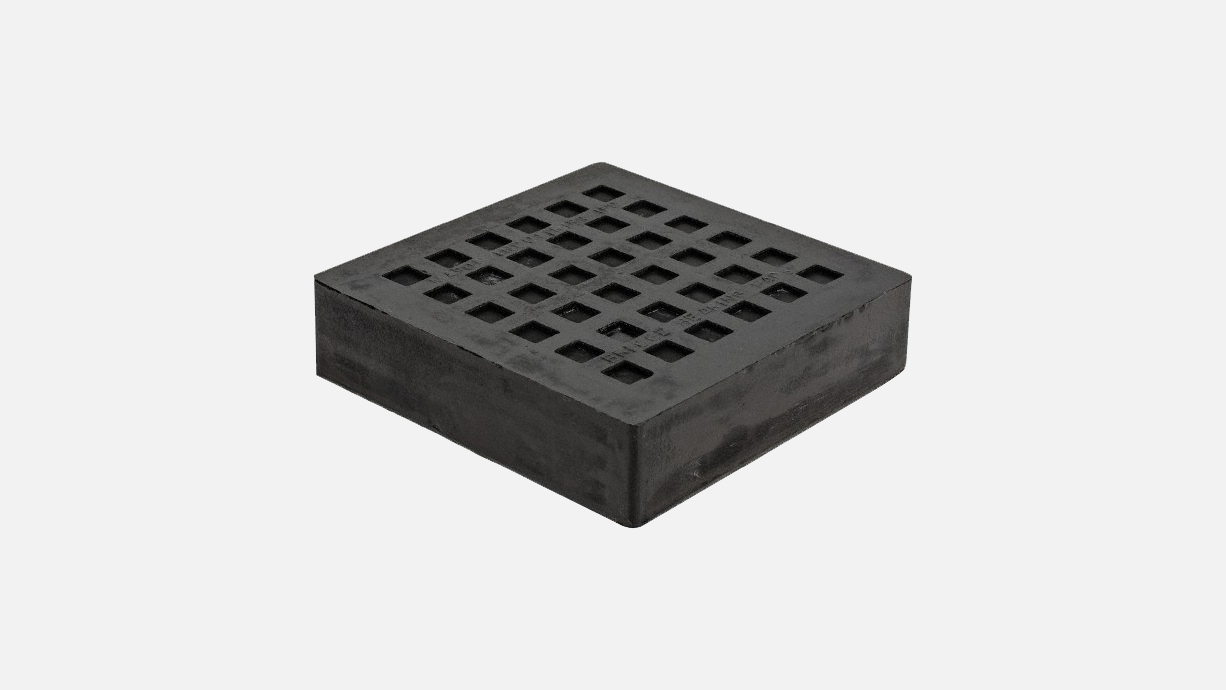
Vibration Pads
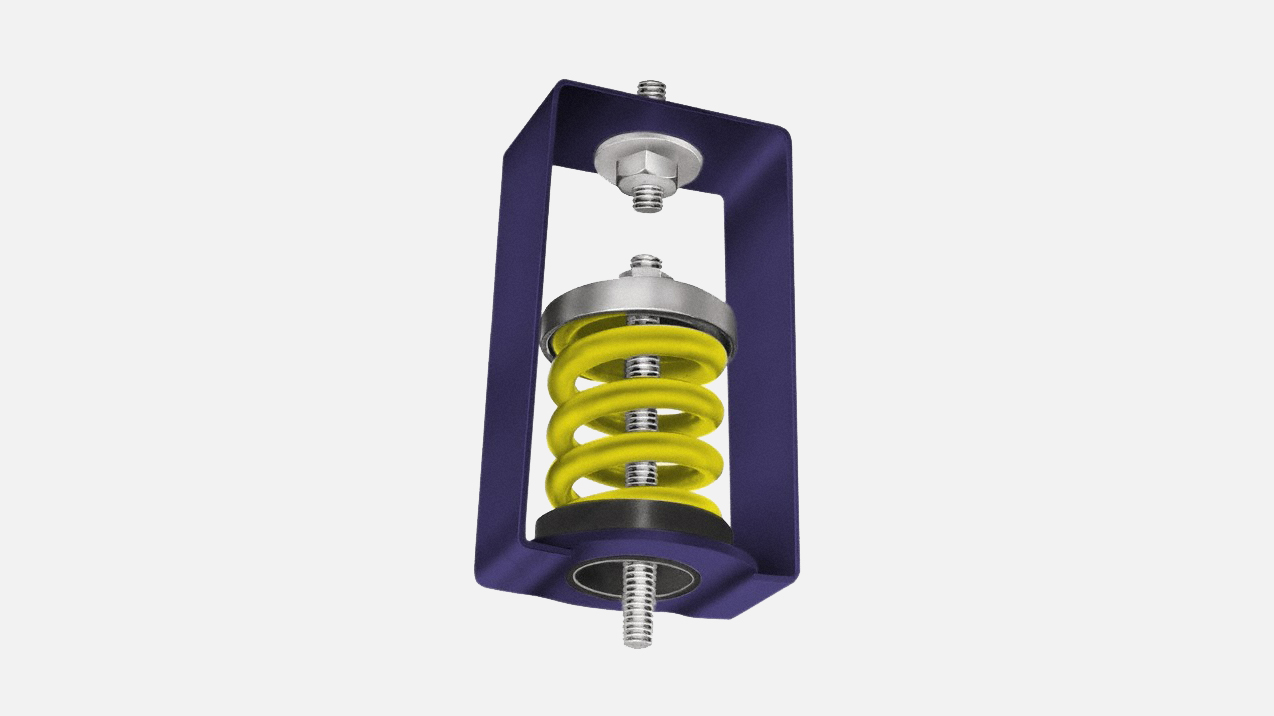
Neoprene Mounts and Hangers
Designed to offer more deflection than pads, neoprene isolators provide a first step toward true vibration control. Suitable for equipment that is operating on rigid, ground-supported concrete slabs.
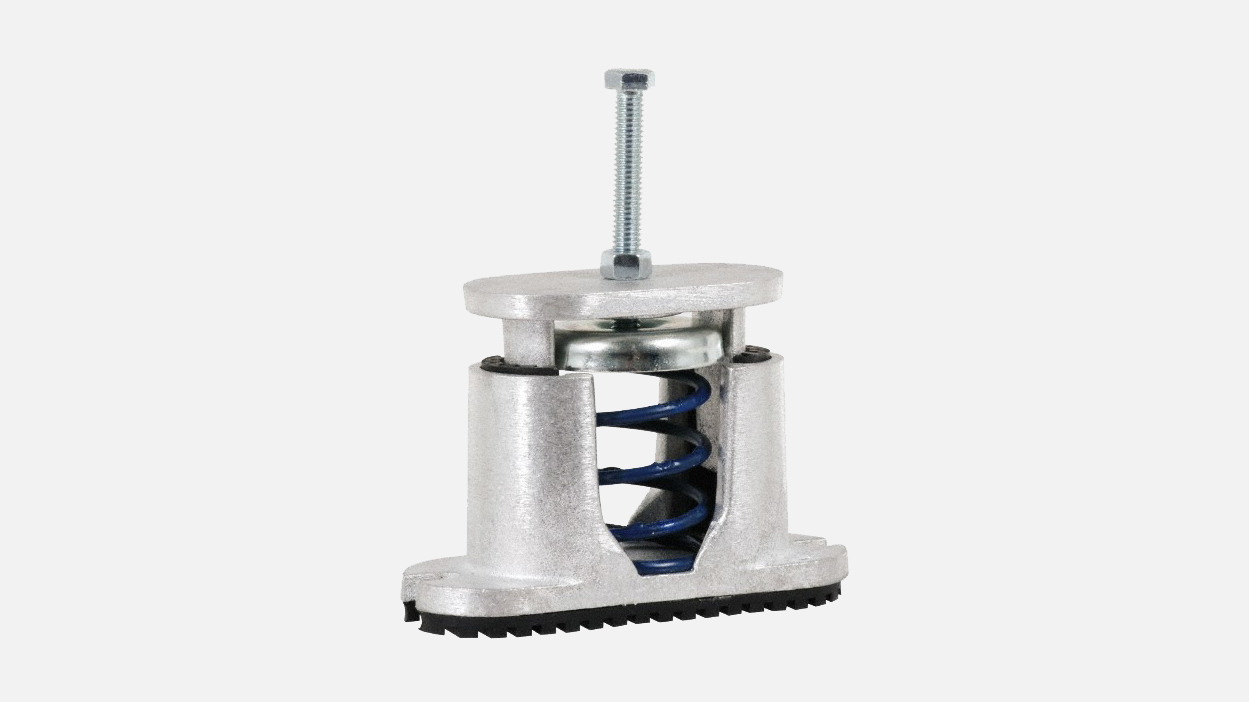
Spring Isolators
For maximum vibration isolation, spring mounts deliver the highest deflection. They are best for sensitive structural areas, especially in upper floors or with equipment operating below 1200 RPM.
Location Matters
If equipment is installed on ground-level concrete (rigid structure), neoprene or spring isolators may suffice. However, for upper levels where the structure is more flexible or prone to vibration, spring isolators are recommended to prevent noise and damage.
Pro Tip
Isolator deflection should be at least three times greater than the sag of the floor or support structure.
Selection Guide
When selecting the right vibration isolation solution, ask:
1. Is the slowest equipment speed above 1200 RPM?
If NO, use spring isolators for better vibration isolation.
If YES, move on to the next question.
2. Is the equipment located on a rigid concrete structure or a flexible, vibration-sensitive structure?
If rigid, use double deflection neoprene or spring isolators.
If flexible, use spring isolators only for proper vibration isolation.
3. What is the equipment’s corner weight (load at each mounting point)?
Each mounting point of your equipment will carry a portion of the total weight known as the corner weight. Match each spring or rubber isolator to its corresponding corner weight using the proper load capacity.
Corner weights often vary and may require isolators with different ratings.
Oversizing the mounting may seem safer, but it can reduce vibration isolation effectiveness.
For best results, choose isolators with load ratings equal to or slightly above the weight they support.
If you’ve previously used a specific isolator type with good results, stick with it. Real-world experience often outperforms theory. In many cases, basic vibration pads offer enough cushion, especially when placed between a steel leg and a concrete floor. You can improve pad performance by stacking layers with 16-gauge plates between them.
To request a quote, please login to your existing account or register a new one. This helps us provide you with a personalized experience and keep track of your requests.