In his more than 50 years of working in the metalworking business, Steve Turner has seen just about everything the industry has to offer. After starting his career at Westinghouse Electric in Charlotte, North Carolina, he made his way to the shop floor and hasn’t looked back.
Over the course of his career, Turner has watched coatings transform carbide tooling, witnessed the rise of CNC machining and developed a reputation that his peers describe in one word: legendary. The senior metalworking specialist with MSC Industrial Supply sat down to share the fundamentals, lessons and insights that have defined his career.
You’ve been in this industry for a long time. What do you think are the fundamentals of running a successful machine shop that haven’t changed?
Turner: The basics are the same as they’ve always been, except the process has gotten more streamlined. When a request for a quote comes into a machine shop, the process isn’t anything more than to make that product as efficiently as possible—knowing the cost of the material, the shop rate, how long it would approximately take to do the parts, all the way through inspection.
What would you say are the most significant changes you’ve seen in this industry?
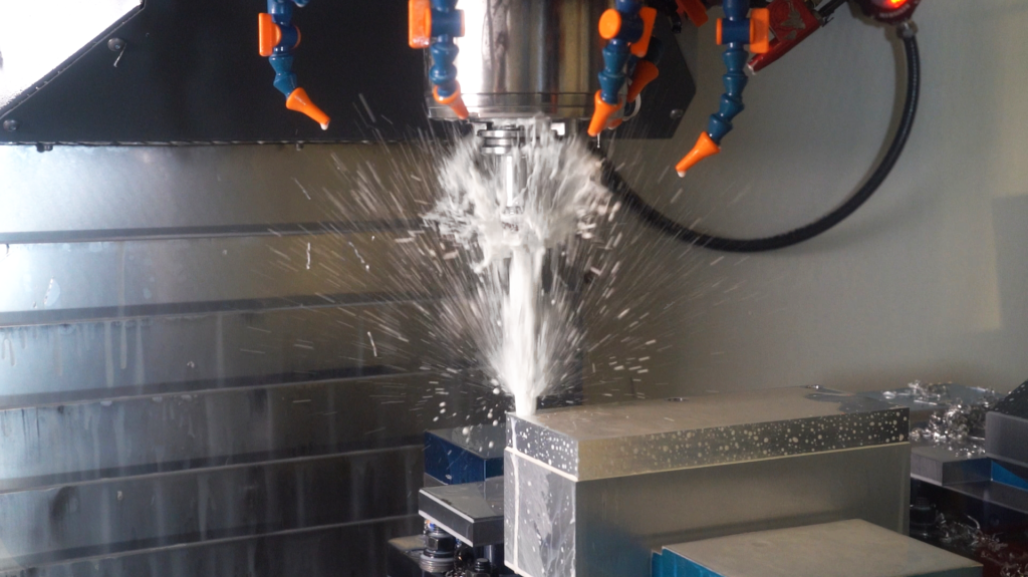
Turner: The biggest changes have come in the speeds and feeds of the tooling, and that also goes back to the coatings on tools. Tools can run so much faster now because the coatings like heat—on a steel product, they don’t start working really well until they get to about 1,200 degrees. The object of the game is to dial in those speeds and feeds so shops can get the longevity out of the tool and also get the parts to run through as efficiently as possible.
I’ve also seen more things come into play in tooling—high-speed holders like HSK, shrink-fit holders, milling chucks. All of these hold that tool so much tighter and take the vibrations and harmonics out. When you do that, you can make more parts more efficiently without having to go back and do a reset.
How has the role of the machinist evolved, and what skills do you think are non-negotiable today?
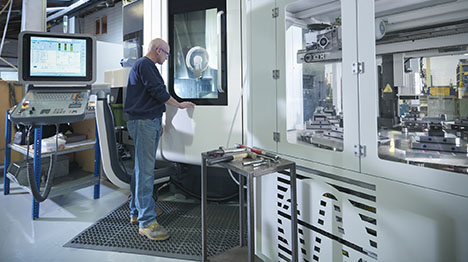
Turner: The basics of a machinist have not changed so much—they still have to have those skills, but they have to step it up a little. When I started, the machinist didn’t have CNC. When NC came along with a tape drive, they had to learn a little bit more and rely on those programmers. Then the evolution went to CNC, and they had to step it up again. These guys are not parts loaders—they are true machinists, where they can hear it and feel it and know what’s going on inside that machine and that spindle. But now they have to know about the controller too.
What most machinists don’t get enough of these days is training. When I do lunch-and-learns at shops, I’ll explain things like depth of cut or running speed, and you can watch the light bulbs come on.
True machinists are a dying breed. Their experience and knowledge is invaluable to this business, and the new young guns would be well served to absorb all of that knowledge before it leaves the industry.
Read more: Machine Troubleshooting Tips: Preventing Common CNC and Equipment Problems
What do you think separates shops that consistently make money from those that struggle?
Turner: Look at where a bottleneck is in a shop. If you have multiple operations going from one machine to another and one is a bottleneck, the object of the game is to smooth that out so all those machines are getting the throughput at the same time. That can be achieved by new tools, by training, or something as simple as putting a whiteboard on a machine where you write down what the problem is. You’ve got to expand everybody’s knowledge and make sure everyone is on the same page.
Sometimes a machinist might have an idea from a previous shop that solves the problem. All they have to do is ask. The dumbest question is the one you don’t ask.
What’s your take on the impact of technology on metalworking—both the advances and the areas where you see misuse or overreliance?
Turner: Technology has brought incredible things—double spindles on lathes, robotics, lights-out manufacturing. You turn the lights out at night, set the machines, and come in the next morning with your parts made. All of this equates to more efficiency.
But the misuse comes down to the difference between a parts loader and a true machinist, and that’s as different as a balloon and a brick. The machinist knows the sounds and feels the cut. The disparity comes in the training and the listening. Everybody’s got to be trained and everybody has to listen.
Any final pieces of advice for machine shop owners and machinists?
Turner: Keep up with cutting tool technology. The salespeople calling on accounts aren’t always there to sell something—they are there to help. Don’t say, “We’ve done it this way for 30 years.” All you have to do is be open-minded.
And don’t look at the cost of a tool up-front. A lot of times you’re going to get sticker shock. Look at the longevity of the tool and how many parts you’re going to get. Once you can put that on paper and show it to the person writing the checks, they understand it. And they’ll say, “Yeah, let’s try this.”