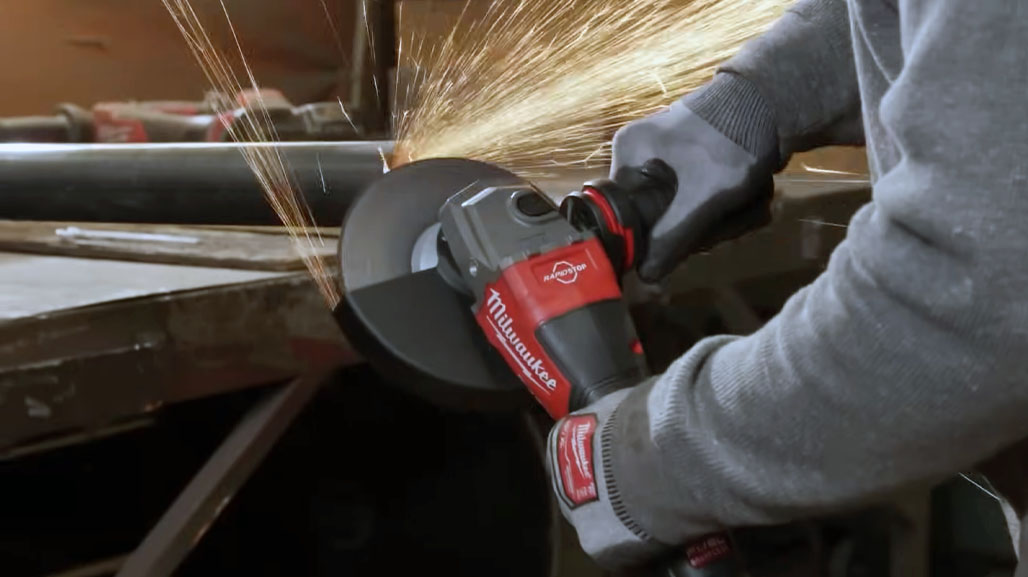
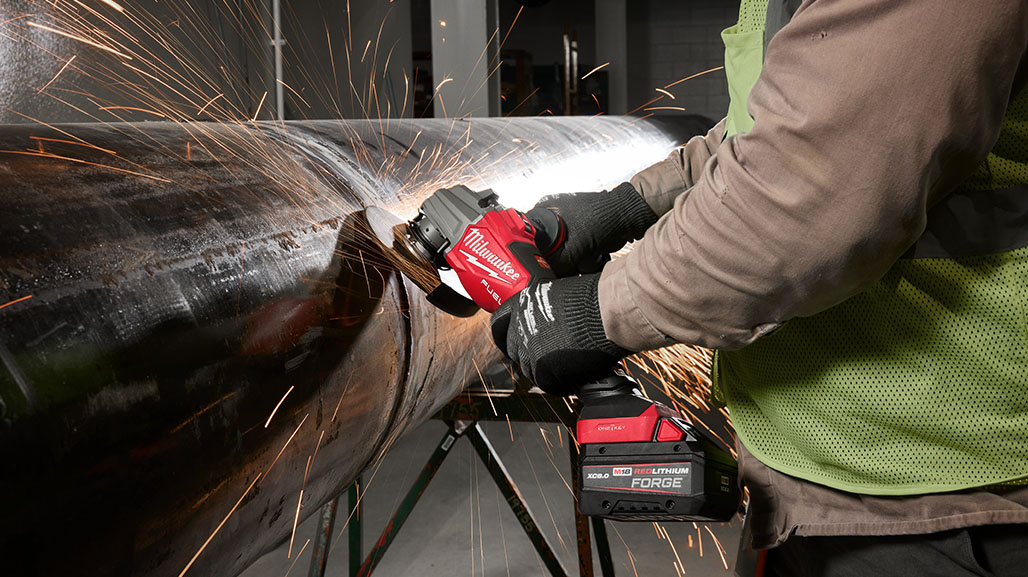
Take a look inside any metalworking or manufacturing facility, and you’ll probably see angle grinders in use. The tools are versatile for cutting, grinding, finishing and preparing surfaces across many applications.
Without attention and control, however, angle grinders also have the potential to cause damage to person and property, whether it’s a spinning abrasive wheel, an unexpected kickback or an awkward working position.
Although administrative controls such as proper work practices and training and personal protective equipment remain essential to a safety program, tool manufacturers are increasingly looking at engineering safety directly into the tool.
The latest generation of portable grinders incorporates features designed not only to reduce the risk of accidents but also to address the long-term physical demands placed on workers.
“People think of grinder safety as keeping all fingers and toes. But there are other things. We consider ergonomics and how it feels more natural for users.”
Emily Walls,
Associate National Account Manager,
Milwaukee Tool
WATCH: In this episode of MSC’s Tooling Up, we hear from Dan Blythe and Jeff Morman of Milwaukee Tool about the latest in power tool safety, ergonomics and battery technology:
Engineering for the Unexpected
Not surprisingly, some of the most visible safety advances in angle grinders center around preventing or minimizing serious incidents.
Stopping Technology
Stopping technology is one example. After completing a task, operators may set down the tool while the accessory is still rotating, which creates the potential for contact injuries or surface damage.
Newer grinders with braking systems can bring the accessory to a stop quickly. RAPIDSTOP™ from Milwaukee Tool, for instance, stops most wheels in less than one second after the trigger is released.
Read more: Cutting the Cord: Why Battery-Powered Tools Are Gaining Ground in Metalworking
Anti-Kickback Technology
Kickback is another common risk. When a grinding wheel catches on a surface or becomes bound in the material, the tool can react suddenly and move unexpectedly toward the operator.
To address the hazard of kickback, Milwaukee Tool developed AUTOSTOP™ to detect sudden movement and automatically shut down the tool. Instead of relying entirely on the operator to react in the moment, the tool itself helps interrupt the event.
Two-Trigger Technology
Two-trigger designs follow a similar philosophy. Milwaukee Tool’s M18 FUEL Dual-Trigger Braking Grinder requires two hands to activate the grinder. Besides reducing the chance of accidental activation, the design encourages a more stable grip, deliberate engagement with the task, and control during grinding.
Thinking About Long-Term Safety
When it comes to safer tool design, reducing fatigue and repetitive strain are becoming increasingly important factors in addition to injury prevention.
“People think of grinder safety as keeping all fingers and toes,” says Emily Walls, associate national account manager at Milwaukee Tool. “But there are other things. We consider ergonomics and how it feels more natural for users. What can we do to create a compact solution where we’re not losing power but also making sure that we’re not developing chronic injuries and making sure that it works naturally with the user’s body?”
White paper: Automated Bodyguard: Safety Technology Adds Protection for Workers
Answering that question means evaluating how workers are using the equipment: overhead, in tight spaces and in front of their bodies.
Walls points to the adjustable side handles available on all of Milwaukee Tool’s new angle grinders. Operators can now choose one of 15 handle positions for the task rather than forcing their body into a single working posture. Another solution, anti-vibration technology, helps reduce exposure to vibration transmitted through the tool during repeated use.
Building Confidence in New Safety Technology
Safety features work best when operators understand their purpose and are willing to use them. That can sometimes be a challenge when introducing changes to familiar types of equipment.
“People like to stick to what they know,” Walls says.
In-person demonstrations can help bridge that gap. Allowing workers to see new features firsthand can make the benefits clearer and build trust in the equipment.
Read more: Milwaukee Unlocks a New Level of Battery Power for the M18 System
“When we’re coming on jobsites, safety is at the forefront of our conversations,” she says. “We have specialists to speak more high-level with safety managers, but it’s also important to have those conversations with the users. Having that hands-on experience and hearing it from the experts themselves, users are more open to the solutions and trying something new.”
Ultimately, the future of safer portable tools is not about asking workers to choose between productivity and protection. It’s about designing equipment that supports both.
“When people are on jobs, they’re in the zone—they’re paying attention to what they need to accomplish,” Walls says. “By incorporating safety technology, it’s one less thing that they have to worry about. The whole goal for us is to make sure that users are going home the same way that they came to work that day.”